

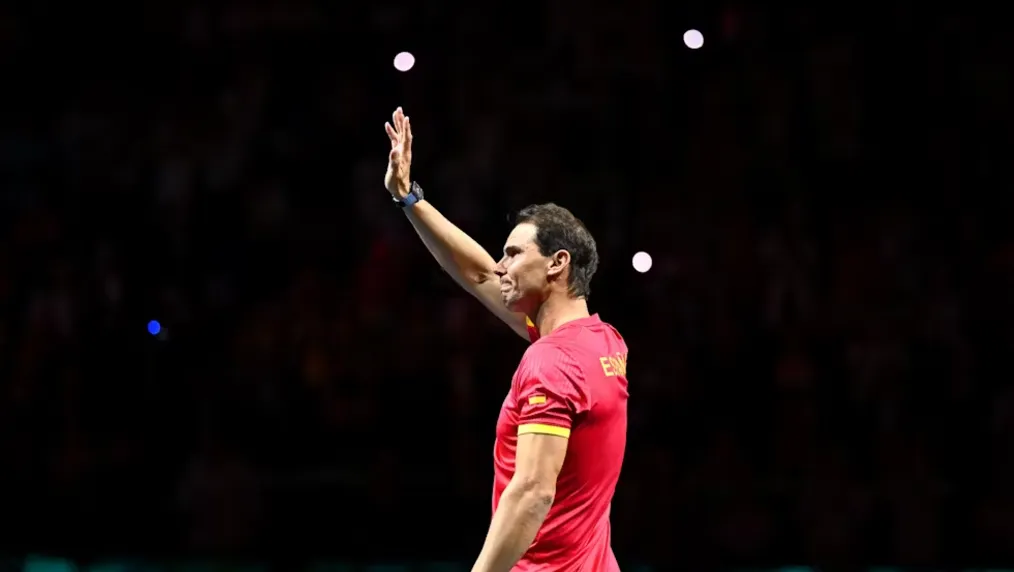
Rafael Nadal’s departure from tennis has brought an official end to an unparalleled era in the sport. At 38, after a Davis Cup singles loss to Botic van de Zandschulp of the Netherlands, Rafael Nadal, once thought unsustainable due to his intense playing style, has called time on a career that defied all expectations.
When Rafael Nadal first burst onto the scene two decades ago, his game seemed too physically demanding to last. His raw power and relentless energy—characterized by a heavily spin-driven forehand, a tenacious backhand, and a never-ending drive—were often seen as a recipe for an early exit from the sport. Yet Rafael Nadal proved everyone wrong. His 22 Grand Slam titles, including a record 14 French Open victories, two Olympic gold medals, and his relentless pursuit of excellence, set a new bar for tennis greatness.
Despite enduring multiple injuries, Rafael Nadal’s perseverance was his hallmark. His style—an all-out, never-give-up approach—was both captivating and exhausting. As much as his body eventually demanded rest, his heart and mind kept him in game longer than many-thought possible. His recent retirement, announced after his final singles match, came with grace and humility, as Rafael Nadal faced the end of his career with the same sportsmanship and respect that defined his entire journey.
Nadal’s tennis was one-of-a-kind. While it’s common to see players trying to emulate Roger Federer’s smooth one-handed backhand or Novak Djokovic’s elastic baseline play. No one has ever managed to replicate Nadal’s unique combination of physicality, endurance, and ferocity. His powerful forehand, deep drives, and unwavering will were as much a product of his natural talent as they were the result of a never-ending work ethic. Nadal even learned to play left-handed, despite being a natural righty, in order to master his craft in a way few ever could.
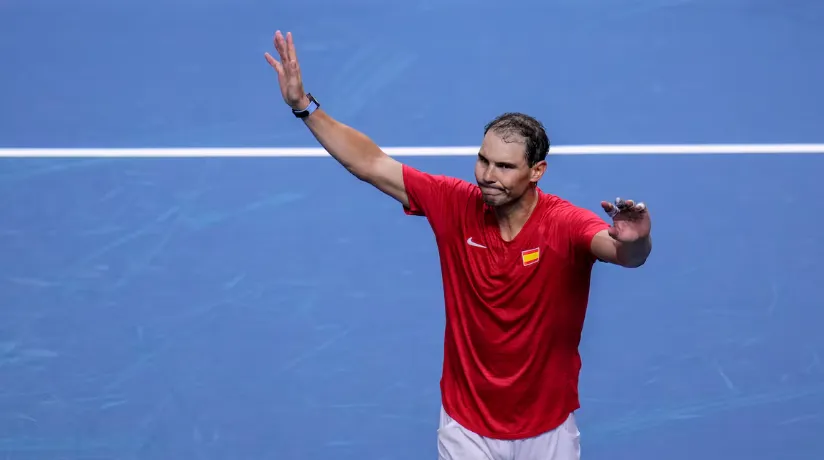
What truly defined Nadal’s career, however, wasn’t just his physical prowess, but his heart. He played every point with an intensity that seemed insurmountable, a willingness to fight for every-point, no matter the circumstance. Whether up or down, Nadal never stopped. He gave everything, every time. His mental toughness and determination made him one of the hardest competitors the sport has ever seen.
While Nadal’s career was a testament to the relentless pursuit of excellence, he also showed humility throughout. Despite becoming one of Spain’s most beloved athletes and one of the greatest players in tennis history, Nadal remained grounded. His on-court passion never overshadowed his respect for the game and his opponents. Always the gentleman, Nadal’s demeanor was as consistent as his play—gracious in victory, humble in defeat.
Nadal’s retirement also signifies the formal conclusion of the Big Three in tennis, a trio of legendary rivals who pushed each other to unprecedented heights. While Federer’s retirement in 2022 already marked a shift, Nadal’s departure finalizes the end of an era. His rivalries with Federer and Djokovic—epic battles that defined an entire generation of tennis—remain part of tennis folklore. Nadal’s record against Federer, 24-16, and his lifetime series with Djokovic, 29-31, only scratch the surface of what was truly a golden age of tennis.
Even Federer, in his heartfelt farewell, acknowledged how much Nadal had shaped his career. The Swiss great wrote fondly about Nadal’s unique habits, from his meticulous water bottle arrangements to his unwavering focus. It’s these quirks, combined with his extraordinary work ethic, that made Nadal so beloved by fans and respected by peers.
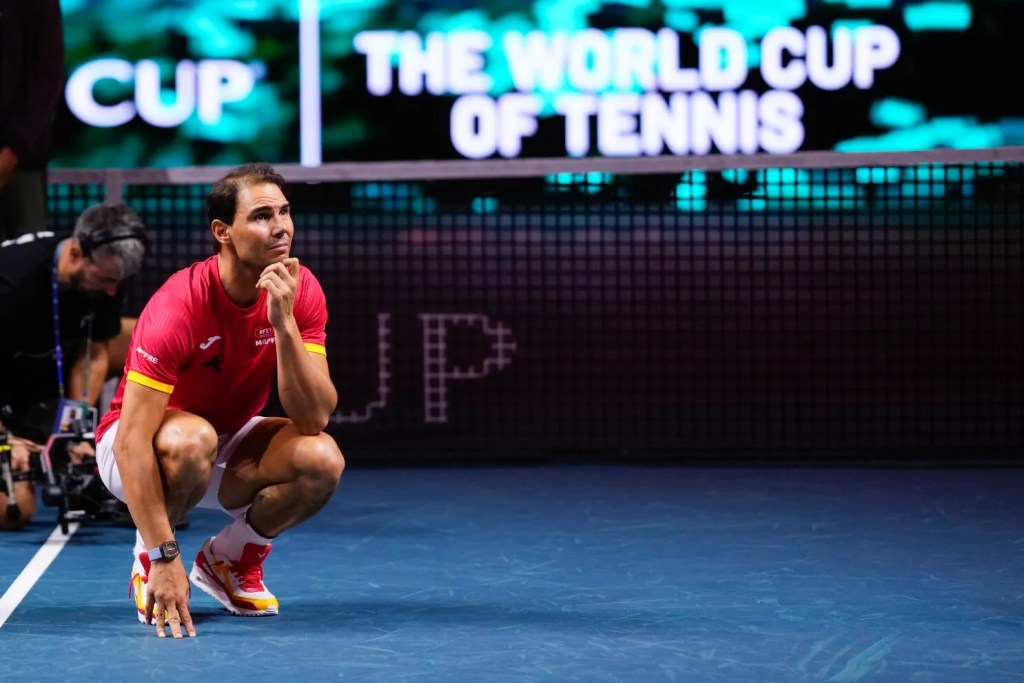
Nadal’s impact on tennis transcends statistics. His dominance on clay is often debated, but his work ethic and adaptability were seen across all surfaces. The argument that his 14 French Open titles somehow diminish his legacy is a short-sighted one. Nadal’s true greatness shines through his relentless pursuit of victory, no matter where he played or the surface.
As Nadal steps away from the sport, he remains focused on what really mattered to him: being a good person. He reflected on his fortune in finding a coach in his uncle Toni, and never shying away from acknowledging the role of others in his success. “Many people work hard,” Nadal said in his retirement speech. “Many people try their best every single day. I was very lucky.”
As Nadal leaves the sport, he secures his legacy, ensuring his impact will resonate for years to come. Spain’s Carlos Alcaraz, now one of tennis’s brightest stars, stands as a testament to Nadal’s influence. Alcaraz, who grew-up idolizing Nadal, has already won four Grand Slam-titles, though he wisely doesn’t try to emulate Nadal’s strokes. Instead, he carries the same relentless spirit, proving that while Nadal’s unique style cannot be replicated, his mentality and passion will continue to inspire a new generation of players.
Rafael Nadal leaves the sport in a better place, and though he may not have been interested in the all-time rankings, his legacy as one of the sport’s greatest players is undeniable. There will never be another player like him.

Leave a Reply