

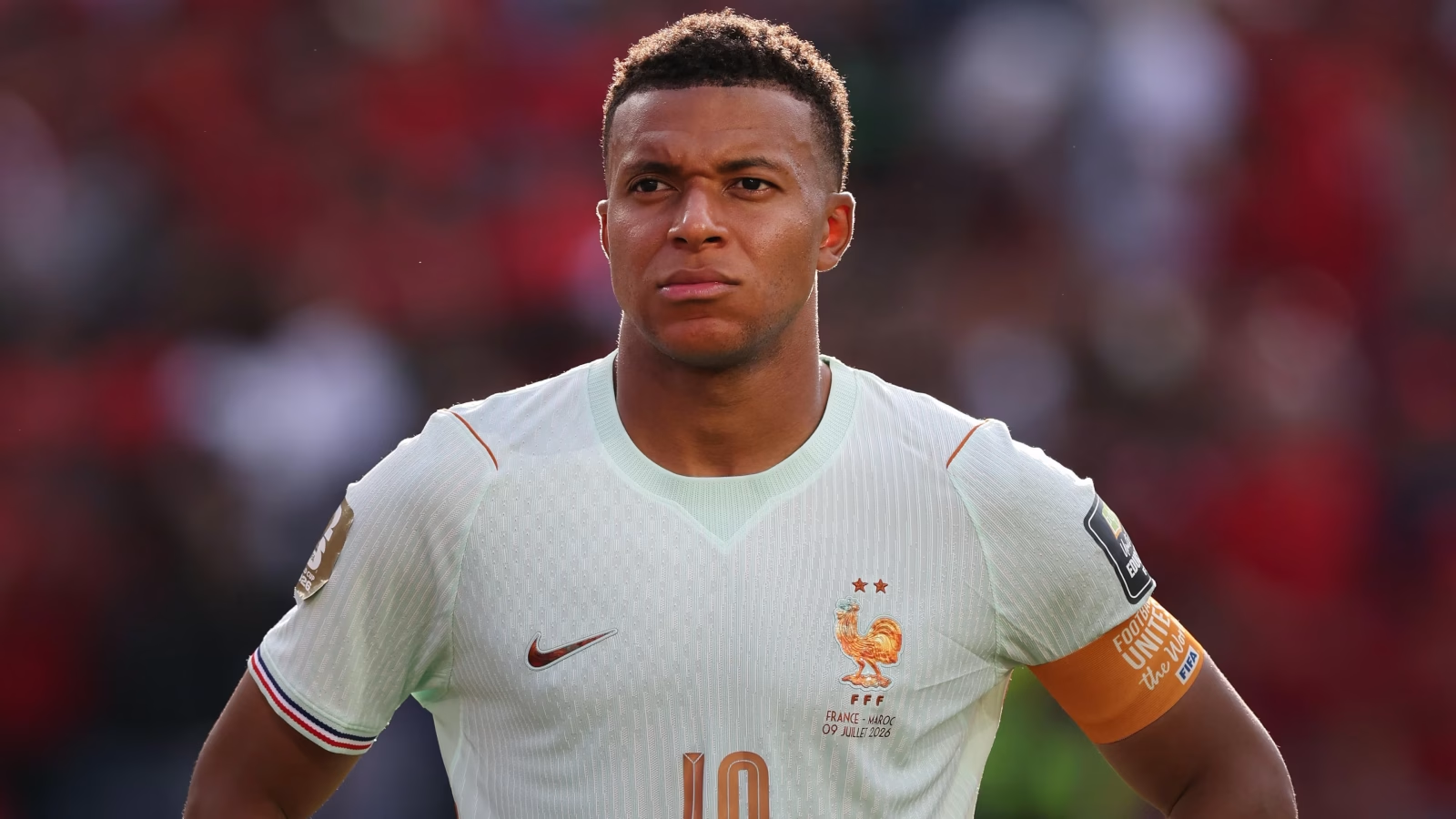
FIFA World Cup 2026 action is now underway in Groups I and J, bringing some of the tournament’s biggest names into sharper focus as the early picture begins to take shape. France and Argentina are among the headline teams involved at this stage of the competition, while Norway also features prominently in the verified tournament listings. The clearest confirmed fixture detail is Norway versus France at Boston Stadium on Friday, 26 June, with a 15:00 local kickoff. That meeting already carries obvious weight because of the stature of the teams involved and its potential implications within the group. With only limited verified match-specific information available at this stage, the significance lies in the structure of the tournament itself: heavyweight nations are now active, group narratives are beginning to form, and every confirmed fixture matters more as the road to the knockout rounds develops.
- FIFA World Cup 2026 matches are underway in Groups I and J, with Argentina and France among the headline teams involved.
- Norway is part of the tournament coverage and has a dedicated team page featuring fixtures, squad and tournament details.
- One verified fixture is Norway versus France at Boston Stadium on Friday, 26 June, with a 15:00 local kickoff.
- The available verified information confirms tournament activity in these groups but does not establish a full day-by-day schedule.
- No verified broadcast, TV listing or streaming details are available in the research provided.
Early Group Storylines Begin to Build
The most important development is that the competition is no longer theoretical for these teams; it is active, live and moving. Once World Cup group play begins, even basic fixture confirmation takes on added meaning because preparation gives way to execution and margins narrow quickly. For France and Argentina, simply being among the headline teams in Groups I and J ensures close scrutiny of how they handle the opening phase of the tournament, how they balance control with urgency, and how they position themselves for the latter stages. For Norway, confirmed inclusion in the tournament picture and a verified upcoming meeting with France place them squarely in one of the more compelling early storylines.
The Norway-France fixture stands out because it combines a confirmed venue, date and kickoff time with the wider intrigue that always surrounds France at a World Cup. Boston Stadium will host that match on Friday, 26 June, at 15:00 local time, and that level of specificity makes it the key anchor point in the current verified picture. In tournament football, a fixture like that can shape not only the immediate standings but also the emotional rhythm of a group, especially when one side arrives with major expectations and the other sees an opportunity to redefine its campaign. Even without verified scorelines, scorers or prior results attached here, the matchup has clear significance because any meeting involving France carries pressure, scrutiny and the possibility of a decisive shift in momentum.
That broader context matters. In the early days of a World Cup group stage, the confirmed schedule often tells its own story before the results fully arrive. Every fixture begins to carry layered meaning: points are at stake, but so are confidence, tactical direction and the sense of control that can define a successful campaign. That is why even limited verified information remains meaningful here. The tournament is active, the groups are moving, and the first established details already offer a framework for understanding which matches could shape the balance of power.
Why France, Argentina and Norway Are Central to This Phase
France’s presence naturally frames much of the conversation around this section of the tournament. At a World Cup, teams of that profile are judged not only on whether they advance, but on how convincingly they impose themselves, how efficiently they navigate the group stage and how little uncertainty they leave behind. That is why the confirmed Norway fixture matters beyond the calendar entry itself: it is one of those games that can reveal whether a contender is settling smoothly into the competition or whether a group remains more open than expected. For Norway, the same match represents a chance to test themselves against elite opposition in a setting where every point and every phase of play can carry outsized value.
Argentina’s inclusion among the headline teams in Groups I and J broadens the sense that this is a significant stretch of the competition, even if the available verified research does not provide a full slate of results or fixtures around them. In practical terms, that means attention is split across more than one major power as the groups evolve. When teams of Argentina’s and France’s stature are active at the same time, the wider tournament temperature rises because supporters and rivals alike begin measuring not just outcomes, but trajectory. The early group stage often becomes a study in control, discipline and timing, and those qualities matter just as much as flair when the objective is to reach the knockout rounds with authority.
Norway’s dedicated team page, with fixtures, squad and tournament details, is another small but meaningful part of the verified landscape. It confirms that Norway’s role in the tournament is not peripheral; they are an established part of the competition coverage and therefore part of the broader competitive equation in this section of the World Cup. That matters because group-stage narratives are often shaped by teams capable of turning a marquee fixture into a genuine contest rather than a routine assignment for a favorite. The confirmed meeting with France gives Norway a clear reference point, and from a competitive standpoint it is the kind of game that can influence confidence, tactical choices and the pressure level surrounding the rest of the group campaign.
There is also value in being precise about what is not established by the verified research. The available information does not provide a full day-by-day schedule, and it does not support broadcast channels, TV listings or streaming details. It also does not support specific claims about England’s matches or viewing information that may have appeared elsewhere. In reporting terms, that means the strongest and most responsible focus remains on the confirmed facts: World Cup 2026 action is active in Groups I and J, Argentina and France are among the headline teams involved, Norway is part of the tournament picture, and Norway versus France in Boston on 26 June at 15:00 local time is a verified fixture with clear competitive relevance.
What comes next is the gradual sharpening of the group-stage picture as more on-field outcomes become established. For now, the key marker is France’s meeting with Norway in Boston, a fixture that could prove highly influential in determining the tone and balance of this phase of the tournament. Argentina’s presence among the headline teams ensures that attention across Groups I and J will remain intense as the competition progresses. As the schedule unfolds and results accumulate, these early confirmed details will provide the foundation for understanding which teams are taking control and which still have work to do to define their World Cup path.


Leave a Reply