

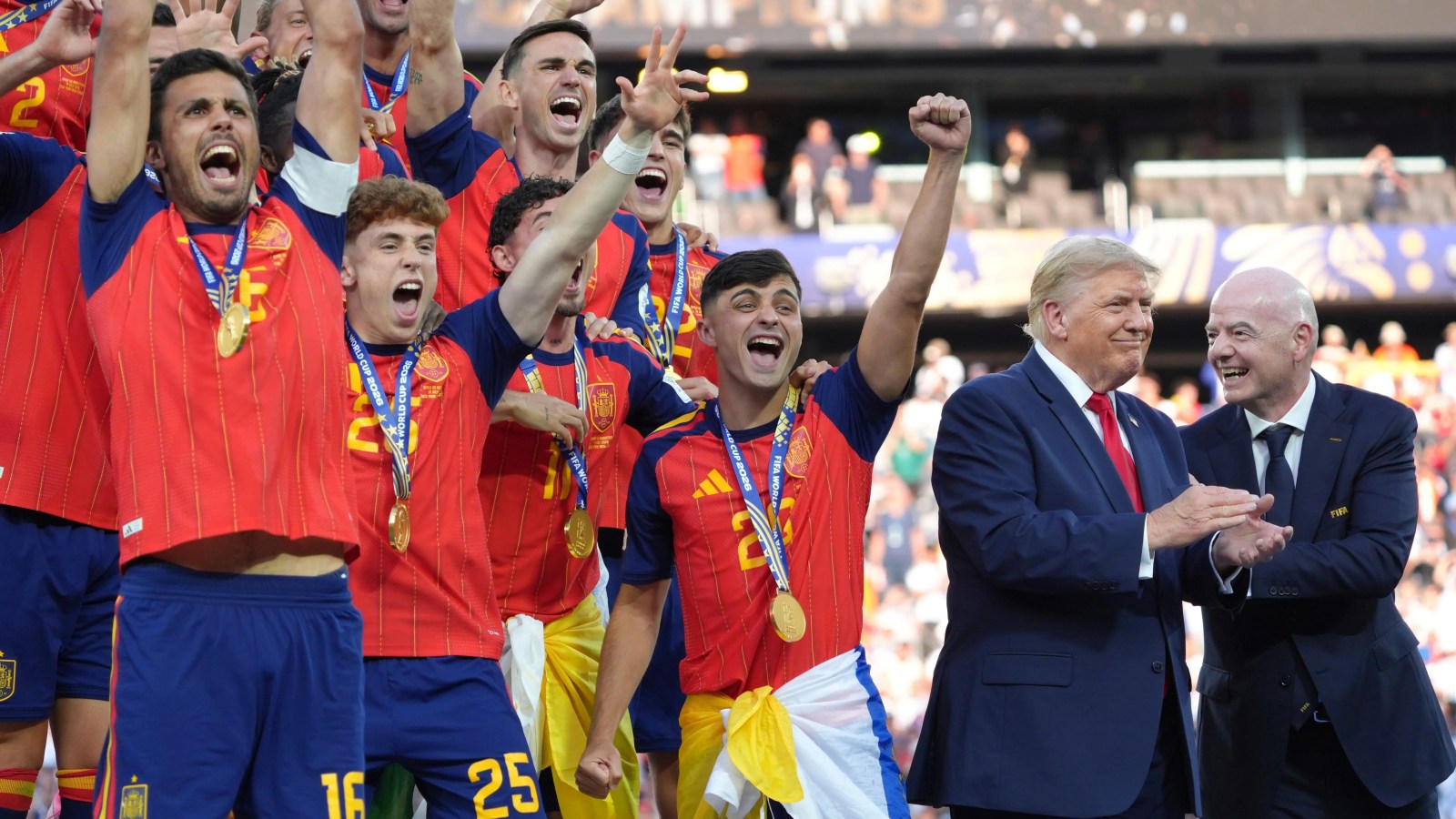
The road to the 2026 World Cup has been overshadowed by an escalating confrontation over FIFA’s private investment plan, with the prospect of a boycott shifting from a theoretical warning to a credible threat. UK Culture Secretary Lisa Nandy has backed the possibility of refusing to take part if the proposal is not withdrawn, delivering a pointed message to FIFA president Gianni Infantino that football belongs to the fans. Her intervention matters because it adds political force to a dispute already spreading through the game’s governing structures. With UEFA discussing its options, Concacaf rejecting the proposal and FIFA members being warned about the financial cost of resisting it, the debate has become one of the most serious governance flashpoints facing the tournament.
- Lisa Nandy has backed the possibility of a World Cup boycott if FIFA does not abandon its private investment plan.
- Nandy told Gianni Infantino that football belongs to the fans, framing the dispute as a battle over the game’s ownership and direction.
- UEFA has been discussing options including a potential boycott in opposition to FIFA’s proposal to raise $20 billion through a sale of equity to investors.
- Gianni Infantino urged FIFA members to support the plan and warned they could miss out on $40 million in funding if they do not agree.
- UEFA has since vowed to boycott the World Cup, while Concacaf has rejected the private equity plan.
Why the dispute has become so significant
At the centre of the argument is FIFA’s proposal to raise $20 billion through a sale of equity to investors, a move that has triggered alarm among those who believe the game’s future should not be shaped by private capital in that way. Nandy’s intervention cuts through because it frames the issue in simple, politically resonant terms: control of football should remain with the sport and its supporters rather than being opened to outside investors. That message is likely to resonate far beyond one government department, particularly at a time when football authorities are already under intense scrutiny over governance, accountability and the commercial direction of elite competition. The fact that the 2026 World Cup is now being discussed alongside boycott threats shows how quickly what began as an internal FIFA dispute has escalated into a crisis with global implications.
The financial dimension explains why the argument has become so charged. Infantino urged FIFA members to support the plan and warned they could miss out on $40 million in funding if they do not agree, turning the debate into a direct choice between immediate financial benefit and resistance to structural change. For some associations, that warning is not a minor detail but a major pressure point, because FIFA funding can shape development budgets, infrastructure plans and broader football programmes. Yet the warning also sharpens the view among opponents that the proposal is being advanced through leverage rather than broad consensus. In that context, resistance is no longer only about the investment plan itself; it is also about how power is being exercised within the global game.
That is why the dispute now carries weight well beyond a single financial proposal. Questions of ownership, oversight and long-term influence sit at the heart of the backlash, and those concerns become even more sensitive when attached to the World Cup. For many critics, this is not simply about whether fresh capital enters the sport, but about what that capital could mean for the priorities and independence of football’s most important institutions. Once that fear takes hold, every discussion about the tournament becomes inseparable from the wider struggle over who ultimately controls the direction of the game.
What UEFA and Concacaf opposition means for 2026
UEFA’s role is central because any serious challenge to a World Cup cannot be separated from the position of Europe’s governing body and its member nations. The fact that UEFA has been discussing options including a potential boycott already signalled a major split, but the situation has moved further with the position that UEFA has since vowed to boycott the World Cup. That raises the stakes dramatically for FIFA, because a tournament without UEFA participation would be transformed in sporting, commercial and political terms. Even before any practical questions are addressed, the symbolism alone would be profound: the most important competition in international football would be facing open rebellion from one of the game’s most powerful blocs.
Concacaf’s rejection of the private equity plan adds another layer of pressure because it shows the opposition is not confined to one region or one political tradition within football. That matters especially in the context of the 2026 World Cup, which is tied closely to the North and Central American football landscape. A rejection from Concacaf underlines that resistance to the proposal is not simply a European complaint about FIFA governance but a broader challenge to the plan’s legitimacy. When two major confederations are positioned against the proposal in different ways, FIFA faces a far more difficult task in presenting the project as a unifying financial strategy for the sport. Instead, the plan increasingly looks like a dividing line between those who see outside investment as an opportunity and those who view it as a threat to football’s institutional independence.
There is also a wider strategic calculation for all sides. FIFA appears to be arguing that the scale of the proposed investment and the associated funding opportunities could strengthen the game globally, especially for associations that depend on central support. Opponents, however, are clearly concerned that accepting private equity into the structure would alter the balance of influence around football’s biggest decisions and potentially reshape priorities in ways that would be difficult to reverse. Nandy’s insistence that football belongs to the fans captures that anxiety in a single phrase, but the concern reaches beyond rhetoric into governance, oversight and long-term control. Once those questions are attached to the World Cup itself, every discussion about qualification, participation and tournament planning becomes entangled with the larger struggle over who directs the sport.
For players, supporters and national associations, the uncertainty is deeply unsettling even at this relatively early stage. The World Cup is supposed to be the moment when football’s competing interests align around the game’s biggest spectacle, yet this dispute threatens to pull those interests further apart. A boycott, whether used as leverage or carried through in full, would create consequences far beyond boardroom politics, affecting the integrity, prestige and competitive shape of the tournament. It would also force national federations into difficult positions between financial dependence, political pressure and sporting ambition. That is why the current standoff feels so consequential: it is not merely a disagreement over funding mechanics, but a confrontation over the future identity of football’s premier competition.
What happens next will depend on whether FIFA presses ahead or retreats in the face of mounting resistance. If the private investment plan remains in place, the boycott threat is likely to stay at the centre of the 2026 conversation, with UEFA’s position and Concacaf’s rejection ensuring the pressure does not fade quickly. If FIFA changes course, it may ease the immediate crisis but still leave lasting questions about trust, governance and the limits of commercial expansion in the sport. For now, the message from opponents is unmistakable: the battle over the World Cup is no longer only about who will play in it, but about who gets to shape what the tournament represents.
Leave a Reply