

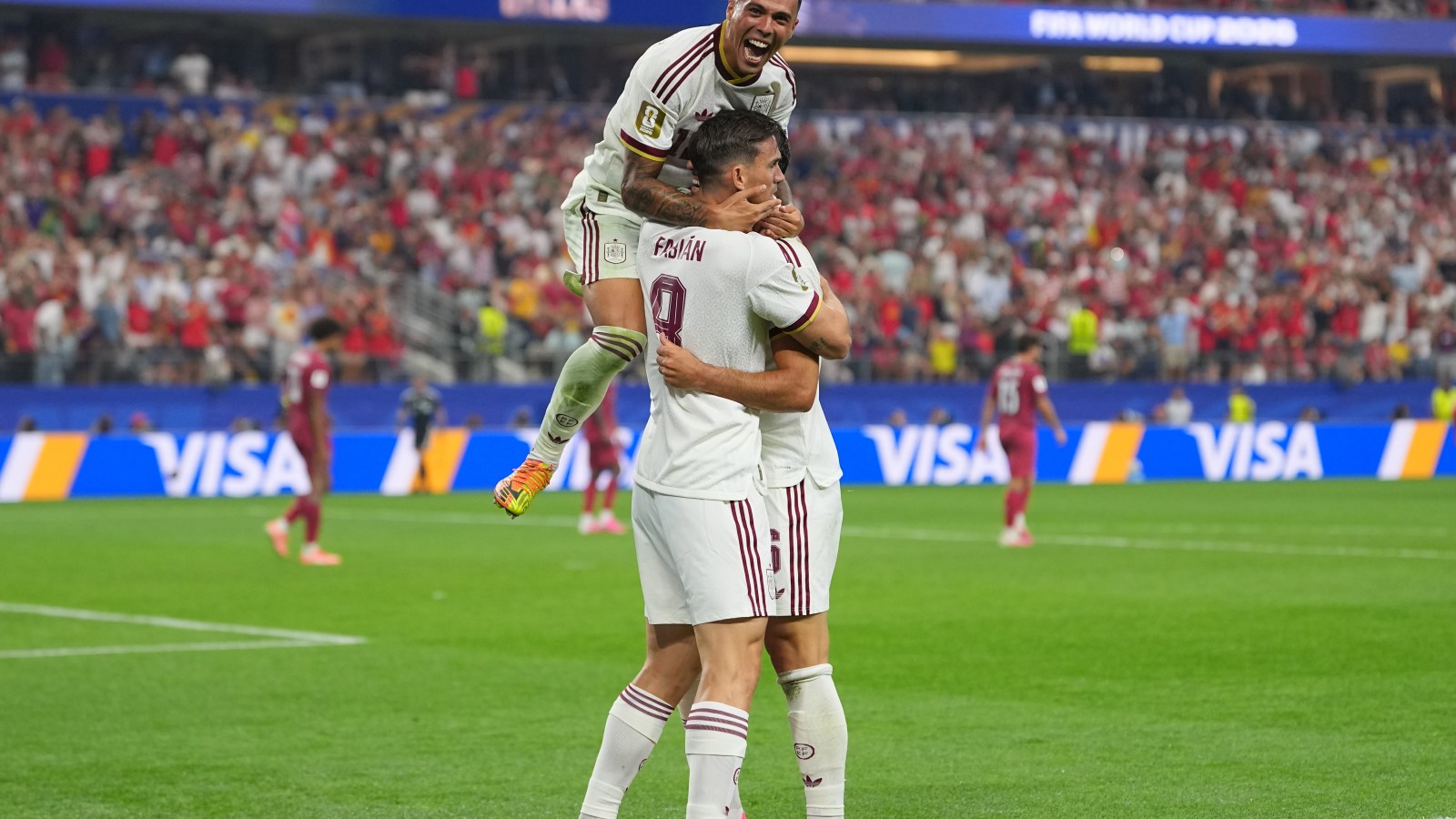
Spain are through to the semi-finals of the 2026 FIFA World Cup, a landmark achievement that leaves Luis de la Fuente’s side within touching distance of the biggest prize in international football. Their progress has set up a heavyweight meeting with France on July 14, a fixture that will determine whether this campaign is remembered as an impressive run or the foundation of a title charge for the ages. At this stage of the tournament, every detail matters, from squad balance to composure under pressure, and Spain have already shown enough to remain firmly in the conversation. With de la Fuente at the helm and figures such as Mikel Merino part of the tournament picture, Spain’s path has become one of the defining stories of this World Cup.
- Spain are in the semi-finals of the 2026 FIFA World Cup.
- Spain will face France on July 14, 2026, for a place in the final.
- FIFA’s tournament information lists Spain in Group G during the opening phase of the competition.
- Spain versus Cabo Verde was among Spain’s opening group-stage fixtures.
- Luis de la Fuente is Spain’s head coach, and Mikel Merino is identified among the team figures in the current tournament guide.
Spain’s tournament has built toward this moment
Reaching the last four is significant in any World Cup, but for Spain it also reflects an ability to navigate the different demands of a long tournament. The group stage requires control, consistency and the discipline to avoid early mistakes, while the knockout rounds demand emotional resilience and sharper decision-making. Spain have clearly handled those shifts well enough to remain alive deep into the competition. That alone marks them out as one of the most accomplished sides still standing.
The structure of Spain’s campaign offers useful context for where they now stand. They began in Group G, where every opening fixture carried the pressure of setting the tone, and Spain versus Cabo Verde was listed among those early assignments. Group-stage football can be deceptive, because it is not only about collecting points but also about building rhythm, testing combinations and establishing authority. Spain’s presence in the semi-finals suggests they came through those early examinations with enough clarity and momentum to sustain a serious challenge.
That progression also says something about the team’s collective management under de la Fuente. Tournament football rarely rewards sides that rely on a single idea; it tends to favour teams that can adapt their tempo, absorb difficult moments and still maintain their identity. Spain’s advance to the semi-finals indicates they have found that balance often enough to survive and progress. Whether through control in possession, discipline without the ball or patience in key phases, they have put themselves in a position where the margins now become even finer.
There is also a broader significance to the way Spain have reached this point. Deep runs at World Cups are usually built on more than talent alone. They require consistency across multiple rounds, the ability to manage pressure and the composure to respond when the stakes rise. Spain’s route to the semi-finals points to a team that has met those demands with enough authority to remain among the tournament’s final contenders.
A defining test against France now awaits
The semi-final against France on July 14 is the kind of occasion that can shape how an entire generation is remembered. A World Cup semi-final is not simply another knockout tie; it is a contest in which tactical precision, nerve and game management are magnified from the opening whistle. Spain will know the challenge is as much psychological as it is technical, because one lapse can undo weeks of strong work. At the same time, the opportunity is enormous: win, and they move to within one match of lifting the trophy.
For Spain, the significance of this stage extends beyond the immediate result. Reaching the semi-finals confirms they have been one of the tournament’s most effective and durable teams, but it also raises expectations. Once a side gets this close, the standard naturally shifts from admiration to judgment, and the discussion becomes less about whether the run is impressive and more about whether it can end in silverware. That is the pressure Spain must now embrace, especially against an opponent with the stature of France waiting on the other side.
De la Fuente’s role becomes especially important here because semi-finals often hinge on clarity rather than complexity. Players need to understand not only the plan from the start but also the adjustments required if momentum swings during the match. Spain’s coaching staff will be tasked with preparing the team for different scenarios, whether that means protecting control, responding to adversity or managing the emotional weight of the occasion. The fact Spain are still standing at this point suggests this group has already handled those demands well enough to earn trust.
Mikel Merino’s inclusion among the team figures in the current tournament guide is another reminder that Spain’s campaign is being defined by more than one headline name. Deep World Cup runs are usually built on a core of players capable of influencing matches in different ways, whether through leadership, tactical intelligence or timely interventions. Even without making unverified claims about individual form or readiness, it is clear Spain’s squad carries enough recognised quality to support a run this deep. In a semi-final, that depth can be just as important as star power, because contests of this level often turn on who can maintain control during the most demanding passages.
It is also worth noting what cannot be said with certainty from the verified information available. There is no confirmed basis here for claims about Lamine Yamal being ready for his or Spain’s World Cup moment, and there are no verified details provided about his condition, role or status at this stage of the tournament. That absence matters because the semi-final should be assessed on confirmed facts rather than projection. What is beyond doubt is that Spain, as a team, have earned the right to contest one of the biggest matches in world football.
That is why this semi-final carries such weight for both the present and the wider arc of Spain’s tournament. The group-stage listing, the route into the knockout rounds and the confirmation of a last-four place all point to a campaign built on sustained performance rather than a fleeting surge. Spain now stand at the point where identity, preparation and belief must be translated into one more elite performance. Against France, there will be no hiding place, but there is also no bigger chance to prove this run deserves to end on the grandest stage of all.
What comes next is simple in structure and enormous in consequence. Spain face France on July 14 with a place in the World Cup final at stake, and every element of their campaign now funnels into that single night. De la Fuente and his players have already shown they can go deep into this tournament; the challenge now is to turn a semi-final appearance into something even greater. If they succeed, Spain will move to within one step of immortality and give this World Cup run its defining chapter.
Leave a Reply