

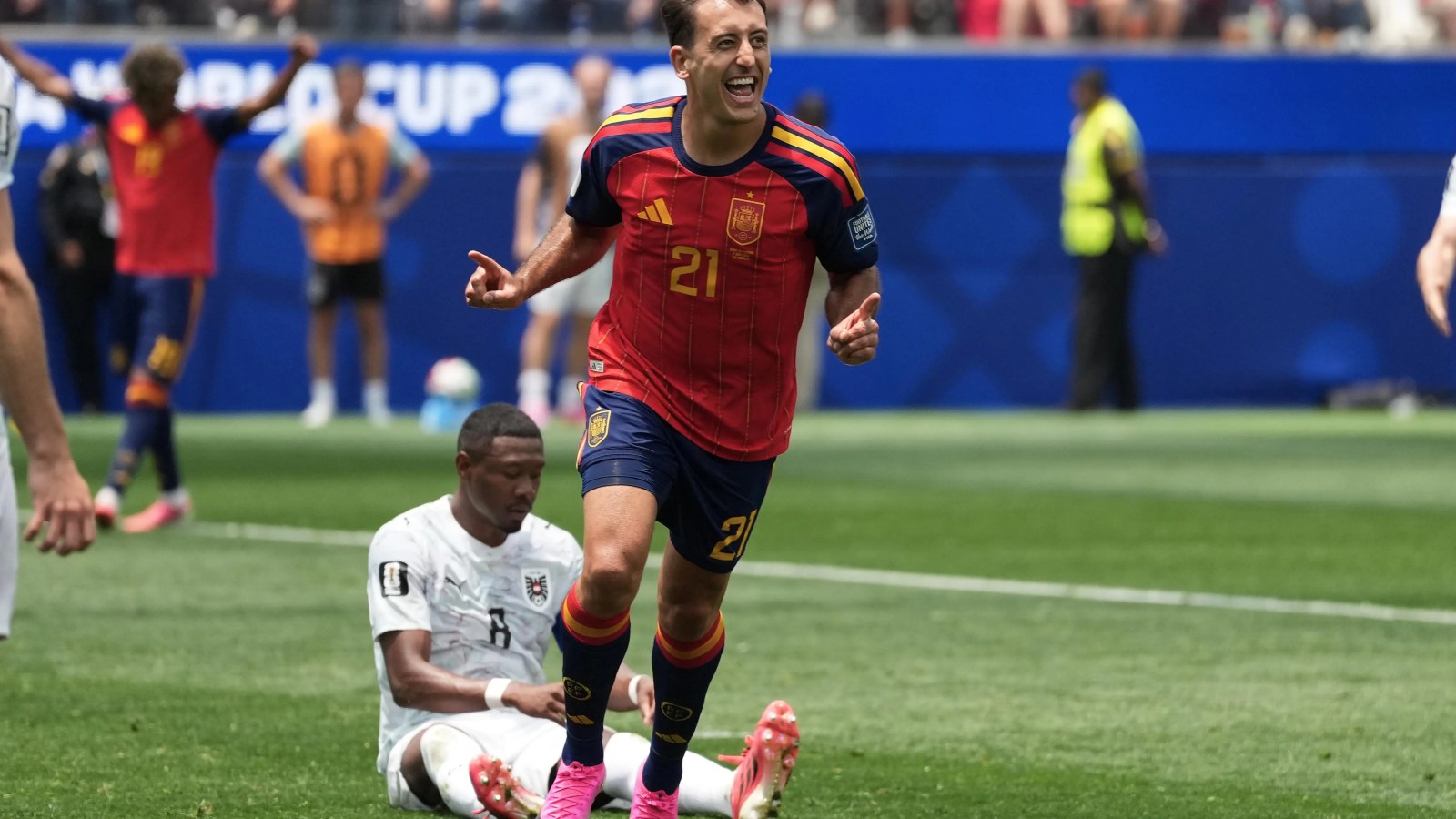
Spain arrive at the FIFA World Cup 2026 final with a clear attacking identity and several players capable of deciding the biggest match of the tournament. Sunday’s meeting with Argentina at New York New Jersey Stadium offers not only the chance to lift the title, but also a measure of whether Spain’s most influential performers can reproduce their best form on the grandest stage. Mikel Oyarzabal is the standout figure after leading Spain with five goals, giving their run the finishing edge that has carried them through the knockout rounds. Around him, Dani Olmo, Marc Cucurella and Rodri have shaped the rhythm and structure of Spain’s campaign, setting up a final in which their individual influence could determine how much control Spain can establish.
- The World Cup final between Spain and Argentina kicks off at 3 p.m. ET on Sunday, 19 July, at New York New Jersey Stadium.
- Spain have scored 13 goals in the tournament so far, with Mikel Oyarzabal leading the team on five goals.
- Oyarzabal scored in Spain’s 2-0 semi-final win over France, the result that sent Spain into the final.
- Dani Olmo and Marc Cucurella are Spain’s joint-leading creators with two assists each in the tournament.
- Rodri has completed 648 passes at the tournament, more than Pau Cubarsí on 547 and Aymeric Laporte on 533, underlining his importance to Spain’s control.
- Pedro Porro also scored in the semi-final against France, showing Spain’s threat extends beyond the central striker role.
Spain’s most dangerous weapons
Oyarzabal’s numbers make him the most obvious concern for Argentina. Five goals in a World Cup campaign is the return of a player reaching the final with confidence, rhythm and a proven ability to turn Spain’s possession into decisive moments. His goal in the 2-0 semi-final win over France was especially significant because it came in a match of the highest pressure, confirming that his finishing has held up deep into the tournament. For Argentina, the threat is not abstract or based on reputation alone; it is immediate, current and supported by the strongest scoring output in Spain’s squad.
What makes Oyarzabal particularly important in this final is that he gives Spain a direct reward for sustained pressure. Spain’s route to the final has produced 13 goals, and the fact he has scored five of them shows how often he has been the player finishing their best moves. In a final likely to be shaped by fine margins, having a forward already accustomed to delivering in this tournament is a major asset. Argentina will know that cutting off Spain’s supply lines matters, but they will also understand that when Oyarzabal receives the kind of service he has enjoyed throughout the competition, he has been the side’s most dependable finisher.
Yet Spain’s threat is not built around one scorer alone, and that is where the challenge becomes more complex. Dani Olmo and Marc Cucurella have each produced two assists, making them Spain’s joint-leading creators and highlighting the variety in where the final pass can come from. Olmo’s contribution points to a player who can unlock spaces and connect attacks, while Cucurella’s numbers underline the danger Spain can generate from the left. When a team creates from different zones, it becomes harder to defend with a single solution, because stopping the central combinations does not automatically shut down the wide supply.
Cucurella’s role is especially notable in the context of this matchup because his delivery from the left gives Spain a different angle of attack. Spain’s run to the final has shown that his supply has been one of the key features of their open-play threat, and that matters in a final where defensive structures are usually compact and disciplined. If Argentina narrow the spaces around Oyarzabal and Olmo, Spain still have the option of stretching the game and creating danger from wider areas. That balance between central invention and left-sided service has been one of the reasons Spain have remained productive throughout the tournament.
Control, tempo and the shape of the final
Behind those attacking numbers sits the player most likely to determine whether Spain can play the final on their own terms. Rodri’s 648 completed passes are more than any of his teammates, ahead of Pau Cubarsí on 547 and Aymeric Laporte on 533, and that gap says a great deal about where Spain’s control begins. He has been the central reference point in possession, the player through whom Spain can settle matches, move opponents around and establish territory. Against Argentina, his influence may be as important as any goalscorer’s, because the ability to dictate tempo often determines which team spends more of the game attacking rather than reacting.
Those passing figures also reveal the broader shape of Spain’s tournament identity. Cubarsí and Laporte both posting high totals suggests a side comfortable building from the back, but Rodri’s lead confirms that the midfield link is the key to turning circulation into command. If Spain can get Rodri on the ball consistently, they increase the chances of feeding Olmo in creative positions and bringing Cucurella into advanced areas, while sustaining the kind of territorial pressure that gives Oyarzabal repeated opportunities. Argentina’s task, then, is not only about stopping the final action; it is about disrupting the chain that starts with Rodri and runs through Spain’s most productive creators.
Spain’s semi-final against France offered another reminder that their danger does not come only from the expected names. Pedro Porro’s goal in that 2-0 win mattered beyond the result itself because it showed Spain can receive decisive contributions from outside the centre-forward position. That spread of scoring threat is invaluable in a final, where opponents often focus heavily on the leading scorer and the main creators. If Argentina devote extra attention to Oyarzabal, Spain have already shown they can hurt elite opposition through runners and finishers from other areas of the pitch.
That is why this final feels like a test of Spain’s collective attacking design as much as any one individual duel. Oyarzabal brings the finishing, Olmo and Cucurella bring the creation, Rodri brings the control, and Porro’s semi-final contribution is further evidence that the supporting cast can still produce defining moments. Spain’s 13 goals in the tournament have come from a structure with multiple access points rather than a single route to goal. For Argentina, the problem is not merely containing one star, but managing a team whose highest-impact players influence matches in different ways and from different positions.
As kickoff approaches at New York New Jersey Stadium, the central question is whether Spain’s most influential tournament performers can impose themselves one more time. Oyarzabal’s finishing form, Olmo’s craft, Cucurella’s supply and Rodri’s command of possession give Spain a strong platform going into the final against Argentina. The match will test whether Spain can turn those familiar strengths into control, chances and pressure on the biggest stage of all. If they do, the players who have driven this run to the final will again be at the heart of everything worth watching.


Leave a Reply