
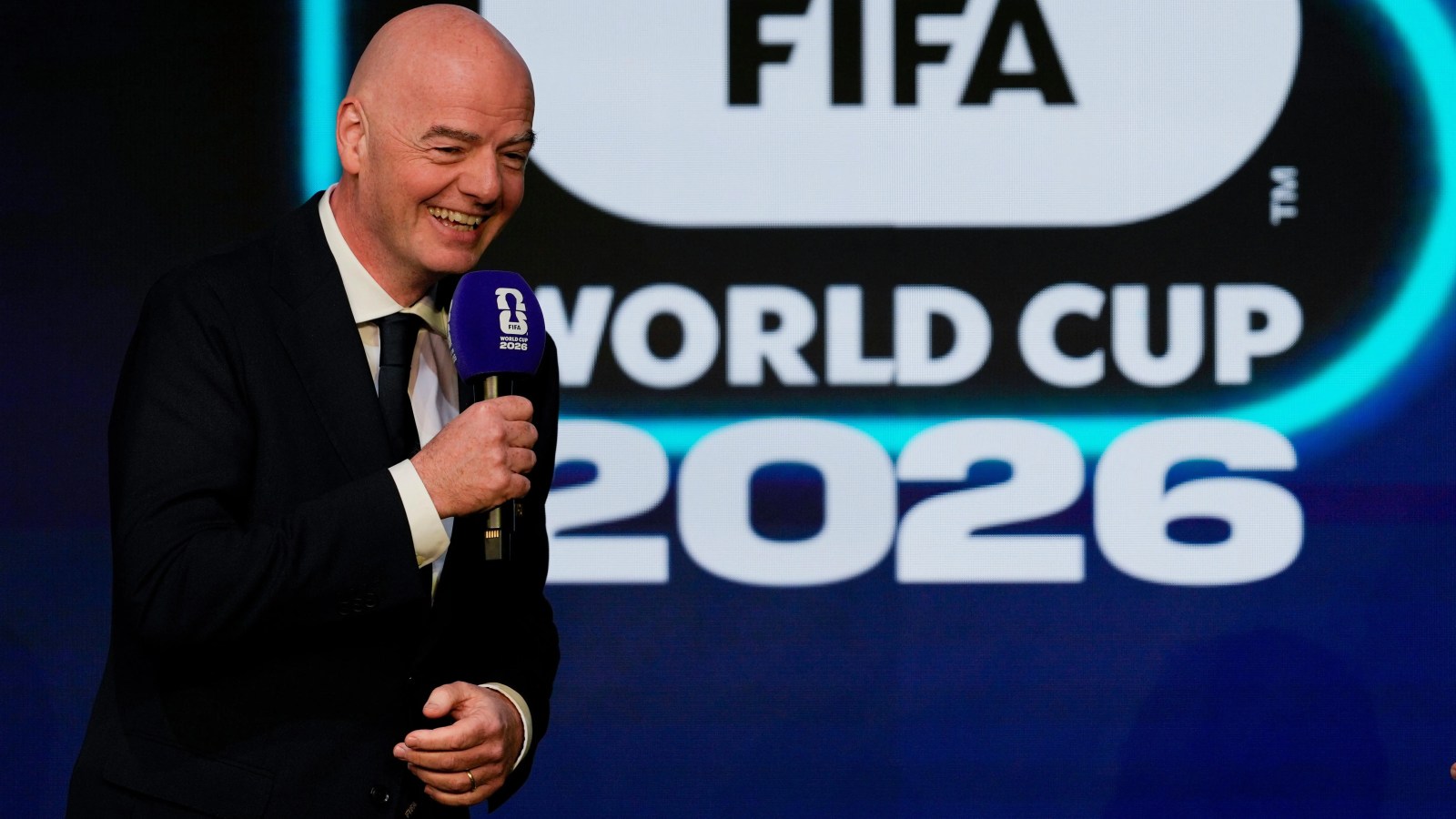
Andy Burnham has intensified the pressure on Gianni Infantino by declaring the FIFA president “the wrong man to lead” the governing body, in a striking intervention as resistance grows to plans for private investment in a company tied to the World Cup. Burnham has also called for Infantino to be replaced, pushing the debate beyond criticism of a single proposal and into a broader challenge to FIFA’s direction under its current leadership. The dispute matters because it goes to the heart of how football’s biggest competition could be controlled and financed in the years ahead. With the World Cup central to FIFA’s power and revenue, any move to sell off part of the value of its competitions has become a defining issue for the organisation and for those concerned about outside influence over the game.
- Andy Burnham has called Gianni Infantino “the wrong man to lead” FIFA and said he should be replaced.
- The criticism is tied to controversial proposals to seek private investment in a company linked to FIFA competitions, including the World Cup.
- Opposition to the plans is mounting as concerns grow over selling off part of FIFA’s competitions to outside investors.
- A key adviser has resigned over the proposals, deepening the sense of internal strain around the issue.
- UEFA has considered boycotting FIFA tournaments if the sell-off plans go ahead, underlining the scale of the split.
Why the criticism matters now
Burnham’s intervention comes at a sensitive moment because the argument is no longer confined to technical questions of finance or corporate structure. At the centre of the dispute is whether FIFA should package and monetise parts of its competitions in a way that gives outside investors a stake in assets built on the sporting and cultural value of the global game. That concern becomes even sharper when the World Cup is involved, given its status as the most important tournament in international football. By directly challenging Infantino’s leadership, Burnham has turned a governance dispute into a broader test of confidence in the president’s stewardship ahead of FIFA World Cup 2026.
The significance of Burnham’s criticism also lies in the language he has used. Calling Infantino “the wrong man to lead” FIFA is not a narrow objection to one strategy; it is a direct judgment on the president’s suitability to remain in charge while such plans are pursued. Burnham’s call for Infantino to be replaced raises the political stakes and gives fresh force to the opposition already building around the proposal. In practical terms, that means the debate is now as much about legitimacy as it is about investment, and about whether FIFA can pursue major structural change without losing the confidence of key figures in the game.
That shift matters because leadership questions tend to reshape the terms of any institutional dispute. Once the issue moves from policy to authority, every subsequent decision is viewed through a wider lens of trust, accountability and control. In this case, Burnham’s comments sharpen the sense that the row is no longer simply about a financial mechanism but about who should be entrusted with decisions affecting football’s most valuable assets. With the World Cup at the centre of FIFA’s commercial model, criticism of this kind inevitably carries weight far beyond the immediate proposal.
Growing resistance around the World Cup plan
The controversy has gathered momentum because the proposal touches FIFA’s most valuable property: its competitions, including the World Cup. Selling off part of those rights or revenues to outside investors would represent a major shift in how the governing body manages its crown jewels. Critics view that as a potentially irreversible step, one that could reshape decision-making around tournaments that are supposed to serve the wider interests of football rather than private financial priorities. Even without further detail on the mechanics of the plan, the reaction already shows how sensitive any attempt to commercialise the World Cup structure has become.
That opposition is no longer abstract. A key adviser has resigned over the proposals, a development that suggests the disagreement has reached FIFA’s own circle and is not simply noise from outside critics. Resignations at moments like this matter because they signal that objections are serious enough to break internal consensus. They also add to the impression of instability around a plan that would require broad trust and clarity to move forward. Instead, the growing backlash has created the sense of a project facing resistance on political, strategic and institutional grounds all at once.
The possibility that UEFA has considered boycotting FIFA tournaments if the sell-off plans go ahead shows just how severe the split could become. A boycott would be an extraordinary escalation, and even the fact that such a measure has been considered illustrates the depth of concern among powerful stakeholders in European football. For FIFA World Cup 2026, that matters because the tournament’s authority depends not only on commercial strength but also on unity across the game’s leading confederations and associations. If relationships deteriorate further, the row could cast a long shadow over preparations for the competition and over confidence in FIFA’s wider governance model.
There is also a larger issue beneath the immediate dispute: who football’s biggest tournaments are ultimately for, and who gets to shape their future. The World Cup is more than a revenue engine; it is the event through which FIFA expresses its global reach and legitimacy. Any perception that its value is being carved up for outside investors risks provoking resistance from those who believe the competition should remain firmly under football’s own control. Burnham’s criticism has therefore resonated because it speaks to anxieties about ownership, accountability and the balance between commercial ambition and stewardship of the sport’s most important assets.
What happens next will depend on whether FIFA presses ahead with the private investment plan or responds to the growing pressure by rethinking it. Burnham’s demand for change at the top ensures the issue will not fade quietly, while the resignation of a key adviser and the prospect of further institutional fallout make the cost of pushing forward much higher. With FIFA World Cup 2026 on the horizon, the governing body faces a choice between forcing through a deeply divisive strategy or trying to restore confidence in the competition’s future. Either way, the debate has already become a major test of Infantino’s leadership and of how far FIFA can go in reshaping the business of the World Cup without fracturing the game around it.


Leave a Reply