

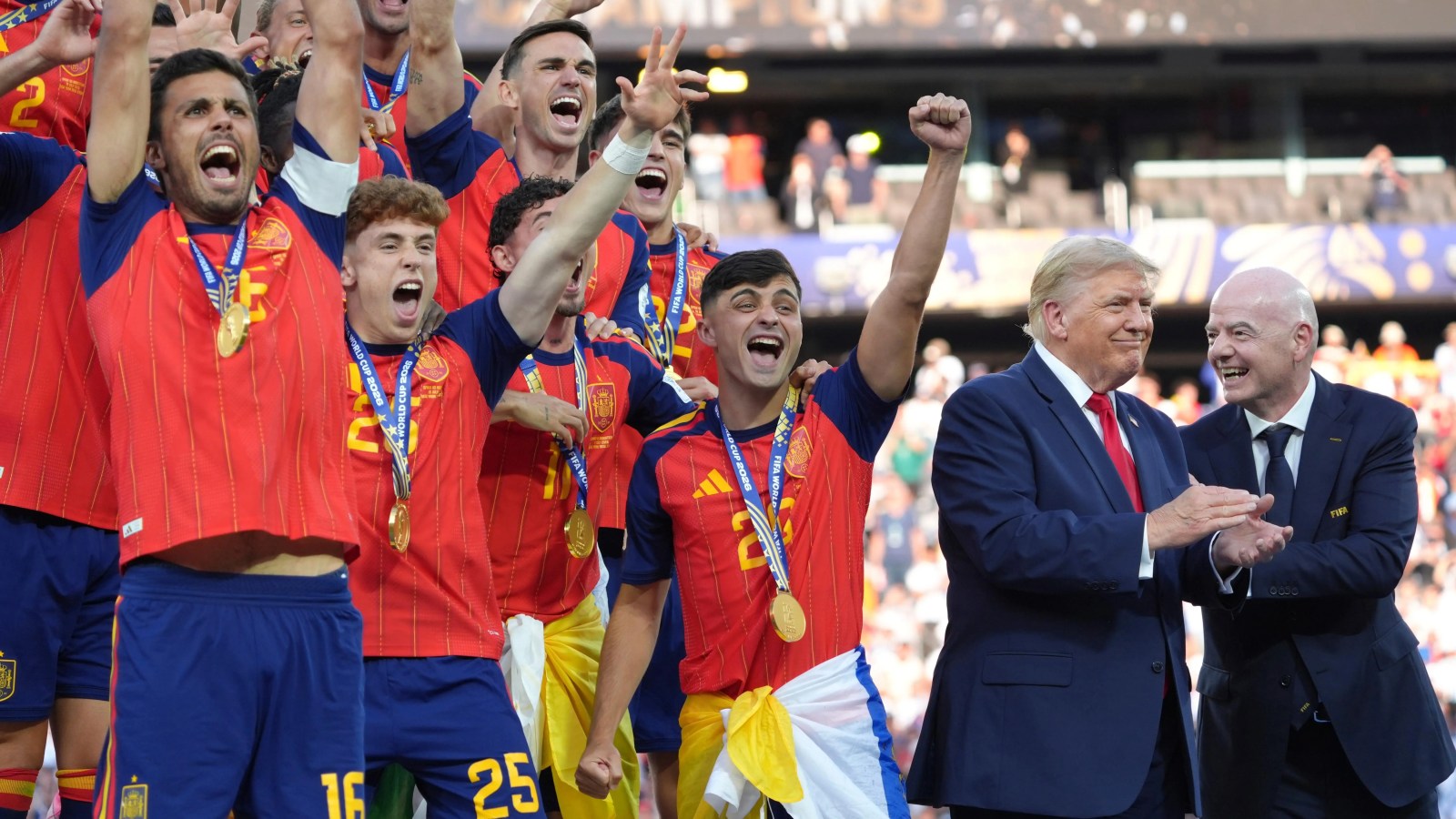
UEFA has escalated its confrontation with Gianni Infantino by threatening legal action over plans to sell stakes in the FIFA World Cup and other FIFA tournaments, in a dispute that has quickly become one of the most significant governance flashpoints ahead of World Cup 2026. The standoff matters because it goes to the commercial future of football’s biggest event and raises fresh questions about how far FIFA can reshape the tournament’s ownership and revenue model without provoking a revolt from its most powerful stakeholders. Infantino is at the centre of the issue, with pressure focused squarely on the investment or sell-off proposal and the process surrounding it. The latest position indicates that, after a fierce backlash and the threat of further escalation, the World Cup stake-sale plans have now been put on hold or scrapped.
- UEFA has threatened legal action against Gianni Infantino over FIFA’s World Cup investment or sell-off plans.
- UEFA warned Infantino not to destroy any material related to the proposal.
- The proposal to sell stakes in the World Cup and other FIFA tournaments triggered a strong backlash.
- The pressure on FIFA included a boycott threat from UEFA.
- Infantino has now put the World Cup stake-sale plans on hold or scrapped them.
Why the dispute matters for World Cup 2026
The significance of this clash extends well beyond a boardroom disagreement. The World Cup is not only FIFA’s flagship competition but also the financial and symbolic centre of the global game. Any attempt to sell stakes in that tournament would inevitably raise issues of control, governance and long-term commercial direction, especially with the 2026 edition looming as a defining event for the sport. UEFA’s response makes clear that the proposal was viewed not as a routine business discussion, but as a move with potentially far-reaching consequences. That is why the legal threat, the warning over preserving material and the boycott pressure all carry such weight in the current landscape.
The warning not to destroy any material related to the plan is especially striking, because it suggests UEFA considered the matter serious enough to require the preservation of records connected to the proposal. Even without fuller details of the correspondence, that step indicates a dispute that had moved beyond private disagreement and into a more formal, potentially adversarial phase. In practical terms, it underlines how sharply relations appear to have deteriorated around the issue. It also reinforces the sense that UEFA wanted to make clear that every part of the process surrounding the plan could come under scrutiny.
That broader context is what makes the timing so important. World Cup 2026 is already shaping the political and commercial agenda of the sport, and any proposal affecting the ownership or revenue structure of the tournament is bound to attract intense examination. The closer the competition moves, the less appetite there is among major stakeholders for uncertainty over who controls football’s most valuable asset. UEFA’s intervention therefore carries significance not only because of the legal implications, but because it reflects a wider resistance to any move seen as altering the balance of influence around the World Cup.
Backlash forces a rethink
The broader backlash is another crucial part of the story. Infantino’s proposal to sell stakes in the World Cup and other FIFA tournaments had already met strong resistance, and that resistance was not confined to quiet internal criticism. The mention of boycott pressure from UEFA points to the scale of the opposition and helps explain why the plan has now been put on hold or scrapped. When a proposal connected to the World Cup reaches the point where boycott threats become part of the pressure campaign, it is clear the issue has become a major political test for FIFA’s leadership.
For FIFA, the immediate consequence is that a plan tied to the future commercial structure of its top competitions has stalled under intense resistance. That in itself is a significant development, because it suggests there are limits to how quickly or aggressively change can be driven when the World Cup is involved. The tournament’s value makes it attractive as an asset, but that same value also makes any perceived dilution of control deeply sensitive. By putting the plans on hold or abandoning them, Infantino appears to have recognised that pressing ahead risked a deeper institutional rupture at a moment when FIFA needs stability around its showpiece event.
For UEFA, the episode is also a demonstration of leverage. The combination of legal threats, demands around preserving material and the prospect of a boycott indicates a willingness to use every available pressure point when it believes the interests of European football are at stake. Even without a full public record of every exchange, the outcome so far suggests that approach has had a tangible effect. The stake-sale plans are no longer advancing as originally proposed, and that alone marks this as a significant intervention in the politics of the World Cup’s future.
There is also a wider message in the way this dispute has unfolded. World Cup 2026 is approaching as a tournament of enormous scale and commercial importance, and that naturally heightens sensitivity around any proposal that could alter who benefits from or influences the competition. The backlash shows that football’s governing politics remain highly combustible whenever commercial innovation collides with concerns over authority and oversight. It also demonstrates that, even at the highest level of the game, major structural ideas can be slowed or stopped when opposition hardens quickly enough.
What happens next is likely to depend on whether this pause becomes a permanent retreat or merely a temporary reset. For now, the clearest immediate outcome is that the World Cup stake-sale plans have been halted after UEFA’s legal threat and broader pressure campaign. That should ease some of the immediate tension around the tournament’s commercial future, but it does not erase the underlying conflict exposed by the episode. As preparations continue toward World Cup 2026, attention will now turn to whether FIFA leaves the idea behind entirely or seeks a different path that avoids another damaging confrontation.

Leave a Reply