

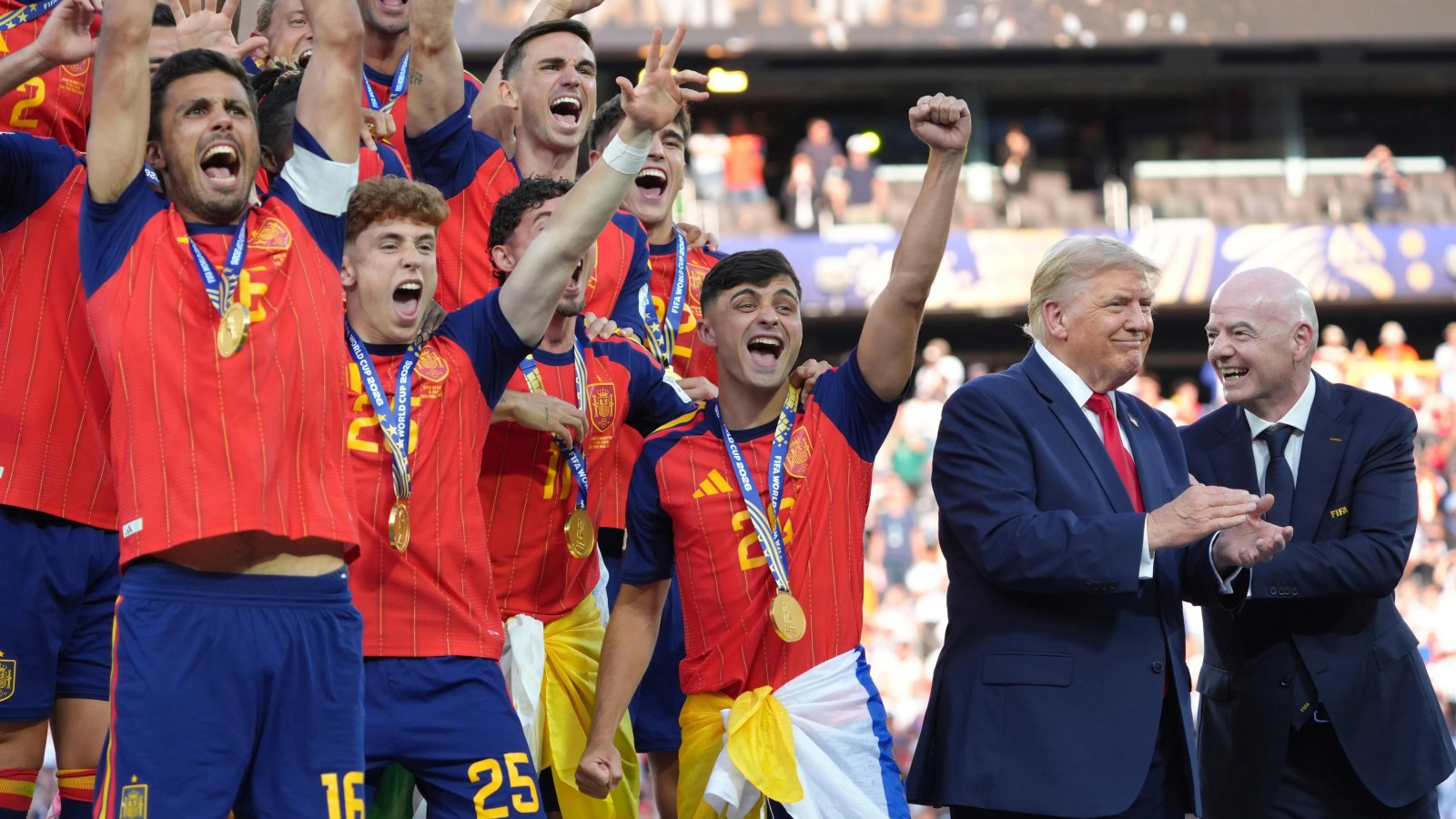
Gianni Infantino has mounted a forceful defence of FIFA and the 2026 World Cup, telling critics to “meditate, pray or watch a football match” instead of “spreading hate and false rumours” about the governing body and its flagship tournament. The FIFA president’s intervention is significant because it places debate around the 2026 World Cup back at the centre of football’s political landscape, with scrutiny of the event increasingly tied to wider questions about his leadership. By using such direct language, Infantino has made clear that FIFA views the criticism not as routine noise surrounding a major tournament, but as a broader challenge to its authority and decision-making. His comments also underline how the build-up to 2026 is becoming as much about perception and governance as it is about football itself.
- Gianni Infantino told critics to “meditate, pray or watch a football match” rather than continue “spreading hate and false rumours” about FIFA and the World Cup.
- His remarks came in a lengthy open letter or Instagram post defending FIFA’s handling of the tournament.
- Infantino accused critics of being driven by hate and urged them to “show some love.”
- The criticism he addressed was linked to the 2026 World Cup and to wider scrutiny of his leadership and FIFA’s decisions around the event.
A combative response as pressure builds
The significance of Infantino’s message lies not only in its tone, but also in its timing. The 2026 World Cup is one of FIFA’s most important modern projects, and any sustained criticism of its organisation inevitably reflects on the president himself. Rather than offering a narrow administrative defence, Infantino chose a highly personal and combative response, framing detractors as figures motivated by hostility rather than concern. That approach suggests FIFA believes the argument has moved beyond technical debate and into a contest over trust, legitimacy and public sentiment.
There is also a strategic element to the language he used. Telling critics to step back, reflect and “watch a football match” positions the game itself as the answer to the noise surrounding it. In effect, Infantino is trying to recast the conversation around football’s unifying power while dismissing attacks on FIFA as distractions from the sport’s central appeal. His call to “show some love” follows the same pattern, seeking to contrast the emotional pull of the World Cup with what he portrays as negativity directed at the organisation. It is a message designed to rally supporters of the tournament while isolating those who continue to question FIFA’s choices.
That matters because the language of leadership often shapes the tone of the wider debate. When a FIFA president responds so directly, the issue ceases to be a background governance dispute and becomes part of the tournament’s public identity. Infantino’s words were not measured bureaucratic phrasing aimed only at officials and administrators; they were crafted to resonate more broadly, to frame the criticism in moral and emotional terms, and to present FIFA as defending football itself. In doing so, he has sharpened the contrast between the organisation’s preferred narrative and the concerns still surrounding the event.
The intervention also reflects how high the stakes have become. FIFA is not merely promoting a World Cup; it is defending the credibility of the structure leading it. The more personal the response, the more closely the tournament becomes associated with Infantino’s own authority. That can be an effective way to project confidence, but it also ensures that criticism of the event and criticism of the president are increasingly difficult to separate. In that sense, the response is both a defence of the competition and a statement about who controls its story.
What it says about FIFA’s 2026 narrative
The broader context is that scrutiny of the 2026 World Cup has become inseparable from scrutiny of FIFA’s leadership. That is a familiar dynamic for any global sporting event, but it carries added weight when the president himself steps forward to answer criticism in such blunt terms. Infantino’s comments indicate that FIFA is unwilling to let the debate unfold without intervention, especially when criticism is seen as affecting both the tournament and the credibility of the institution behind it. By responding publicly and at length, he has signalled that protecting the image of the 2026 World Cup also means protecting the authority of FIFA’s executive leadership.
His use of an open letter or Instagram post is notable in its own right because it allows him to communicate directly and at scale, without the mediation of a formal press conference or a tightly limited statement. That kind of platform suits a message built around emotion, confrontation and personal conviction. It enables Infantino to speak not only to officials and stakeholders, but also to supporters who may be less interested in governance detail and more responsive to a simple argument about backing football over conflict. In that sense, the medium matches the message: direct, accessible and intended to shape the mood around the tournament as much as the substance of the debate.
For FIFA, the challenge now is that strong rhetoric can energise supporters while also sharpening attention on the issues under dispute. A president who answers criticism so directly ensures the story remains alive even as he tries to shut it down. That can be useful if the aim is to project confidence and control, yet it also raises the stakes for every future decision linked to the 2026 World Cup. Once the conversation becomes this personalised, every criticism of the tournament risks being interpreted as criticism of Infantino’s stewardship, and every defence of FIFA becomes part of a wider political struggle over the direction of the game.
From a football perspective, this episode is another reminder that the road to a World Cup is shaped by more than fixtures, venues and team preparation. The tournament carries immense symbolic weight, and the leadership around it is always judged on how it handles pressure as well as logistics. Infantino’s intervention shows FIFA wants to present itself as embattled but resolute, rejecting what it sees as unfair attacks while urging supporters to focus on the sport. Whether that message calms the atmosphere or intensifies scrutiny will become clearer as the 2026 World Cup draws nearer and every major decision around the event is examined through this increasingly charged lens.
What comes next is likely to matter just as much as the statement itself. FIFA will want attention to return to the tournament and its footballing promise, while critics will continue to test the organisation’s decisions and leadership. Infantino has drawn a firm line with his call for detractors to stop spreading “false rumours” and instead “show some love,” but that line now creates a clear standard by which FIFA’s handling of 2026 will be judged. As the countdown continues, the World Cup remains the central prize, yet the argument over how it is being led is plainly becoming one of the defining stories around it.


Leave a Reply