
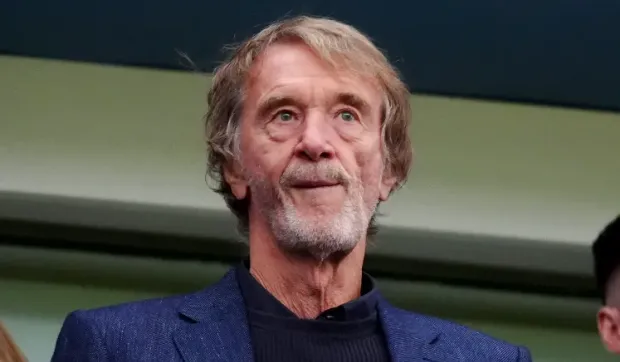
Sir Jim Ratcliffe’s first year as part-owner of Manchester United has not unfolded as many fans expected when his £1.05bn deal for a 25% stake in the club was finalized. Despite a victory in the FA Cup final against Manchester City in May, the anticipated transformative effect has been largely absent at Old Trafford. Ratcliffe’s vision for the club is still unfolding, but several key decisions in the past 12 months have sparked significant backlash and failed to deliver positive results.
Here are five major decisions made by Ratcliffe that have not had the desired effect on the club:
1. The Ten Hag U-Turn
One of the most contentious decisions came regarding Erik ten Hag’s future. Initially, the club hierarchy had explored the possibility of replacing Ten Hag after a disappointing season and were reportedly close to making a change before the FA Cup final. However, a strong performance in that match prompted United to reverse course and extend Ten Hag’s contract. While the decision to back the Dutch manager seemed justified at the time, the delay in finalizing their coaching strategy has created instability, leaving the team struggling this season. With significant investment in the squad during the summer, the team still lacks the cohesion needed to fit Ten Hag’s tactical vision, and any potential remedy could take multiple transfer windows.
2. Controversial Staff Cuts
In an effort to reduce costs, Manchester United made headlines in July with the announcement of 250 redundancies, reportedly saving £40m. However, the move was met with widespread criticism, with morale among staff hitting rock bottom. Financial reports later revealed that the club spent £8.6m on severance packages. In addition to the layoffs, the club made controversial decisions such as canceling the staff Christmas party and providing less-than-ideal catering for workers at Old Trafford. The end of Sir Alex Ferguson’s long-standing ambassadorial position further complicated the situation, leaving many fans and staff disillusioned.
3. The Ashworth Debacle
Another misstep involved the hiring process for a new sporting director. INEOS quickly dismissed Dan Ashworth after he expressed interest in joining United from Newcastle while on gardening leave. This sparked questions about the club’s organizational structure and the lack of a clear, unified direction. United now finds itself with multiple decision-makers, including chief executive Omar Berrada, technical director Jason Wilcox, and interim director of recruitment Christopher Vivell, alongside a separate team from INEOS, including Sir Dave Brailsford and Jean-Claude Blanc. This fragmented approach has created confusion and inefficiency within the club’s management.
4. Women’s Team Oversight
Ratcliffe has faced criticism for his approach to Manchester United’s women’s team. Despite the growing prominence of the Women’s Super League, Ratcliffe has made it clear that the women’s side is not a top priority. In a recent interview, he stated that the women’s team is an “opportunity,” but one that would have to take a backseat to the men’s team. The decision to move the women’s team out of their designated section of the training ground to make space for the men’s team during renovations further alienated supporters. While the women’s team sits fourth in the WSL, trailing Chelsea by seven points, there remains uncertainty over the club’s long-term commitment to their success.
5. Ticket Price Increases and Fan Backlash
One of the most significant points of contention for Manchester United fans has been the recent hike in ticket prices. Members’ ticket prices have risen to £66, with the club also eliminating concession pricing. The 1958 fans’ group, which has led protests against the Glazer family and the INEOS takeover, has voiced their opposition, calling the price increase a “clear exploitation” of the fanbase. Ratcliffe’s justification—citing Fulham’s pricing and asserting that United, as a bigger club, should charge similarly—has been met with widespread criticism. Many fans argue that the economic realities in Manchester differ greatly from those in West London, making such increases hard to justify.
Looking Ahead
Ratcliffe’s first year at Manchester United has featured a series of controversial decisions that have failed to meet fans’ expectations. From uncertainty around managerial stability to staff cutbacks and tensions over the club’s priorities, the road ahead remains rocky. While he is still implementing his vision for the club, Ratcliffe will need to reassess his approach to restore unity and focus at Old Trafford.