

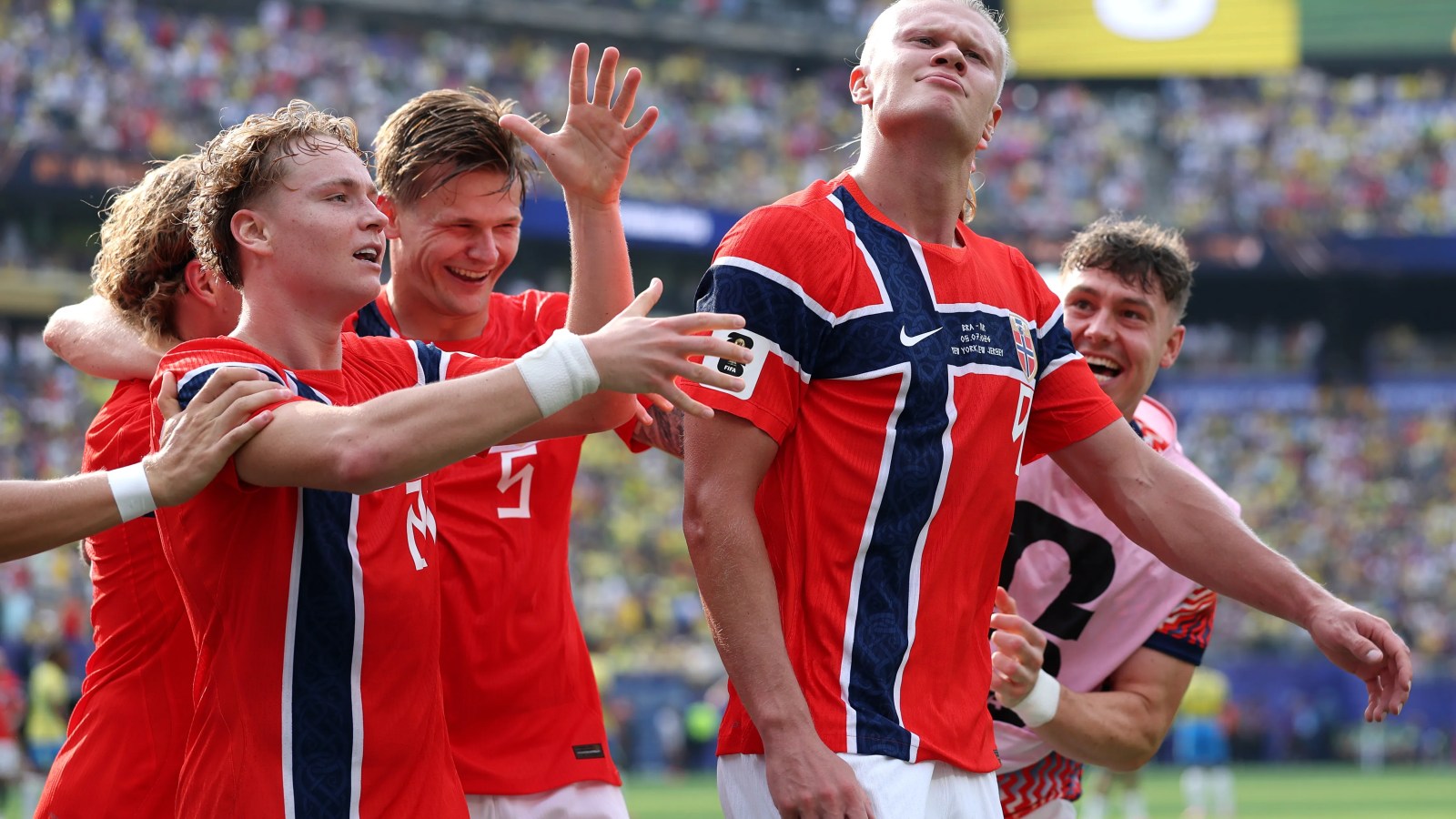
Norway’s FIFA World Cup 2026 campaign has entered its most significant phase yet, with a quarter-final against England now looming after back-to-back knockout victories over Côte d’Ivoire and Brazil. The Scandinavian side has already shown it can navigate high-pressure ties, beating Côte d’Ivoire 2-1 on 30 June 2026 before following that with another 2-1 win over Brazil on 5 July 2026. Those results have elevated Norway from an intriguing contender to a team carrying genuine momentum into the last eight. As the stakes rise sharply, the defining strength may be collective rather than individual: a Norway side proving it can repeatedly find a way through difficult knockout matches.
- Norway have reached the quarter-finals of FIFA World Cup 2026.
- A quarter-final against England is part of Norway’s path in the tournament.
- Norway beat Côte d’Ivoire 2-1 on 30 June 2026 to advance in the knockout stage.
- Norway then defeated Brazil 2-1 on 5 July 2026 to continue their run.
- Successive one-goal wins suggest Norway are handling pressure well as the tournament enters its decisive stage.
Norway’s knockout form is defining their tournament
What stands out most about Norway’s progress is not simply that they remain in the competition, but the way they have negotiated two demanding knockout fixtures. A 2-1 win over Côte d’Ivoire followed by the same scoreline against Brazil points to a side that has found the balance required at this stage of a World Cup. Knockout football often turns on composure, game management and the ability to seize decisive moments rather than dominate every phase. Norway’s route to the quarter-finals suggests they have developed exactly those qualities at the right time.
The victory over Brazil carries particular weight because of the occasion and the stature of that opponent in any World Cup setting. Even without a fuller statistical breakdown, the result alone is enough to underline the scale of Norway’s achievement. Beating Brazil 2-1 in a knockout match indicates a team capable of matching elite-level pressure and surviving the emotional swings that come with a major tournament tie. It also gives Norway a result that can deepen belief internally, because teams often draw confidence not only from winning, but from knowing they have already come through a severe test.
The earlier 2-1 win over Côte d’Ivoire should not be overlooked in that context. Tournament runs are often built on avoiding a slip before the glamour ties arrive, and Norway did exactly that. Advancing from one knockout round to the next requires concentration as much as flair, and edging a close contest showed they could protect a narrow advantage or respond effectively in a game that remained alive deep into the contest. That experience could be invaluable before facing England, because quarter-finals are rarely straightforward and often hinge on which side stays calmer when the margins tighten.
Just as importantly, successive one-goal victories suggest a side that is becoming increasingly comfortable with the demands of knockout football. There is little margin for error in these matches, and Norway have shown they can manage that reality without losing their nerve. They have not needed ideal conditions or a one-sided contest to progress. Instead, they have handled the kind of tense, finely balanced games that often define how far a team can go in a major tournament.
What the England tie means for Norway
A quarter-final against England now offers Norway the chance to redefine the ceiling of this campaign. Reaching the last eight is already a significant marker, but the next result will determine whether this run becomes a respected showing or a truly landmark World Cup story. England bring a different level of scrutiny and tactical challenge simply because of the stage and the profile of the fixture. For Norway, that means the game will test not only their defensive resilience and attacking efficiency, but also their ability to absorb the emotional intensity that surrounds a place in the semi-finals.
There is also a broader pattern in Norway’s recent results that could matter greatly in that matchup: they have shown they can win close games. Successive 2-1 victories imply a side that is comfortable operating in matches that remain competitive throughout, rather than needing a large cushion to feel secure. In quarter-finals, that trait can be decisive, because teams are often separated by very little and the side that best handles transitions between control and survival tends to prevail. Norway’s recent work suggests they are not being overawed by those moments, and that may be one of their greatest strengths going into the England game.
From England’s perspective, Norway’s route to this stage ensures there can be no underestimation. Any team that has just beaten Brazil in the knockout rounds arrives with credibility, and any team that has followed one 2-1 elimination win with another has demonstrated consistency under pressure. Norway therefore enter the quarter-final with more than hope; they carry evidence that they can execute in exactly the type of environment this match will produce. That does not guarantee anything in a World Cup quarter-final, but it does mean England are facing opponents whose belief is grounded in recent results rather than sentiment.
Another important element is the psychological shift that can happen once a team reaches this point of the tournament. Early in a World Cup, an emerging side may be judged on whether it can compete. By the quarter-finals, that framing changes, and the question becomes whether it can finish the job against another heavyweight obstacle. Norway have earned that change in perception through their wins over Côte d’Ivoire and Brazil, and that shift can be powerful inside a squad because it alters expectations from simple participation to genuine ambition. The challenge now is to convert that momentum into another disciplined, high-level performance when the margin for error is even smaller.
There is, too, a sense that Norway have already changed the conversation around their campaign. Two knockout wins, both by the same narrow margin, suggest a team with a clear understanding of what these matches demand. Whether that is expressed through composure, discipline or belief, the effect is the same: Norway have made themselves a serious quarter-final opponent. The next step is to show that the resilience displayed against Côte d’Ivoire and Brazil can hold up once more against England.
What comes next is the biggest match of Norway’s tournament so far: a quarter-final against England with a semi-final place at stake. Norway arrive there on the back of two consecutive 2-1 knockout wins, carrying momentum, confidence and proof that they can survive tense, finely balanced contests. England represent another major step up in consequence, if not necessarily in pressure, because Norway have already shown they can handle that burden. The next chapter will reveal whether this run ends as a strong quarter-final appearance or continues into the final four of FIFA World Cup 2026.



Leave a Reply