

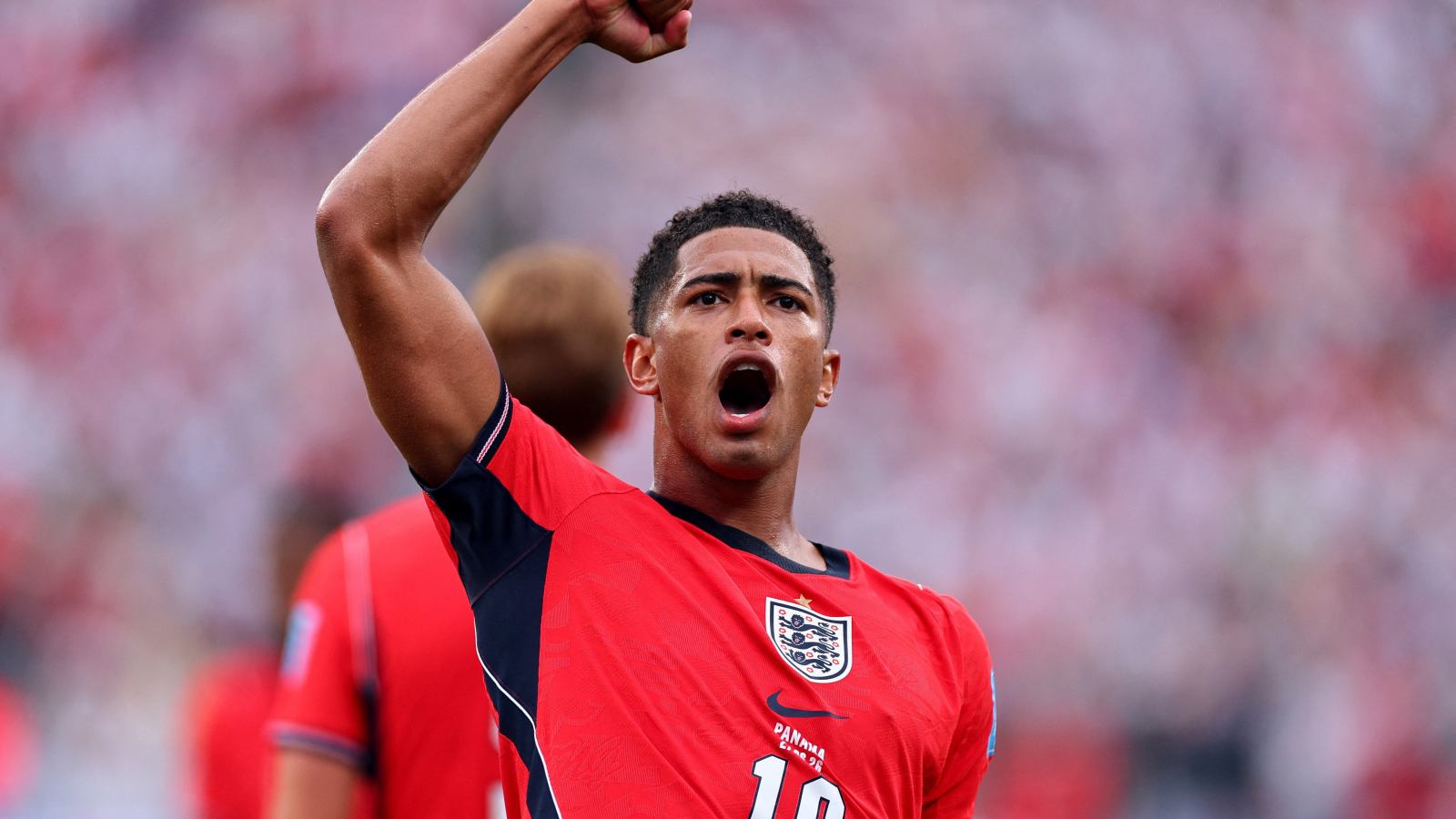
The 2026 FIFA World Cup is already shaping up to be one of the most significant tournaments in the competition’s history, not because of any verified theory about a so-called perfect age to win it, but because of the event’s sheer scale and structure. The finals will be staged across the United States, Mexico and Canada, creating a truly continental backdrop for a tournament that is expanding in every sense. With a record 48 nations involved, the competition will bring more teams, more matches and more opportunities for established powers and ambitious challengers alike. For England, much of the early discussion naturally centres on Jude Bellingham and Harry Kane, two figures repeatedly highlighted in assessments of the country’s chances of making a deep run.
- The 2026 men’s World Cup will be hosted by the United States, Mexico and Canada.
- The tournament will feature a record 48 nations, the largest field in World Cup history.
- The 2026 edition is set to be the longest World Cup ever, with 9,360 minutes of action.
- England is being discussed as a potential contender, with Jude Bellingham and Harry Kane central to that outlook.
- No verified evidence supports the claim that there is a specific “perfect age” profile for winning the 2026 World Cup.
A tournament built on scale and change
The clearest early storyline around World Cup 2026 is the transformation of the tournament format. Expanding to 48 nations changes the competitive landscape dramatically, widening access to the finals and increasing the range of styles, tactical approaches and football cultures on display. That matters not only for nations making history by reaching the tournament, but also for traditional heavyweights, who will have to navigate a different rhythm and structure from previous editions. A larger field can reshape preparation, squad management and the way teams build momentum across the competition.
The hosting model adds another dimension to that sense of change. With the United States, Mexico and Canada sharing staging duties, the World Cup will unfold across a geographic footprint unlike anything previously seen in the men’s game. That promises an event of enormous logistical complexity, but also one with a distinctive identity. The tournament will feel spread across a continent, and that scale could influence everything from travel demands to recovery planning, making adaptability a major competitive asset for the teams best equipped to handle it.
The figure of 9,360 minutes of action underlines just how extensive this World Cup will be. That number does more than describe duration; it points to a competition that will test depth, resilience and tournament management over a prolonged period. Coaches and players will need to think not only about individual matches, but also about sustaining physical and mental sharpness through an event longer than any previous World Cup. In practical terms, that could place even greater value on squad balance and the ability to rotate without losing tactical clarity.
All of that reinforces the idea that 2026 will not simply be a bigger version of what came before. The expansion affects the tournament’s texture as much as its size. More teams and more minutes mean more variables, more pressure points and more opportunities for momentum to shift. The nations that adapt quickest to those demands may gain an edge, especially in a competition where managing the full journey could prove just as important as excelling in any single match.
What it means for contenders such as England
For England, the early framing of the 2026 race has already brought familiar themes into view. The national team is being discussed as a possible champion, and that expectation is closely tied to the influence of Jude Bellingham and Harry Kane. Bellingham offers the kind of all-action presence capable of driving a side through different phases of a major tournament, while Kane remains a focal point whose experience and attacking authority can shape high-pressure matches. Even without detailed projections or verified claims about an ideal squad age, those two names alone help explain why England is part of the conversation.
The absence of verified evidence for a “perfect age” to win the World Cup is important in its own right. Tournament success has always depended on far more than a simple age formula, and the available information here does not support reducing 2026 to that kind of neat theory. In a competition this large and this long, balance is likely to matter more than any single demographic trend. Teams will need experience to manage pressure, energy to cope with the demands of the schedule and enough quality across the squad to respond when matches develop in unexpected ways.
That is one reason the focus on England’s leading figures carries such weight. Bellingham and Kane represent different but complementary forms of influence, and in a tournament of expanded scale, teams with genuine match-winners in key areas often begin with an advantage. A player who can control tempo, break lines or seize decisive moments becomes even more valuable when the route to the trophy is longer and potentially more complicated. England’s hopes, then, are not rooted in an unverified age model, but in the more tangible reality that elite talent and leadership tend to travel well in major tournaments.
Beyond England, the broader significance of the 48-team format is that it opens the door to a more layered and less predictable competition. More nations mean more storylines, more contrasting football identities and a greater chance that the established order will be challenged. At the same time, the traditional contenders may still benefit from the quality that often decides World Cups: the ability to absorb pressure over time and remain composed as the stakes rise. The expanded structure does not erase hierarchy overnight, but it does create more room for disruption, and that should make every stage of the tournament feel more consequential.
There is also a symbolic dimension to this World Cup that should not be overlooked. A tournament spread across three host nations and expanded to 48 teams reflects football’s drive to present itself as more inclusive and more globally representative. That does not guarantee a different champion, but it does guarantee a different environment in which the next champion will be crowned. The team that lifts the trophy in 2026 will have come through the biggest and longest World Cup the men’s game has ever staged, and that alone will give the achievement a distinctive place in football history.
As the road to 2026 continues to take shape, the clearest verified picture is one of expansion, endurance and opportunity. The World Cup will arrive in the United States, Mexico and Canada with a record number of nations and an unprecedented volume of football, setting the stage for a competition unlike any before it. England’s prospects will continue to be measured through the influence of Jude Bellingham and Harry Kane, but the wider lesson is that this tournament is too complex to be reduced to a single theory about age. What comes next is the gradual sharpening of the field, as contenders prepare for a World Cup that promises to be broader, longer and more demanding than any the sport has known.



Leave a Reply