

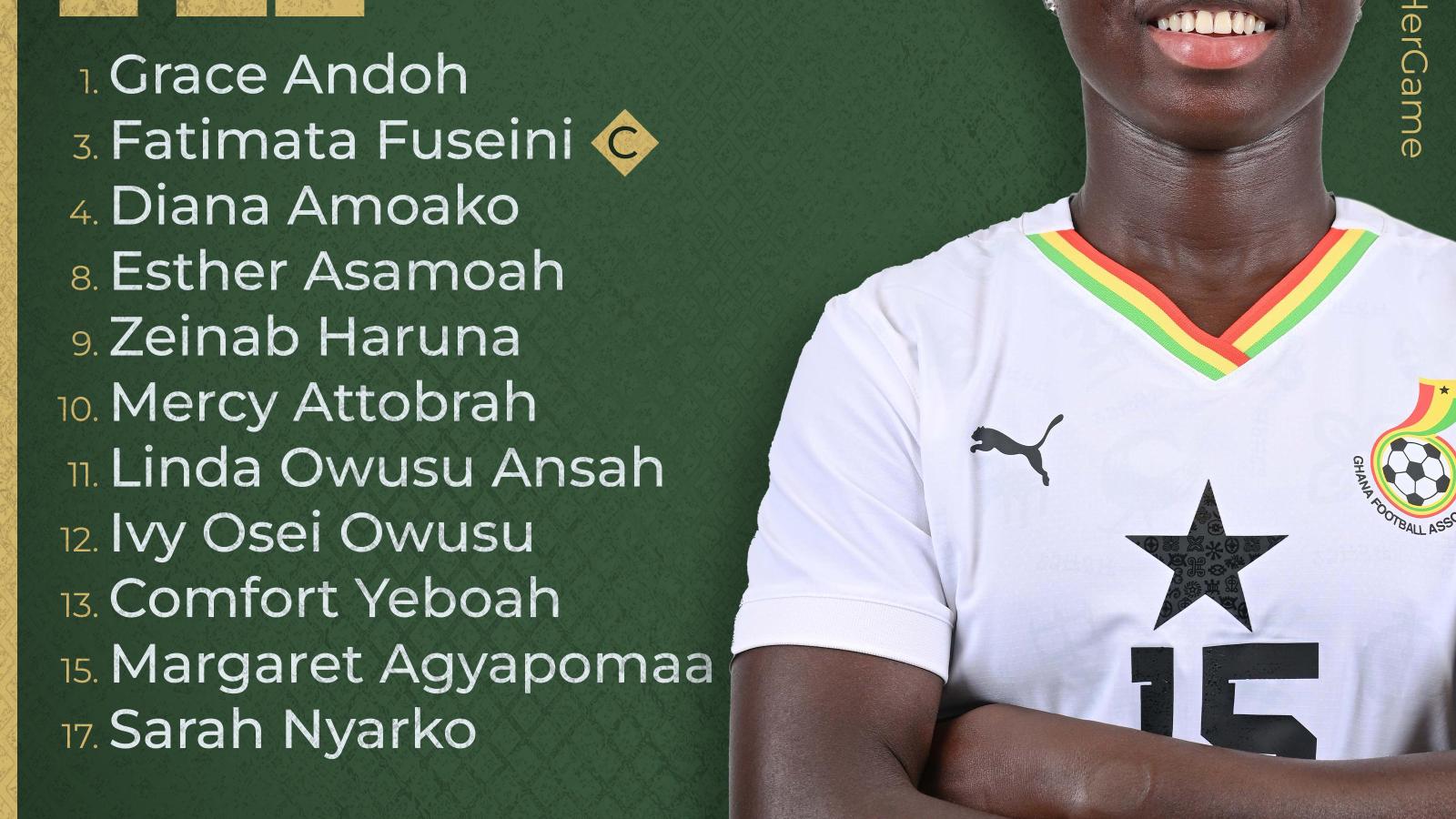
Ghana kept their Women’s World Cup qualifying hopes alive with a 1-0 victory over Ivory Coast, a result defined by Sampson’s decisive goal and the wider significance of staying firmly in the race for progression. In a campaign where margins are thin and pressure escalates quickly, a one-goal win can carry enormous weight, particularly against a direct regional rival. The central takeaway from this contest was straightforward: Ghana found the breakthrough they needed, protected their advantage, and secured a result that preserved valuable momentum. With progression still within reach, this performance represented an important step rather than a final destination, but it gives Ghana a platform on which to build in the next phase of the campaign.
- Ghana defeated Ivory Coast 1-0 in a women’s World Cup qualifying match.
- Sampson scored the goal that decided the contest.
- The available verified details do not support any claim that Ghana came from behind to win.
- The result kept Ghana in contention for progression.
- The victory highlighted the value of efficiency and defensive control in a tightly balanced qualifier.
A result built on narrow margins
Qualifying football is often decided by moments rather than long stretches of dominance, and this match followed that familiar pattern. Ghana did not need a high-scoring display to make their point; instead, they secured the one thing that mattered most in a high-stakes qualifying environment: the winning goal. Sampson’s contribution therefore carries added significance, because in matches of this nature the decisive scorer naturally becomes the focal point of both the immediate story and the broader campaign picture. The difference between a draw and a win in this setting is not merely numerical; it can shape confidence, influence tactical planning, and alter the pressure attached to the fixtures that follow.
The narrow scoreline also reveals much about the character of the contest. A 1-0 result typically reflects a game in which structure, concentration, and discipline are just as important as attacking quality, especially when neither side is able to build a comfortable cushion. For Ghana, protecting a one-goal lead would have required composure and collective responsibility, because a single lapse can wipe out the value of a hard-earned breakthrough. In that sense, the victory was not only about Sampson finding the net, but also about managing the match effectively enough to ensure that one goal remained enough.
That is often the reality of qualification football. Teams are not always afforded the luxury of flowing performances or multiple clear chances. Instead, they must recognise key moments, take them when they arrive, and then show the discipline to preserve the advantage. Ghana did exactly that here. The outcome underlined a capacity to operate within the demands of a tense, low-margin fixture, where patience and concentration can be every bit as decisive as creativity in the final third.
There is also a practical significance to winning this kind of match. A narrow victory can reinforce belief in a team’s ability to navigate pressure, particularly when the stakes are obvious and the room for error is limited. Ghana’s success was built not on spectacle, but on efficiency. In qualifying campaigns, that can be a highly valuable trait. Teams that advance are often those capable of turning close contests in their favour, even when the margin for success is slim and the game offers little comfort.
Why the win matters for Ghana and Ivory Coast
The clearest implication of this result is that Ghana remained in contention for progression, and that alone gives the match substantial importance within the wider campaign. In qualifying, staying alive is often the first priority, because it keeps future fixtures meaningful and preserves the chance to build momentum at the right time. Ghana now have the benefit of a result that strengthens belief while also validating the tactical discipline and game management required to edge such a close encounter. Even when the margin is narrow, a win can help shape a team’s identity as resilient, efficient, and capable of handling pressure when qualification stakes are high.
For Ivory Coast, the defeat is difficult not only because of the scoreline, but because of how little separated the two sides. Losing by a single goal in a qualifier can be especially frustrating, as it suggests the contest was within reach while still yielding no reward. Matches like this often leave a team reflecting on fine margins, whether in attack, defensive concentration, or the inability to change the game state before time ran out. The challenge after such a result is to respond constructively, without allowing a narrow defeat to become a broader setback in confidence or campaign direction.
One important point in assessing the match is the need for precision about what is actually verified. The available details confirm Ghana’s victory, confirm the 1-0 scoreline, and confirm Sampson as the scorer, but they do not support any suggestion that Ghana recovered from a deficit. That distinction matters because comeback narratives can significantly alter how a match is interpreted, placing emphasis on recovery and dramatic momentum swings that are not established here. The verified picture is simpler, but still meaningful: Ghana won a close qualifier and kept themselves in the running, which is significant enough without adding unconfirmed detail.
From a competitive perspective, this kind of result can also shape the psychology of the road ahead. Ghana can draw confidence from showing they can navigate a tense, low-margin fixture, the type of test that frequently appears in qualification pathways. Teams that progress are often those that learn to win without ideal conditions or expansive scorelines, and a 1-0 success can be evidence of exactly that quality. At the same time, the narrowness of the victory is a reminder that there is no room for complacency, because remaining in contention is not the same as securing advancement.
The broader lesson from this match is that campaigns are often shaped by accumulation rather than spectacle. A single goal, a clean sheet, and a result that keeps a team alive can prove more valuable than a more dramatic display that fails to deliver points or advancement leverage. Ghana’s task now is to turn this encouraging step into sustained progress, using the win as both reassurance and warning: reassurance that the team can get the job done, and warning that future qualifiers may demand the same level of precision under pressure. Ivory Coast, meanwhile, must absorb a setback narrow enough to show competitiveness, yet costly enough to affect the immediate outlook.
Looking ahead, Ghana move forward with a result that preserves opportunity and gives real significance to the next stage of their qualifying journey. Sampson’s goal provided the immediate difference, but the lasting value of the win will be measured by whether Ghana can turn continued contention into actual progression. For Ivory Coast, the response now becomes the central issue after a defeat decided by the smallest of margins. What is certain is that Ghana did exactly what they needed to do in this match: win, stay alive, and carry their Women’s World Cup qualifying ambitions forward.



Leave a Reply