

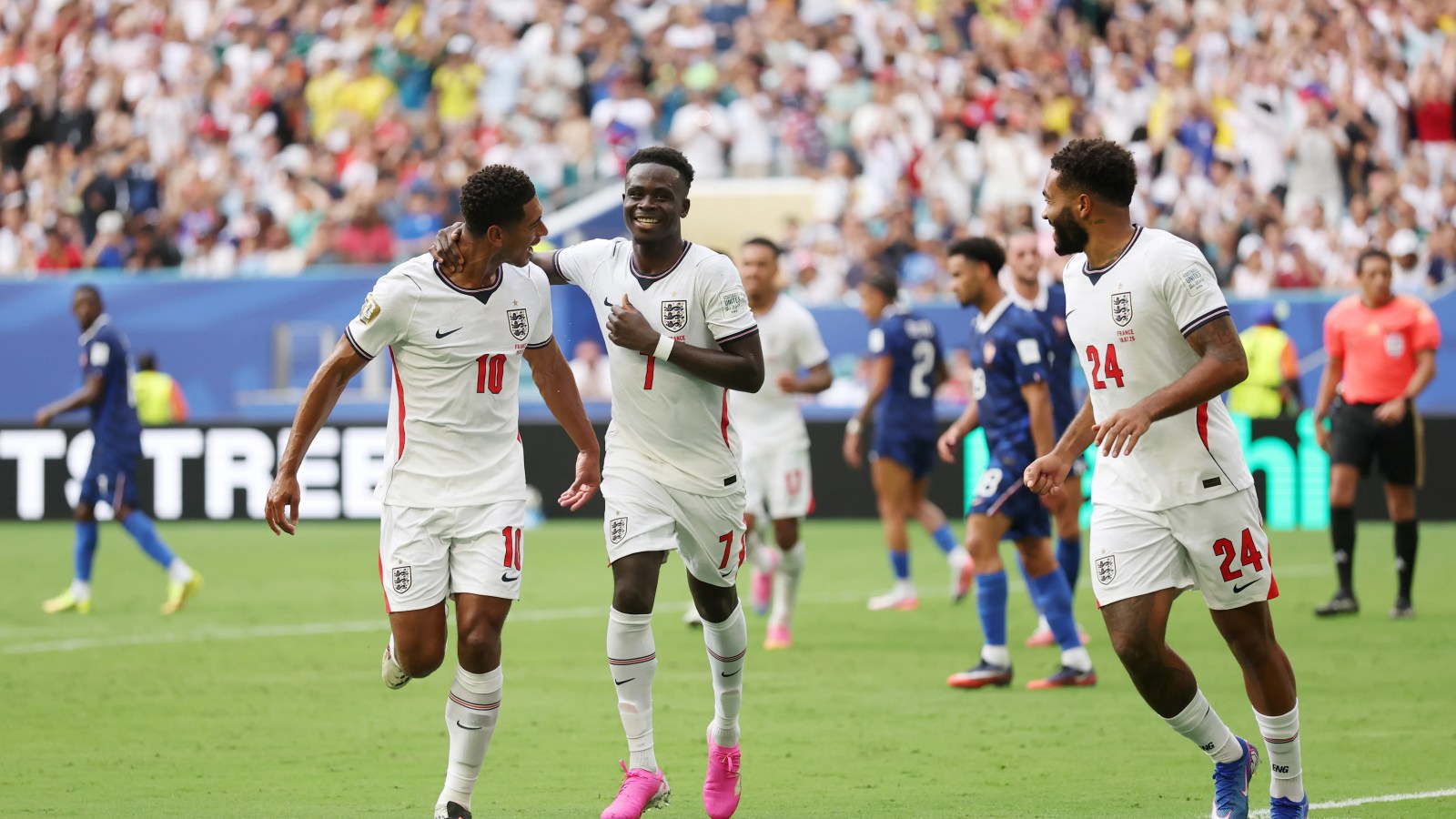
England’s immediate World Cup picture is now clear, even if transfer-market noise around the squad is not. Thomas Tuchel has named a 26-man England squad for the 2026 World Cup, giving the national team a defined group for the tournament and sharpening attention on the defensive unit expected to underpin the campaign. Reece James, Ezri Konsa and Marc Guehi are all included among the defenders in a projected starting XI listed in the verified material, making that back line the standout area of focus as England’s tournament plans take shape. At this stage, what matters most is not speculation over club futures, but the fact that England now has an official squad and fixtures framework in place for the competition.
- Thomas Tuchel has named a 26-man England squad for the 2026 World Cup.
- Verified material includes Reece James, Ezri Konsa and Marc Guehi among the defenders in a projected England starting XI.
- England has official squad and fixtures sections on FIFA’s team pages for the 2026 tournament.
- The claim that half of England’s World Cup defenders are on the move in the transfer market is not verified by the provided material.
- No transfer details, club moves or evidence of multiple England defenders changing teams are confirmed in the verified research.
What is confirmed about England’s defensive picture
The clearest verified development is the presence of a settled tournament structure around England rather than any off-field upheaval. A 26-man squad gives Tuchel the full framework from which to build combinations, manage workloads and prepare for the specific demands of World Cup football. Within that context, the inclusion of James, Konsa and Guehi in a projected starting XI offers a meaningful snapshot of how England’s defensive spine could look. Even without further confirmed detail on shape or selection hierarchy, those names point toward a back line built on balance, athleticism and familiarity with high-level international responsibility.
That matters because defensive clarity is often one of the biggest dividing lines between teams that simply arrive at a World Cup and teams capable of controlling matches deep into the tournament. James draws particular attention because of his profile as a defender who can influence both the team’s structure and its progression from deeper areas, while Konsa and Guehi provide recognised central options in the verified material. The available research does not confirm exactly how Tuchel intends to deploy them in every phase, but it does establish them as key defensive figures in England’s projected setup. In tournament football, simply identifying the likely pillars of the back line is significant, especially when preparation time is limited and cohesion can matter as much as individual quality.
Why the transfer angle cannot lead the story
The more dramatic claim attached to England’s defenders is that half of them are on the move in the transfer market, but that angle is not supported by the verified material. There are no confirmed transfer details, no club changes and no evidence in the provided research that multiple England defenders are changing teams. That distinction matters because transfer speculation can easily distort the reading of a national-team story, particularly before a major tournament. In this case, the responsible conclusion is straightforward: England’s squad is confirmed, but the suggested transfer trend among its defenders is not.
That leaves the football discussion on firmer ground. Rather than treating unverified market talk as a defining factor, the focus returns to how Tuchel can shape a defensive unit from the names that are actually confirmed in the research. A World Cup squad announcement is always about more than a list; it is about hierarchy, trust and the manager’s preferred balance between security and flexibility. With James, Konsa and Guehi identified in the projected XI material, the conversation naturally shifts toward whether England can build a reliable platform at the back and use that as the basis for a broader run through the tournament.
There is also wider significance in FIFA’s England team pages confirming official squad and fixtures sections for the 2026 tournament. That administrative certainty is not a minor detail; it signals that England’s World Cup campaign is now framed by an official competition pathway rather than abstract anticipation. Fixtures define rhythm, recovery and tactical planning, while the official squad listing fixes the pool from which Tuchel can make his decisions. Even without additional verified information on opponents or results, the existence of that structure is central to understanding where England stands: the campaign is no longer theoretical, and attention can now move to execution.
For England, that execution will depend heavily on how quickly the defensive group establishes authority. International tournaments often compress preparation time and magnify every lapse, so defenders who can settle the team early become especially valuable. The verified material does not provide scores, previous results or deeper statistical indicators, which means any broader claims about form would go beyond the evidence. It is still fair to say, however, that a projected XI featuring James, Konsa and Guehi places the spotlight on defensive organisation as one of the clearest themes of England’s World Cup build-up.
For Tuchel, the challenge is not simply choosing defenders but creating a collective identity from the squad he has named. A 26-man group offers room for tactical alternatives, injury cover and situational changes across the tournament, yet it also increases the need for clearly defined roles. Defenders are central to that clarity because they set distances, shape the first line of buildup and determine how aggressive or conservative the team can be without the ball. The available research stops short of confirming exactly how England will play, but it does show enough to identify the defensive unit as one of the most important reference points in the squad.
What comes next will determine whether England’s confirmed squad can become a convincing World Cup team. The official fixtures pathway means every selection call will soon be tested in the competitive environment that matters most, and the defenders highlighted in the projected XI will be judged on their ability to provide stability under pressure. For now, the key takeaway is simple: England has a confirmed 26-man squad, Tuchel has identifiable defensive options in Reece James, Ezri Konsa and Marc Guehi, and the transfer-market claim surrounding the back line remains unverified. Until firmer evidence emerges on any club movement, England’s World Cup story is about preparation, structure and the search for defensive certainty on the biggest stage.



Leave a Reply