

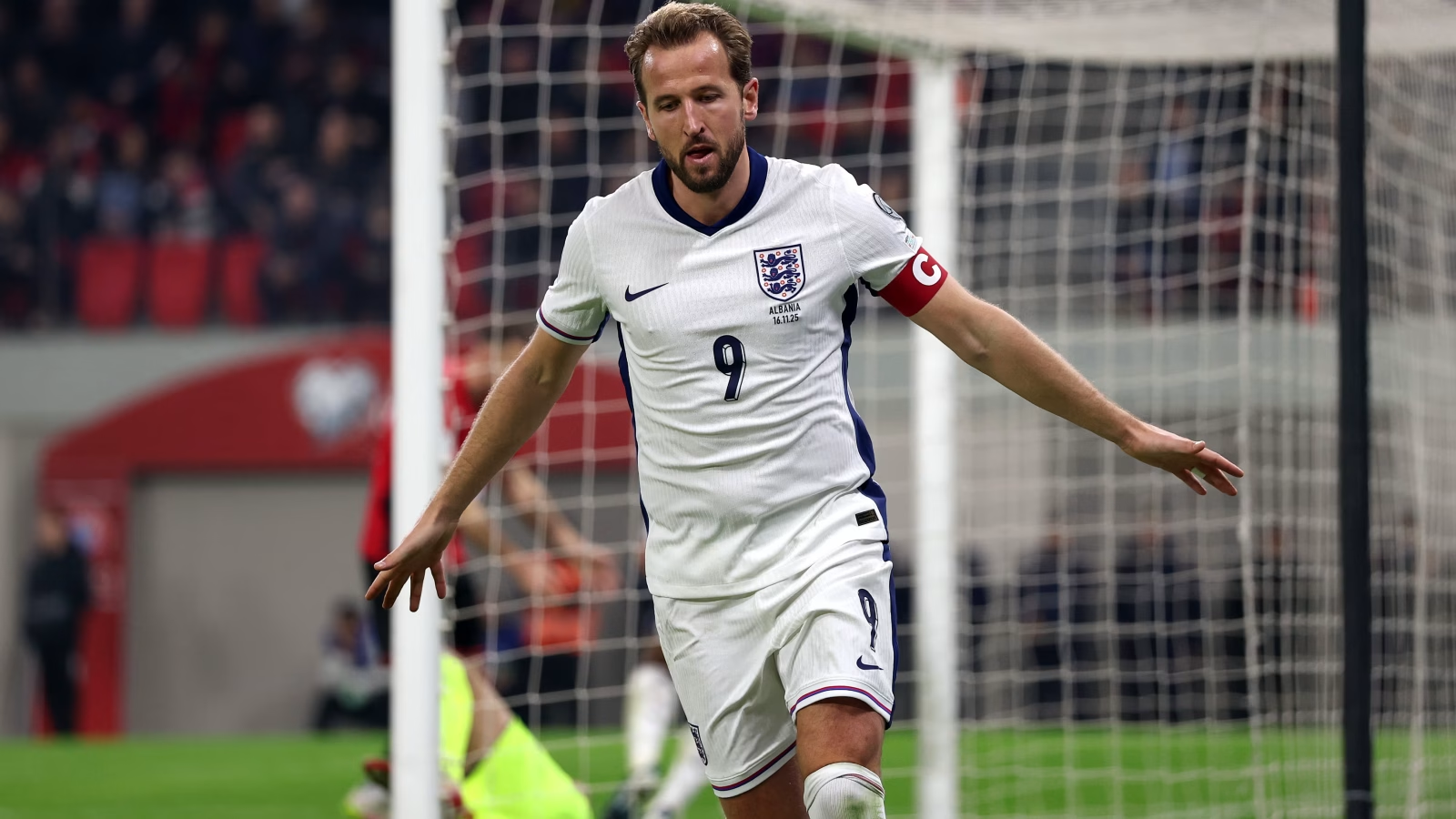
England are through to the World Cup quarter-finals after a 3-2 round-of-16 win over Mexico, a result that keeps their campaign alive and strengthens belief that this squad can make a deep run. In a knockout tie shaped by pressure and fine margins, Harry Kane and Jude Bellingham both scored, underlining their importance at the most decisive stage of the competition. The victory matters not only because it extends England’s tournament, but because it shows they can come through a high-stakes contest when the margin for error is almost nonexistent. With the field narrowing and the final now clearly in view, England have given themselves a genuine chance to build momentum.
- England beat Mexico 3-2 in the round of 16 to reach the World Cup quarter-finals.
- Harry Kane scored for England in the knockout victory.
- Jude Bellingham was also on the scoresheet as England advanced.
- England had already shown attacking threat earlier in the tournament with a 4-2 opening win over Croatia.
- The 2026 World Cup final is scheduled for 19 July at New York-New Jersey Stadium.
Knockout edge carries England forward
The most important fact for England is straightforward: they are still standing. A round-of-16 tie often becomes as much a test of nerve as of quality, and a 3-2 scoreline points to a match that demanded attacking conviction and enough resilience to survive difficult moments. England did exactly that, finding the goals required to move on even as Mexico pushed the contest deep into tense territory. In tournament football, especially once the knockout rounds begin, the ability to win without complete control can be every bit as valuable as a polished performance.
Kane and Bellingham scoring in the same match is especially significant because it highlights where England’s authority is coming from. Kane’s presence in front of goal remains central to England’s attacking identity, giving the side a focal point and a proven route to decisive moments. Bellingham’s contribution adds another layer, because goals from midfield or advanced central areas make England harder to contain and less predictable. When a team can rely on established leadership and emerging force within the same attack, opponents find it far more difficult to isolate one threat and feel they have solved the problem.
The wider tournament context adds further weight to the result. England opened with a 4-2 victory over Croatia, and while group-stage and knockout matches pose different questions, the common thread is clear attacking output. Scoring four in the opener and then three in a win-or-go-home match suggests a side creating enough danger to carry itself through varying game states. That does not mean every performance has been perfect, and conceding twice against Mexico shows there are areas England will want to tighten, but teams with reliable scoring power remain dangerous in any World Cup.
Just as important is the manner in which England handled the pressure of the occasion. Knockout football rarely allows long periods of comfort, and matches can swing quickly on one mistake, one finish or one lapse in concentration. England still found a way through. That capacity to stay productive in a game that remained alive until the end is one of the clearest signs of a side with serious ambitions. The quarter-finals demand quality, but they also demand emotional control, and England have at least shown they can navigate a match in which the stakes are impossible to ignore.
What the result says about England and the road ahead
There is clear psychological value in progressing through a close knockout game rather than cruising through one. A narrow win can leave a team with a stronger sense of its own durability, because it has already been forced to manage swings in momentum and the emotional strain that comes with them. England now know they can absorb the intensity of a last-16 contest and still emerge on the right side of the result. That experience can become a resource in the quarter-finals, where matches are often shaped by composure, patience and the ability to respond quickly when the game turns.
For Mexico, the defeat ends the campaign at the stage where the stakes rise most sharply, and the 3-2 margin suggests they remained competitive throughout. England were not handed passage; they had to earn it against an opponent capable of keeping the pressure on. That matters because quarter-final places are often secured not by dominance alone, but by surviving opponents who refuse to fade. England’s reward is progress, yet the challenge from Mexico should also serve as a reminder that every remaining side in the tournament will punish lapses and force difficult stretches.
From England’s perspective, the blend of proven names and growing tournament momentum is now the central theme. Kane’s goal reinforces the value of experience in knockout football, where one finish can alter the direction of an entire campaign. Bellingham’s strike speaks to energy, timing and the ability of England’s attack to receive decisive contributions from more than one source. The available evidence already paints a picture of two players exerting major influence on England’s progress, and that balance in the final third could become increasingly important as the opposition grows stronger.
The schedule adds another layer to the significance of reaching this stage. The 2026 World Cup final is set for 19 July at New York-New Jersey Stadium, and the bronze-match date is also in place, giving every quarter-finalist a sharply defined target on the horizon. At this point in the competition, the abstract dream of lifting the trophy becomes more concrete with each round survived. England are now close enough to the final stages that every performance will be judged through the lens of whether this team can turn promise into a place in the tournament’s closing weekend.
That is why the result against Mexico resonates beyond the scoreline itself. It was not merely a victory; it was a demonstration that England can keep advancing while carrying both expectation and pressure. Their tournament has already included an open, high-scoring start against Croatia and now a tense knockout success, evidence of a side that has had to win in different circumstances. If England can combine their attacking punch with greater control in the next round, they will believe they have the tools to keep this run going.
What comes next is the hardest part of any World Cup journey, because the quarter-finals strip away any sense of easing into the competition. England move forward with confidence built on a 3-2 win over Mexico, with Kane and Bellingham once again central to the story. The immediate task will be to preserve their attacking edge while reducing the vulnerability that can turn knockout matches into chaos. With the final on 19 July now one step closer, England have earned the right to keep chasing a place in the tournament’s defining matches.



Leave a Reply