
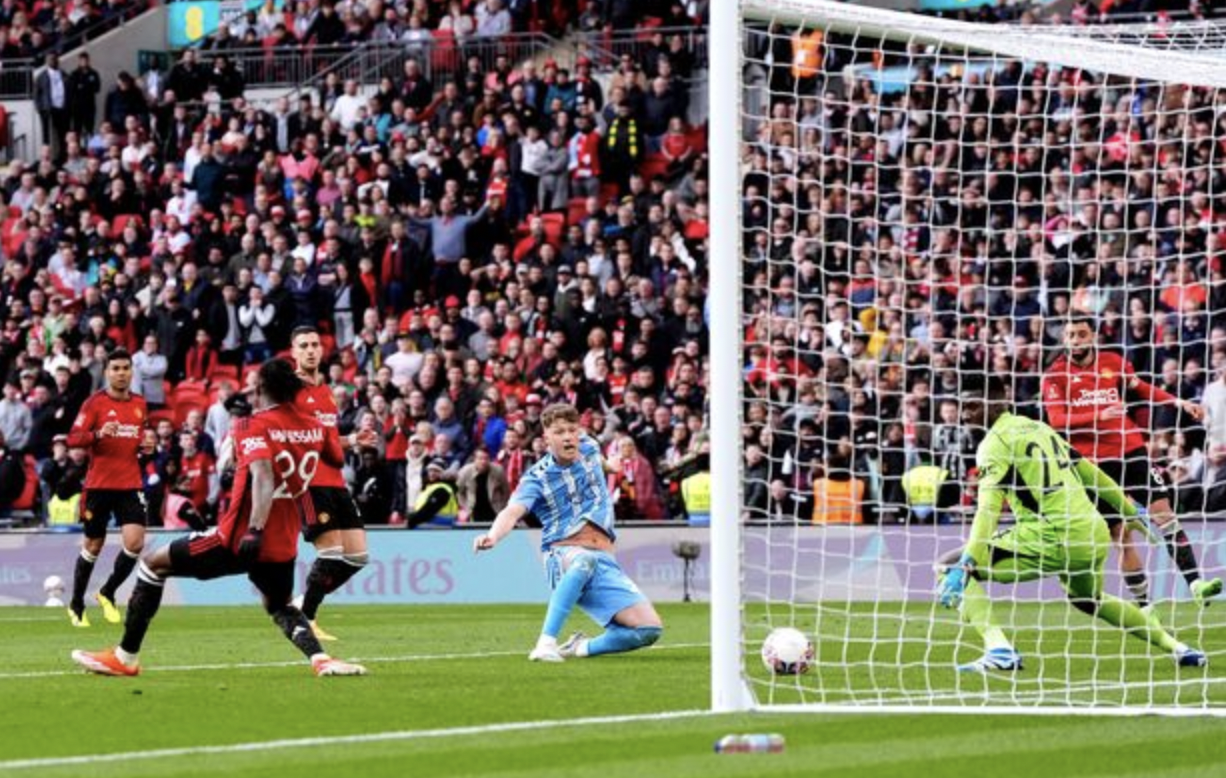
In the wake of the controversial VAR decision during the recent Manchester United match, it’s crucial to examine the facts rather than succumb to sensationalism.
The offside ruling that nullified Victor Torp’s potential extra time goal was indeed correct. Despite the fervent backlash on social media. While some have circulated misleading images suggesting an error in the technology, closer scrutiny reveals that the goal was right fully disallowed due to offside.
It’s important to note that advancements are on the horizon, with semi automat off sides poised to enhance decision making efficiency next season. However, questioning the fundamental aspects of VAR based on personal biases or fleet emotions undermines its purpose.
The weekend has been marred by contentious referee decisions, compound by Nottingham Forest’s critical statement following their defeat at Everton. Additionally, former referee Mark Clattenburg’s recent remarks, seemingly aligning with Forest’s grievances, only add to the contentious atmosphere.

While Clattenburg’s consultancy role at Forest is ostensibly to offer constructive feedback. His apparent support for the club’s stance reflects poorly on his impartiality. Contrary to insinuations, there’s no evidence to suggest that referee Stuart Attwell’s actions were influence by personal allegiances.
The notion that referees harbor biases or ulterior motives undermines the integrity of the sport. While errors may occur, attributing them to anything other than human fallibility is unjustifiable. Unfortunately, there’s a growing trend among clubs to perceive officiating decisions through a lens of suspicion and distrust.
This trend is exemplified by the proliferation of club statements condemning refereeing decisions, mirror Liverpool and Arsenal’s recent grievances. Such actions only perpetuate a cycle of animosity and mistrust that detracts from the essence of the game.
In conclusion, it’s imperative to afford referees and VAR officials the benefit of the doubt and refrain from succumbing to baseless accusations. Rather than vilify them, constructive dialogue and support are necessary to foster a fair and transparent officiating environment.