


The Board of Control for Cricket in India (BCCI) has finally brought an end to the anticipation by eagerly announcing India’s T20I squad against Afghanistan. While fans rejoiced at the inclusion of cricket stalwarts like Virat Kohli, Rohit Sharma, and Sanju Samson, one glaring absence left many pondering: why didn’t the BCCI pick KL Rahul?
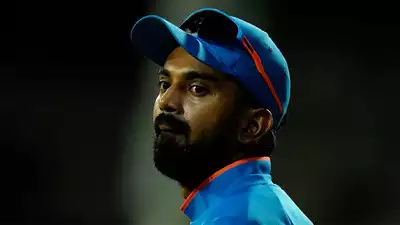
Despite KL Rahul’s exceptional performance in South Africa, where he notched up a century on the challenging Centurion pitch, the selection committee, spearheaded by Ajit Agarkar, decided to explore alternative options. This decision sidelined Rahul, a seasoned player who has demonstrated his prowess both as an opener and a middle-order batsman in ODIs and Tests.
Factors Behind KL Rahul’s Omission
Reports suggest that the exclusion of Rahul from the 3-match T20I series against Afghanistan stems from the selection committee’s inclination towards different candidates for opening and middle-order roles. While Rahul has predominantly played as an opener in T20 Internationals, the emergence of talents like Shubman Gill and Yashasvi Jaiswal has intensified competition for these positions, especially considering the presence of Kohli and Rohit in the squad.
Moreover, in the wicket-keeper role, the selectors favored Jitesh Sharma and Sanju Samson as finishers over Rahul. Rahul has yet to assume this role in T20Is. The upcoming Indian Premier League (IPL) season presents Rahul with an opportunity to showcase himself as a specialist finisher while donning the wicket-keeping duties for his IPL franchise, Lucknow Super Giants, as he aims to secure a spot in India’s T20 World Cup squad.
The reasons behind the absence of Ishan Kishan remain unclear. Kishan had requested relief from the Test series against South Africa citing a ‘personal matter.’ The details regarding the cause of his withdrawal and the expected timeline for his return remain undisclosed.
For more latest cricket sports news and updates, click here.
Disclaimer: This image/content includes references to the original creator for attribution purposes. Nevertheless, all rights and credits for the creation of this content belong to the respective copyright holder.
Leave a Reply