

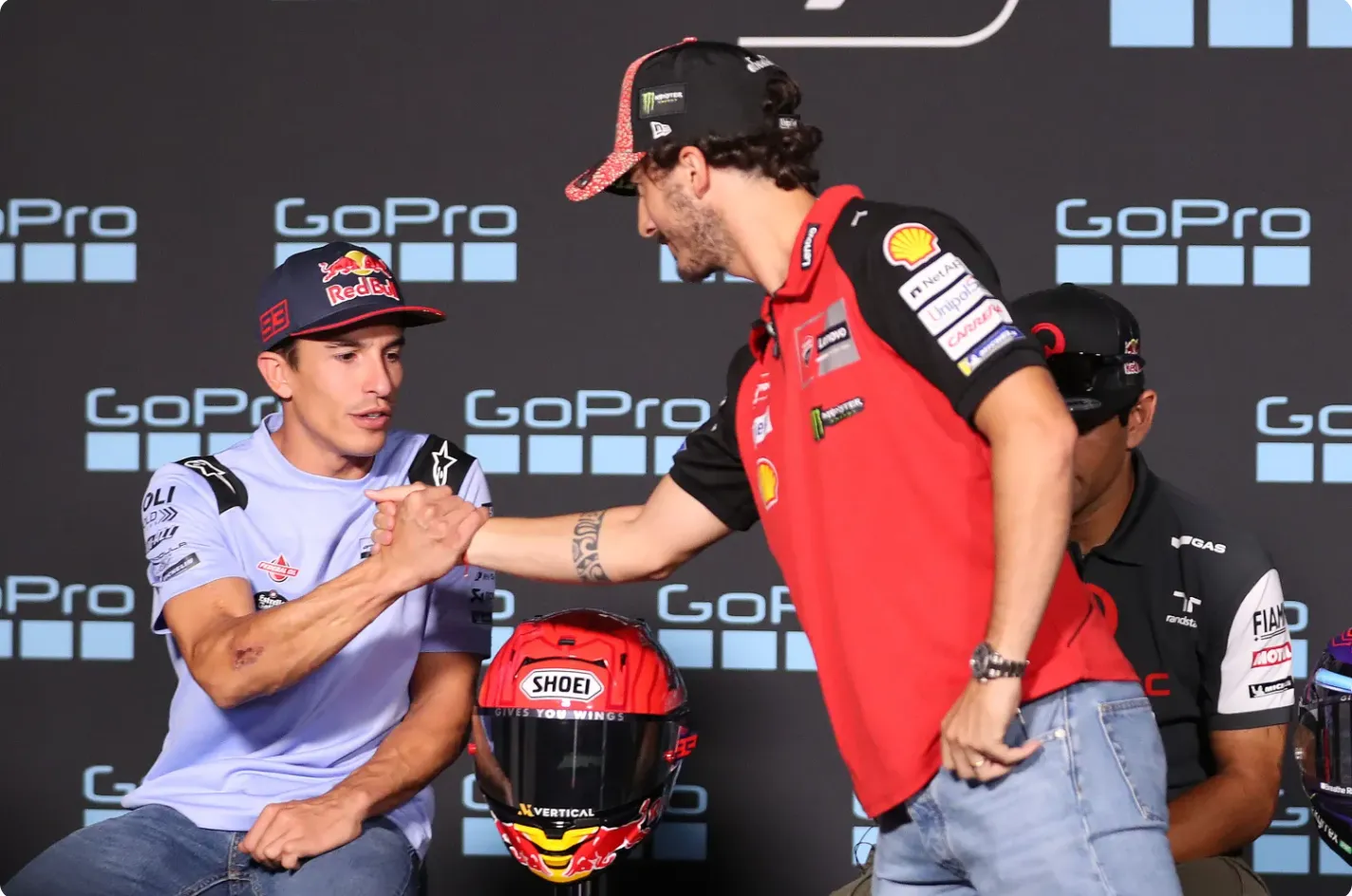
MotoGP‘s recent events have highlighted Ducati’s growing dilemma regarding team orders and rider dynamics. The spotlight this week has been firmly on the Marquez brothers, Marc and Alex, for contrasting reasons at Aragon GP.
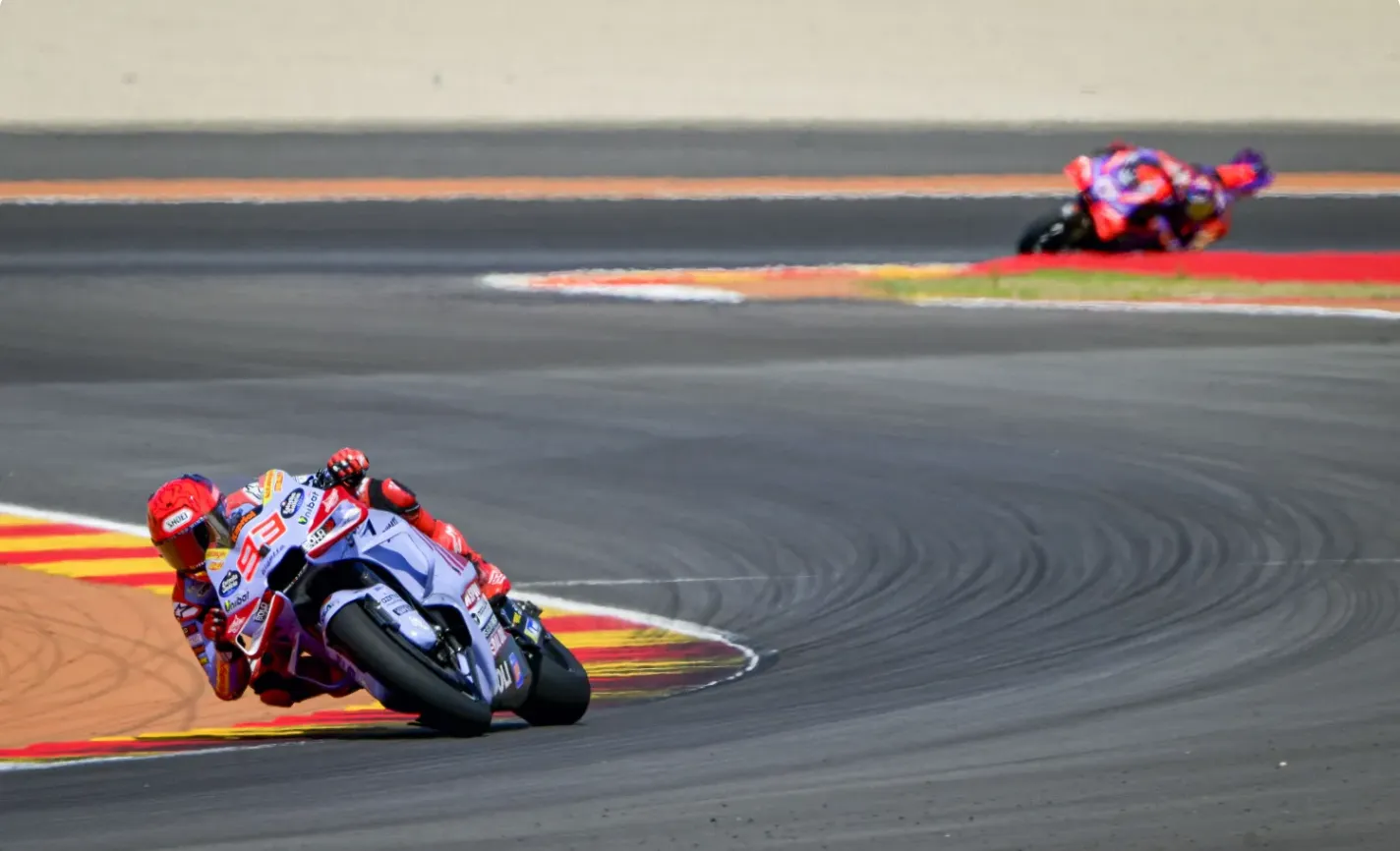
Marc Marquez’s stellar performance in Aragon marked a significant turnaround for the eight-time world champion. Ending a period of four years marked by struggles and uncertainty. Although it is unlikely he will replicate this dominant form at Misano, it is almost certain that Marquez will be back on the podium in the remaining eight rounds of the season.
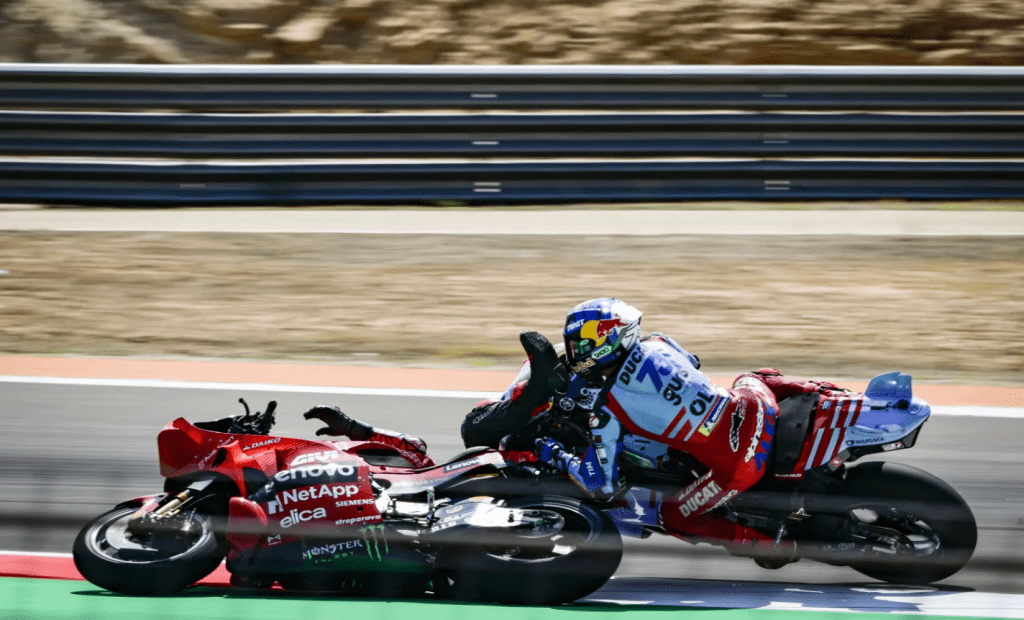
Conversely, Alex Marquez’s controversial collision with Francesco Bagnaia late in the Aragon GP has sparked considerable debate. Bagnaia has accused Marquez of causing incident, claiming that data shows Marquez opened his throttle at the moment of contact. Marquez has strongly refuted these claims and responded publicly after both riders expressed their views in the media.
Race Direction reviewed the incident but decided no further action was needed. However, the fallout has led to comparisons with the 2015 controversy between Marc Marquez and Valentino Rossi. With some fans and commentators speculating about a similar narrative unfolding.
The reality is that Alex Marquez and Bagnaia rarely race each other closely, and the Aragon incident, while unfortunate, was avoidable with better timing on Bagnaia’s part. As a result, Jorge Martin’s second-place finish has given him a 23-point lead in the championship. Intensifying Ducati’s fears of losing the title to Martin, who will join Aprilia next year. Bagnaia, dealing with the aftereffects of his Aragon crash and not fully fit for the San Marino GP, faces an uphill battle to regain his championship position.
Internally, Ducati’s challenge lies in enforcing team orders. Historically, Ducati has avoided imposing strict team directives. In 2022, Ducati allowed riders who were not in championship contention to race freely but with an understanding to avoid compromising Bagnaia’s title bid. This approach might need reevaluation, as evidenced by clash between Alex Marquez and Bagnaia, which could have jeopardized Bagnaia’s season.
Ducati’s predicament is compounded by the fact that many of its riders are not obligated to follow team orders. Alex Marquez, riding for Gresini, has indicated he will prioritize his team’s interests over Ducati’s directives. Similarly, if Marc Marquez continues to close the gap in the standings, it is unlikely that Alex Marquez would defer to Ducati’s interests.
Ducati could attempt to exert pressure on its satellite teams, but with Pramac Racing transitioning to Yamaha and VR46’s Marco Bezzecchi heading to Aprilia, enforcing compliance may prove difficult. Even within Ducati’s factory-team, Enea Bastianini, who will join KTM in 2025, has previously shown reluctance to follow team orders.
Ironically, Marc Marquez might indirectly assist Ducati. While Ducati cannot impose team orders on him as long as he remains a championship contender. Marquez’s form could limit Bagnaia’s losses to Martin if Marquez performs strongly.
In summary, Ducati faces significant challenges in managing its rider dynamics and enforcing team orders. As the 2024 season progresses, Ducati will need to navigate these complexities and hope that circumstances align favorably for them in the championship race.

Leave a Reply