

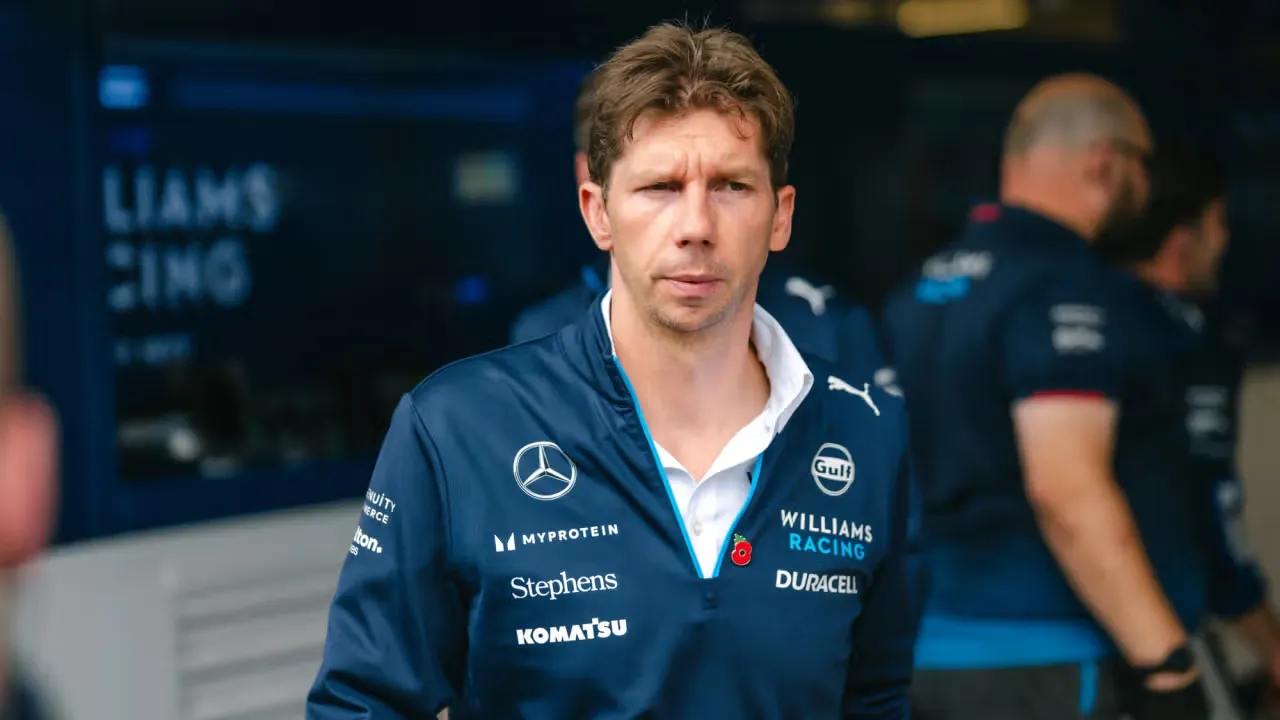
Williams Team Principal James Vowles has acknowledged that the ambitious restructuring of the Grove-based F1 team has posed challenges, admitting that the extensive changes have sometimes been overwhelming for the organization in the short term.
Vowles, who joined Williams two years ago after a successful tenure as Mercedes’ strategy director, inherited a team facing significant infrastructural hurdles. With parts tracking managed via Excel spreadsheets and much of the team’s infrastructure dating back to outdated systems, Vowles has been focused on modernizing Williams, despite limited financial resources under the Williams family in the 2010s.
In a candid end-of-season interview, Vowles conceded that the pace of change might have been too rapid for the team to handle. “We have to change a lot within our organisation in terms of infrastructure and technology to get us to the right place,” he explained. “There’s a sign called change saturation. You can change things at a certain rate. You go too far and you break it.”
He noted that while some of these changes were essential for long-term success, the results were a mix of both positive learning and short-term setbacks. “We didn’t get it all right, which is why we’re not fighting for those positions,” Vowles said. “But we won’t undo that learning. That learning will stay with us now for the rest of time.”

Vowles’ strategy of pushing the team to its limits during the development of the Williams FW46 in 2024 aligns with this approach. “I wanted to stress the system to the absolute limit to understand where it’s breaking, and how it’s breaking,” he explained. “It’s the only winter we’re going to do it.”
The 2024 season saw Williams experience numerous setbacks, including crashes and technical issues, but Vowles remained resolute in his belief that these challenges are necessary sacrifices for future success. “I always said from the beginning, before we started the year, we were going to sacrifice 2024 and 2025. This is a little bit what the sacrifice looks like, just with a lot more attrition than I expected.”
Vowles confirmed he had full backing from team owner Dorilton Capital for this long-term vision, emphasizing that the focus is on sustainable success rather than short-term fixes. “It was part of the agreement from the get-go when I joined, which is no one, neither side, wants any short-term fixes,” Vowles said. “We’re building a team that is successful for many years to come.”
Looking ahead, Vowles acknowledged the pressure surrounding the 2026 technical regulations but stressed that the real fruits of their efforts would begin to show in 2025. “Every year should be a build from the previous one,” he concluded. “’27, ‘28 should be steps above that.”
For Vowles, the road to success is clear: steady, gradual improvement with an unwavering focus on building a team that can compete at the highest level for years to come.

Leave a Reply