

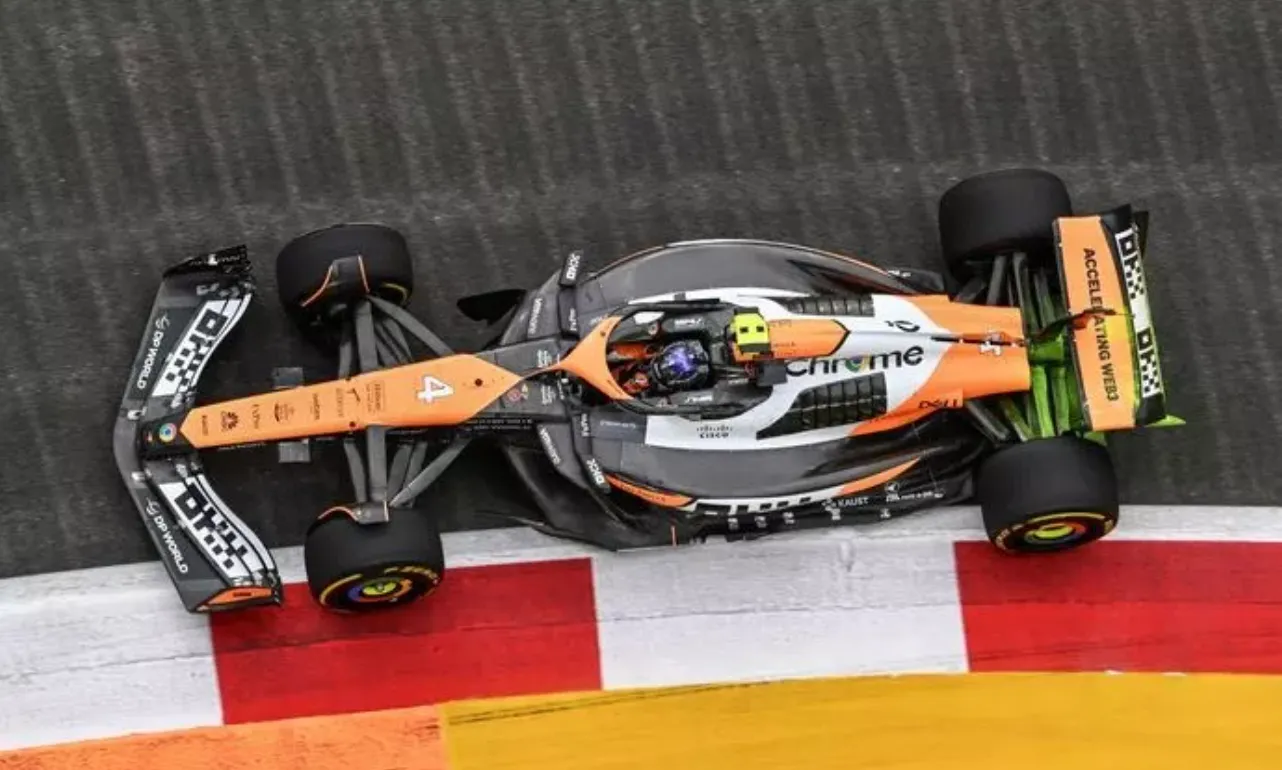
McLaren has announced plans to modify its rear wing design in response to a request from the FIA, following scrutiny over its ‘mini-DRS’ system.
After the Azerbaijan Grand Prix, rival teams raised concerns about the legality of McLaren’s rear wing, which appeared to flex in a way that opened up the slot gap. While the wing has passed all static tests and complies with current regulations, the FIA has requested adjustments to address the flexibility of the upper element.
McLaren will continue to use the low-drag wing in appropriate conditions but must make changes to prevent the upper element from flexing as it did during the Baku race.
A McLaren spokesperson stated, “Although our Baku rear wing meets the regulations and passes all FIA deflection tests, we have proactively offered to make some minor adjustments following discussions with the FIA. We also expect the FIA to engage with other teams regarding the compliance of their rear wings.”
FIA regulations mandate that components must pass static load tests, but the technical directive also addresses how parts behave under dynamic conditions. According to Technical Directive 34 (TD34), designs that alter their structural characteristics due to factors like temperature or aerodynamic load are deemed illegal. The FIA does not permit designs that change their deflection characteristics between static and dynamic conditions.
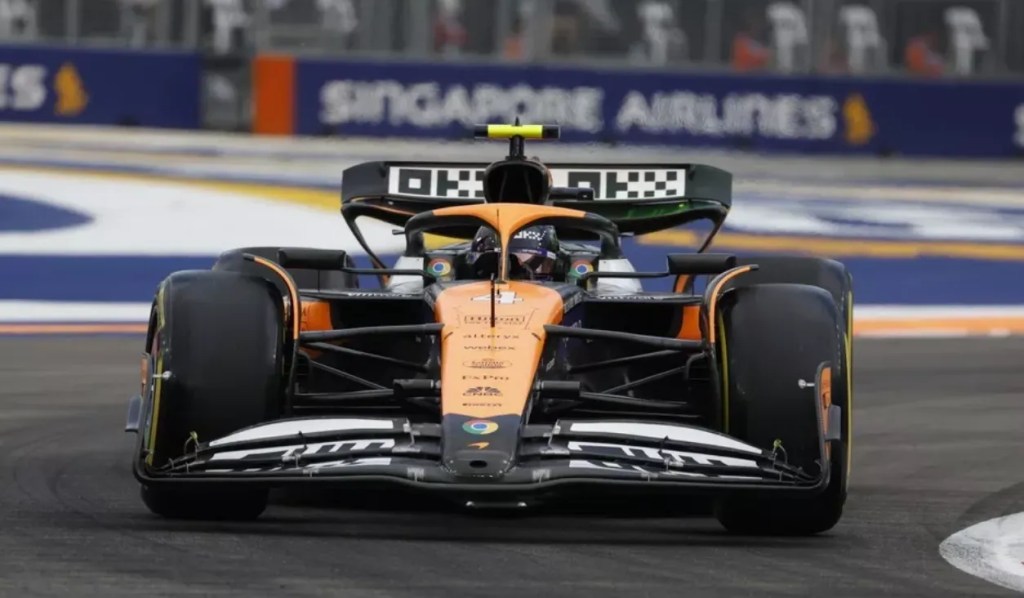
The FIA’s request for McLaren to revise its rear wing follows concerns from rival teams about potential exploitation of regulatory boundaries. Previously, the FIA had addressed issues with flexible front wings but left room for intervention regarding rear wing designs.
This move aims to alleviate concerns about an arms race in wing design and ensure compliance with the regulations. A team boss commented, “Aero elasticity has been a factor for many years. Even if the FIA tests a wing and it passes, the regulations clearly state that teams cannot design components to flex. The FIA needs to define acceptable limits to prevent extreme exploitation.”
The FIA’s decision reflects a broader concern about maintaining fair competition and regulatory compliance in Formula 1.

Leave a Reply