


As Formula 1’s calendar expands to 24 races, managing the schedule has become an increasingly intricate task. The sport’s surge in popularity, under Liberty Media’s ownership, has led to a flood of cities vying to host a grand prix, including recent additions like Miami, Qatar, and Las Vegas, with Madrid set to join in 2026.
Despite the theoretical possibility of expanding to 25 races, F1 has settled on 24 as the optimal number to balance the unprecedented demand with the risk of saturation and the strain on its 10 teams. Crafting this schedule involves significant logistical challenges, as evidenced by recent years’ calendars.
The 2022 season, for example, featured 22 races and saw the return of Australia, Canada, Japan, and Singapore after pandemic-related breaks. It also included a demanding double-header in Baku and Montreal, standalone events in Australia and Miami, and a grueling sequence of six flyaway races in eight weeks to wrap up the season by November 20.
The 2023 and 2024 calendars continued to test the limits, with numerous standalone flyaways accumulating significant airmiles for F1 staff, and triple-headers pushing the team’s endurance to the limit.
The Puzzle Pieces of the F1 Calendar
With the 24-race limit set and ambitious sustainability goals for 2030, F1 must reorganize its race calendar to enhance logistical feasibility and human resource management. The most practical approach involves clustering races geographically and shifting more reliance towards sea freight.
However, due to existing mid-to-long-term contracts, overhauling the calendar isn’t straightforward. The complexity of aligning various factors—such as climate, religious holidays, and date equity—adds to the challenge. Each expiring race contract presents an opportunity to refine the calendar, a task managed by F1’s Director of Race Promotion, Louise Young.

Young, who succeeded Chloe Targett-Adams a year ago, is responsible for negotiating with existing and potential race promoters. She explains, “In an ideal scenario, we seek maximum flexibility in race deals while considering practical constraints like weather conditions, religious and national holidays, and political cycles.”
Optimizing the Calendar: Examples and Adjustments
Recent changes highlight F1’s efforts to improve scheduling efficiency. The 2025 calendar aims to minimize back-and-forth travel across continents and enhance freight flow. For instance, Japan’s shift from October to April allows for pairing with China, reducing logistical strain.
“This adjustment was a significant challenge for Japan, hosting two events within seven months,” Young notes. “Linking Azerbaijan and Singapore has also unlocked substantial savings.”
Challenges remain, such as finding a solution for Miami and Montreal, which are currently standalone events. Young describes it as a “dream” to eventually pair them, reflecting the ongoing quest for calendar optimization.
The Reality of Triple-Headers
Triple-headers, once seen as a temporary measure during the pandemic, have become a fixture in the calendar. This year concludes with two triple-headers: Austin, Mexico, and Sao Paulo, followed by Las Vegas, Qatar, and Abu Dhabi. The 2025 season will feature an early triple-header with Japan, Bahrain, and Saudi Arabia.
Is this congestion an inevitable outcome of the 24-race format? Young acknowledges the constraints: “With additional events post-pandemic, congestion is natural. We need to preserve the August break and allow weeks between seasons, which limits available weekends.”
F1’s current focus remains on balancing competition, fan engagement, and emerging markets. “We understand the teams’ limits regarding sustainability and are committed to maintaining this balance,” Young adds.
Enhancing the F1 Experience
Liberty Media’s approach not only increases the number of races but also elevates the quality of each event. The series has transitioned from mere races to weekend-long festivals, integrating entertainment to appeal to a broader audience.
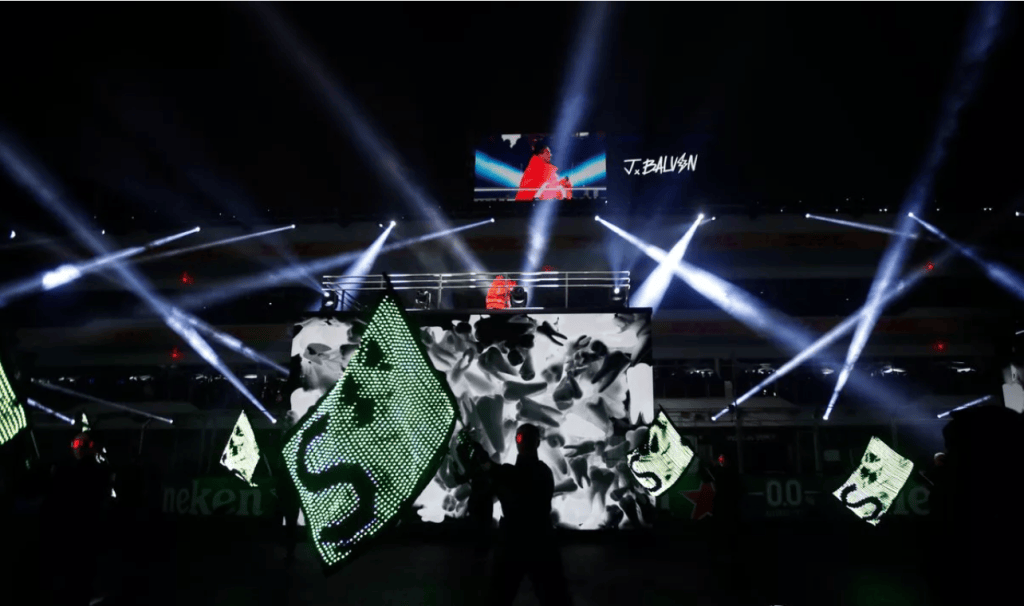
Traditional European races have had to adapt, with some embracing enhancements beyond the on-track action. Young cites Singapore and Silverstone as examples of how events have evolved, incorporating concerts and extended programs.
Evaluating New and Traditional Events
F1’s expansion includes new race talks in Thailand, South Korea, and Rwanda, raising concerns about moving away from traditional European venues. Young addresses this by emphasizing a balance between tradition and innovation in the calendar.
European races face scrutiny as new venues emerge, with potential rotation systems discussed for circuits like Monza, Imola, Zandvoort, and Spa. Barcelona may also struggle to coexist with Madrid’s 2026 addition.
Young highlights the criteria for renewal: “We assess each race based on on-track content, commercial arrangements, and fan services. Rotational models may help accommodate new destinations while preserving key events.”
Looking Ahead
As F1 continues to refine its calendar, sustainability and fan experience remain central. Young emphasizes the importance of sustainable practices, connectivity, and overall event quality in future planning.
“Every year, we aim for incremental improvements,” Young concludes. “The ideal calendar may never be universally perfect, but we strive for continuous enhancement.”
In navigating this complex puzzle, F1 balances innovation with tradition, aiming to deliver an engaging and sustainable calendar for the future.

Leave a Reply