

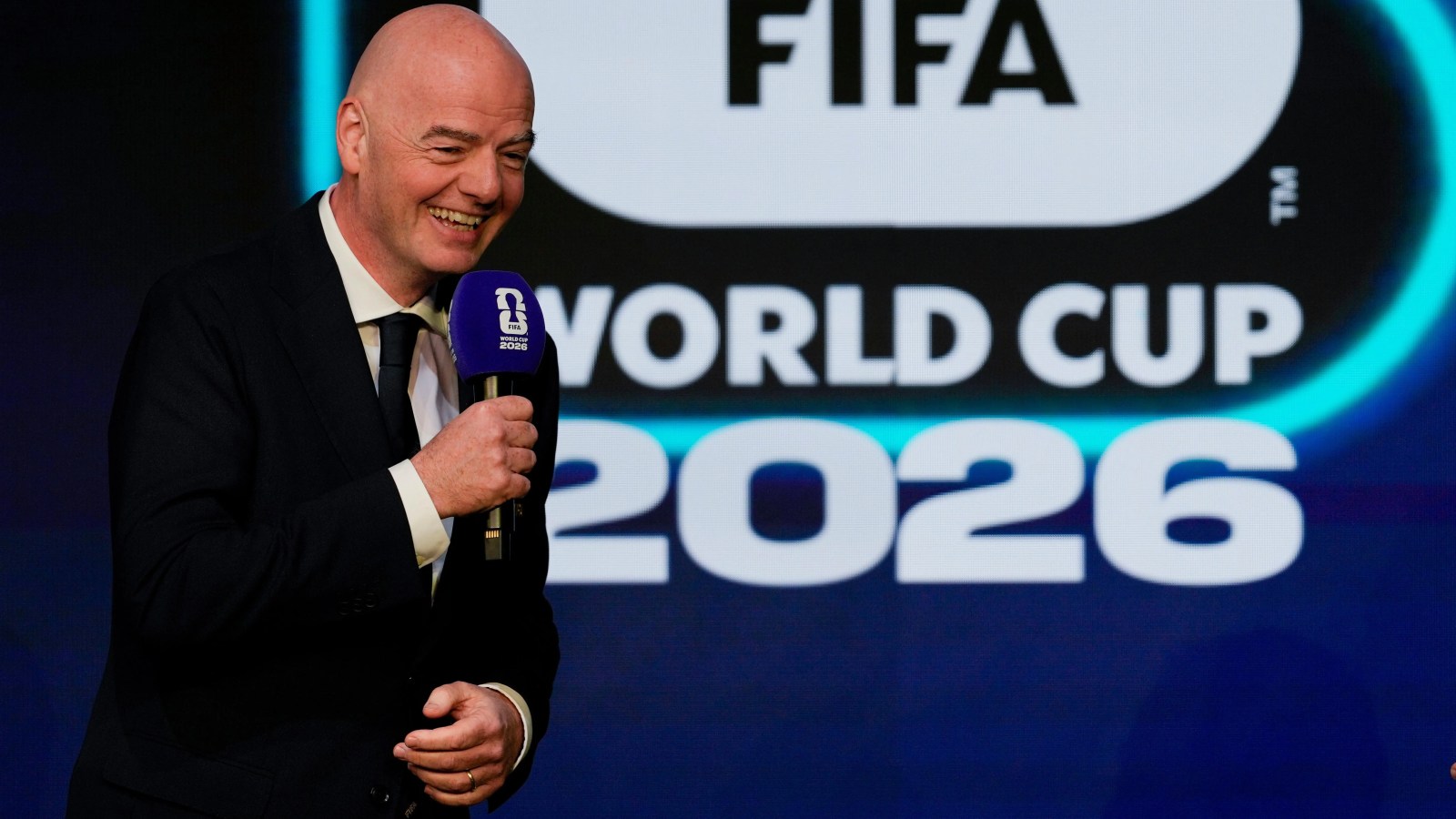
Pressure on FIFA president Gianni Infantino has intensified after UEFA, CONCACAF and the AFC issued a joint open letter accusing FIFA of “deception” and a “fundamental breach of trust” over the process surrounding a planned sale of a stake tied to the World Cup. The intervention is significant because it unites three major continental bodies from Europe, North America and Asia in a direct challenge to FIFA’s handling of one of the game’s most commercially and politically sensitive matters. At the center of the dispute is not only the proposed transaction itself, but also the confidence those confederations say has been damaged by the way the process has unfolded. With the 2026 World Cup on the horizon, the row now threatens to become a broader test of governance, trust and authority at the top of global football.
- UEFA, CONCACAF and the AFC have issued a joint open letter accusing FIFA of “deception” and a “fundamental breach of trust” over the World Cup stake sale process.
- The dispute centers on plans to sell a stake tied to the World Cup and has increased pressure on FIFA president Gianni Infantino.
- The standoff involves football’s governing bodies in Europe, Asia and North America, giving the dispute significant political weight ahead of the 2026 tournament.
- UEFA still lacks confidence in Infantino and says the conditions have not been met to lift its World Cup boycott.
- The latest developments point to a deepening governance conflict rather than a short-term disagreement over commercial strategy.
Why the dispute carries major weight
The significance of the joint letter lies in the breadth of the opposition. When three confederations spanning Europe, Asia and North America align publicly using language as severe as “deception” and “fundamental breach of trust,” the issue moves beyond an internal disagreement and into a full-scale political confrontation. FIFA has long relied on the World Cup as both its flagship sporting event and its central source of influence, so any conflict connected to a stake sale tied to that competition immediately becomes a matter of global importance. The fact that the criticism is aimed at the process, and at confidence in leadership, suggests the damage is not confined to a single transaction but extends to the relationship between FIFA and some of its most powerful members.
That broader loss of confidence is especially important in the context of the 2026 World Cup, a tournament that will require close coordination across continents. North America is central to the event’s staging, while Europe and Asia remain vital to the competition’s sporting profile, commercial reach and political legitimacy. A dispute involving those regions therefore creates pressure on multiple fronts at once. Even without further detail on the mechanics of the proposed sale, the language of the letter indicates that the confederations believe the issue cuts to the credibility of FIFA’s decision-making. For Infantino, that means the challenge is not simply to defend a plan, but to restore trust where it has plainly eroded.
UEFA’s position raises the stakes further
UEFA’s stance adds another layer of seriousness because the confederation is not merely expressing dissatisfaction; it still lacks confidence in Infantino and says the conditions have not been met to lift its World Cup boycott. That position turns a dispute over process into a potentially destabilizing institutional standoff. Boycotts, or even the continued threat of them, carry symbolic force far beyond the immediate argument because they call into question the unity FIFA depends on to present the World Cup as a singular global event. UEFA’s refusal to soften its line also suggests that whatever assurances or explanations have been offered so far have not been enough to repair the relationship.
For FIFA, that creates a difficult balancing act. The governing body must manage preparations for 2026 while also confronting a coalition that includes some of the most influential voices in the sport. Europe’s clubs, leagues and national teams hold enormous weight in the football economy, Asia represents a vast and strategically important market, and North America is directly tied to the next World Cup cycle. When all three regions are part of the same confrontation, the dispute becomes harder to isolate or outlast. Instead, it risks shaping the atmosphere around the tournament build-up unless there is a meaningful effort to address the concerns laid out in the letter.
The wording of the accusations also matters because it frames the disagreement in ethical and institutional terms rather than purely financial ones. “Deception” implies that the confederations believe they were misled, while “fundamental breach of trust” suggests a rupture in the relationship between FIFA and its members. Those are not phrases typically associated with a routine commercial debate. They point to a belief that the process itself has undermined confidence in governance. In practical terms, that can be more damaging than criticism of a single policy because it raises doubts about how future decisions will be handled, especially those linked to the World Cup and the distribution of power around it.
There is also a strategic dimension to the timing and alignment of the letter. By acting jointly, UEFA, CONCACAF and the AFC have ensured that the issue cannot be dismissed as a regional grievance or a narrow political maneuver. The coalition gives the protest institutional depth and signals that dissatisfaction has spread across multiple centers of football power. It also increases the pressure on Infantino personally, because the dispute is now clearly linked to his leadership rather than being treated as a technical disagreement within FIFA’s commercial structure. That makes the next phase crucial: any attempt to calm the situation will have to address both the substance of the stake sale process and the wider question of confidence in FIFA’s leadership.
What remains clear from the current picture is that this is a dispute defined by mistrust. The available facts establish the existence of a plan to sell a stake tied to the World Cup, a forceful accusation from three confederations, and UEFA’s insistence that confidence has not been restored. Those elements alone are enough to show why the issue has become one of the most serious governance challenges facing FIFA ahead of 2026. The controversy reaches beyond boardroom procedure because it touches the ownership, stewardship and political management of the sport’s biggest event. In that sense, the row is not simply about one decision; it is about who controls the future direction of the World Cup and on what terms.
The next steps will determine whether this confrontation hardens into a prolonged institutional crisis or becomes the catalyst for a reset between FIFA and three of its most important confederations. For now, the message from Europe, Asia and North America is unmistakable: confidence has been badly damaged, the conditions for reconciliation have not yet been met, and scrutiny of Infantino’s leadership is only increasing. With the 2026 World Cup drawing closer, FIFA faces mounting pressure to respond in a way that restores trust rather than deepens the divide. Until that happens, the stake sale row will remain one of the defining off-field stories surrounding the tournament.

Leave a Reply