
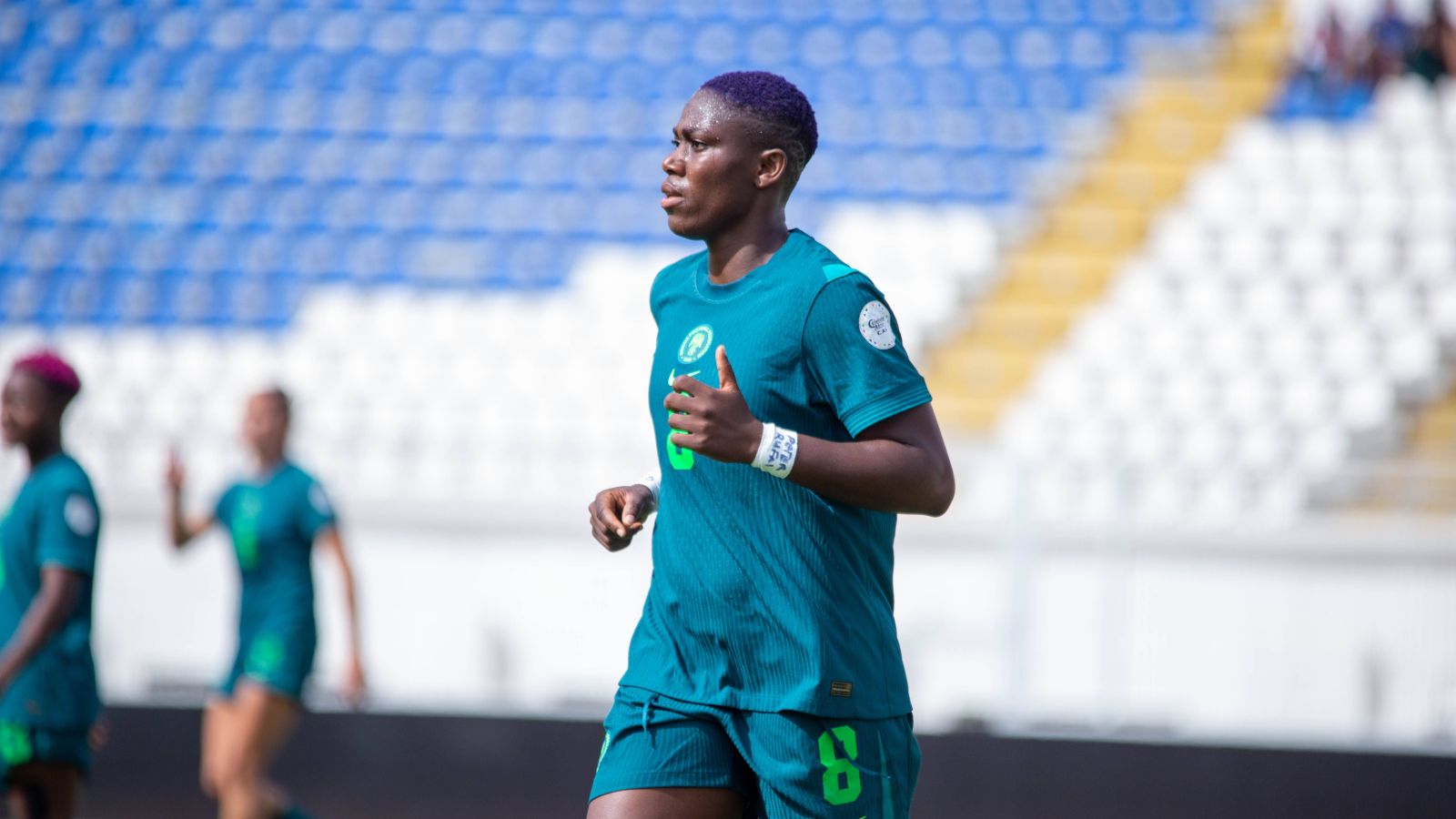
The Women’s Africa Cup of Nations has entered its decisive phase, with the quarter-finals set to cut the field from eight teams to four after an enthralling tournament. Nigeria’s Super Falcons and South Africa’s Banyana Banyana remain among the leading contenders, and their progress carries significance not only in the race for the continental title but also in the broader push for Women’s World Cup qualification momentum. One confirmed tie, Nigeria versus Cameroon, immediately gives the knockout bracket a heavyweight feel, bringing together two of the continent’s most recognisable teams at the stage where every mistake carries greater cost. As the competition shifts from group-stage calculation to direct elimination, the pressure, margins and significance all rise sharply.
- The WAFCON quarter-finals are set, with the knockout stage beginning after an enthralling tournament.
- The final eight teams will be reduced to four in the next round.
- Nigeria’s Super Falcons are among the teams targeting progress and Women’s World Cup qualification momentum.
- South Africa’s Banyana Banyana are also among the sides pushing for a strong quarter-final showing.
- One confirmed quarter-final pairing is Nigeria versus Cameroon.
Knockout football raises the stakes
The move into the quarter-finals changes the nature of the tournament instantly. Group matches often leave room for recovery, whether through a later result, goal difference or a more cautious tactical approach, but knockout football removes that safety net. From here, every selection decision, every defensive lapse and every moment of composure in front of goal can define a team’s campaign. That is why the quarter-final stage carries such weight: it is not simply another round, but the point at which ambition must be matched by execution.
The reduction from eight teams to four also brings the competition into sharper focus. The tournament has already delivered enough to justify its billing as enthralling, and that momentum now feeds directly into the last-eight ties. The teams still standing have already shown resilience and quality to reach this point, but the quarter-finals demand something slightly different: emotional control, tactical discipline and the ability to manage a match that may turn on very few clear chances. In that environment, reputation may help with confidence, but it guarantees nothing once the game begins.
That broader context matters when discussing the route toward Women’s World Cup qualification. The quarter-finals are not only about lifting a continental trophy; they also sit within the wider landscape of international progression and global opportunity. For players, coaches and federations, advancement can shape the next cycle of planning and expectation. The result is a stage loaded with consequence, where the immediate objective of winning a knockout tie is closely tied to a much larger long-term target.
There is also a distinct psychological shift at this point in the competition. In the group stage, teams can balance risk and reward over multiple matches, measuring performances across a broader sample. In the knockout rounds, there is no such buffer. A single error, a missed chance or one lapse in concentration can outweigh everything that came before it. That reality tends to sharpen decision-making and intensify the emotional demands on every squad still involved.
For that reason, the quarter-finals often reveal more than technical quality alone. They test how well a side can absorb pressure, adjust to changing momentum and remain composed when the game becomes tense. The margins are thinner, the consequences are heavier and the ability to manage the occasion becomes almost as important as the football itself. It is in this environment that genuine contenders tend to separate themselves from teams that were merely good enough to reach the last eight.
Nigeria, Cameroon and South Africa at the centre of attention
Nigeria’s meeting with Cameroon stands out immediately as one of the defining fixtures of the round. Even without leaning on predictions, the pairing carries obvious significance because it brings together two major names in African women’s football at the point where the stakes are at their highest. Nigeria’s Super Falcons enter the quarter-finals with both the burden and privilege of expectation that come with their status, while Cameroon represent the kind of opponent capable of turning a tie into a test of nerve as much as quality. In knockout football, familiarity between strong rivals often produces tense contests shaped less by openness than by who handles the key moments better.
For Nigeria, the challenge is likely to be as psychological as it is tactical. The Super Falcons are specifically identified among the teams chasing Women’s World Cup qualification momentum, and that naturally places them under a brighter spotlight. With that attention comes the need to balance authority with patience, especially in a match where the opposition will understand the value of staying compact and making the game uncomfortable. Nigeria’s route through this quarter-final will therefore say a great deal about their ability to handle tournament pressure when the narrative shifts from potential to necessity.
Cameroon’s role in that equation should not be understated. A fixture of this profile rarely unfolds on reputation alone, and knockout ties between established rivals are often decided by discipline, concentration and the capacity to seize isolated openings. That gives the contest an added edge. Nigeria may carry expectation, but Cameroon arrive with the opportunity to disrupt a leading contender and reshape the bracket in one result. That dynamic is part of what makes the tie such a compelling focal point in the quarter-final line-up.
South Africa’s Banyana Banyana are another central part of the quarter-final picture, and their presence underlines the strength at the top end of the tournament. Being named among the teams targeting Women’s World Cup qualification momentum places them firmly in the conversation around who can shape the knockout phase. At this stage, that status is earned through consistency and competitive edge rather than hype. South Africa’s task now is to convert that standing into a semi-final place, proving they can carry group-stage promise into the more unforgiving environment of elimination football.
What makes this quarter-final line-up especially compelling is the way it blends prestige with uncertainty. The tournament may already have been enthralling, but the knockout round tends to reveal a different layer of quality, one built on adaptability and emotional endurance. Teams can no longer think in terms of managing a campaign over several matches; they must solve the problem immediately in front of them. That is why the final-eight stage so often becomes the true measure of a contender, separating those who can live with the pressure from those who are only talented enough to reach it.
There is also wider significance in how these quarter-finals frame the next chapter of women’s football on the continent. When teams such as Nigeria and South Africa are discussed in the context of World Cup qualification, the stakes extend beyond one tournament run to questions of continuity, development and international relevance. Success here can reinforce a team’s place among the leading powers, while defeat can force a hard reset at a moment when momentum matters most. That tension gives every quarter-final a double edge: one eye on immediate survival, the other on a future that can be shaped by a single result.
The next round will therefore do more than trim the field from eight to four. It will show which teams are best equipped to handle the demands of knockout football and which nations can turn an enthralling tournament into a genuinely defining campaign. Nigeria versus Cameroon provides one clear focal point, while South Africa’s presence ensures another major storyline as the competition moves deeper into its decisive stretch. What comes next is simple in format but immense in consequence: win and move closer to both silverware and World Cup momentum, or lose and watch the opportunity disappear in one unforgiving night.



Leave a Reply