


UEFA EURO 2024 has been a thrilling journey to the semi-finals, showcasing a more level playing field in European football and providing opportunities for new teams to shine. Spain, France, England, and the Netherlands have reached the final four, but their paths were anything but easy, with three of the four quarter-finals going to extra time.
Spain’s dramatic late winner eliminated hosts Germany, while France and England triumphed over Portugal and Switzerland, respectively, in penalty shoot-outs. This followed a fiercely competitive group stage, which saw tournament debutants Georgia advance to the round of 16. Slovenia reached the knockouts for the first time, and Romania returned to this stage for the first time since 2000.
Opportunity Knocks
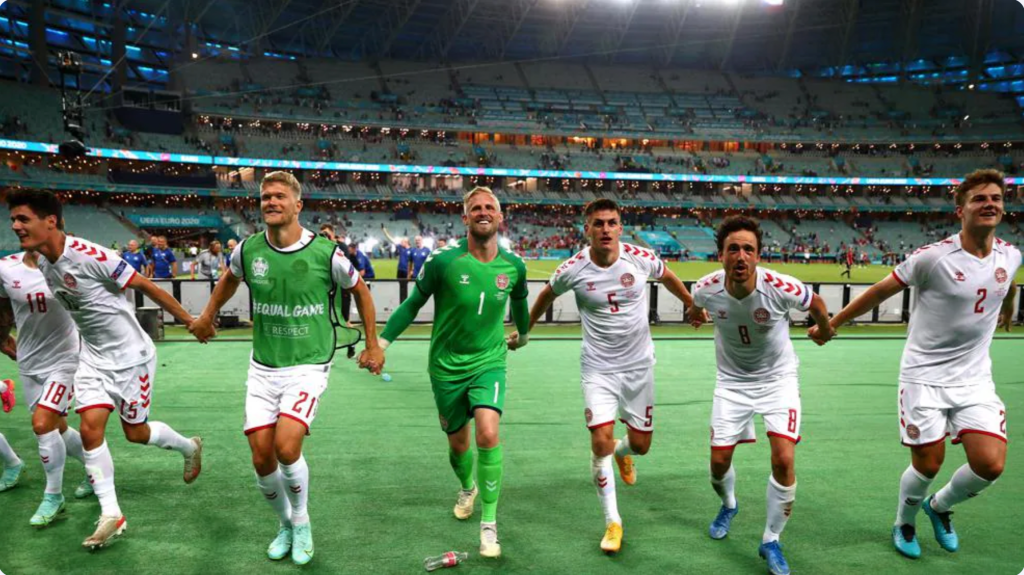
The expanded 24-team format, introduced in 2016, has increased the variety and competitiveness of teams at the top level. This format allowed Wales to reach the semi-finals in 2016, and debutants Iceland stunned England in the last 16. Denmark continued this trend by reaching the semi-finals at EURO 2020.
The opportunity for third-placed teams to qualify for the knockout stage ensures that more nations have something to play for throughout the tournament. At EURO 2020, 23 of the 24 teams had a chance to progress going into their final group games. This year, only Poland was eliminated before Matchday 3.
Increasingly Unpredictable Tournament
EURO 2024 matches have been incredibly tight, highlighting the tournament’s growing competitiveness. The average margin of victory has been just 1.08 goals, the lowest since the eight-team 1992 edition and significantly lower than the 1.39 average margin at EURO 2008. This trend was evident even in the group stage, where the average margin of victory was 1.03 goals.
All 24 teams earned at least one point, and the average points difference between first and fourth in each group was 4.5 points, the lowest since EURO ’96, the first to feature 16 teams. Of the four semi-finalists, only Spain won all their group stage games, while the Netherlands, England, and France each registered just one victory.
Level Playing Field
The expansion of the EURO aligns with UEFA’s goal to increase the competitiveness of European football. The UEFA Nations League has provided regular competitive matches for Europe’s smaller footballing nations, crucial for their development and increasing interest. Georgia’s success at EURO 2024 marks a significant achievement in this period of growth.
Financial support is another key factor in strengthening European football. Following EURO 2024, around two-thirds of the tournament’s revenue will be redistributed among UEFA’s 55 member associations to support football development both on and off the pitch.
EURO 2024 exemplifies how the tournament’s evolution fosters a more competitive environment, giving more teams the chance to make their mark on the European stage.


Leave a Reply