

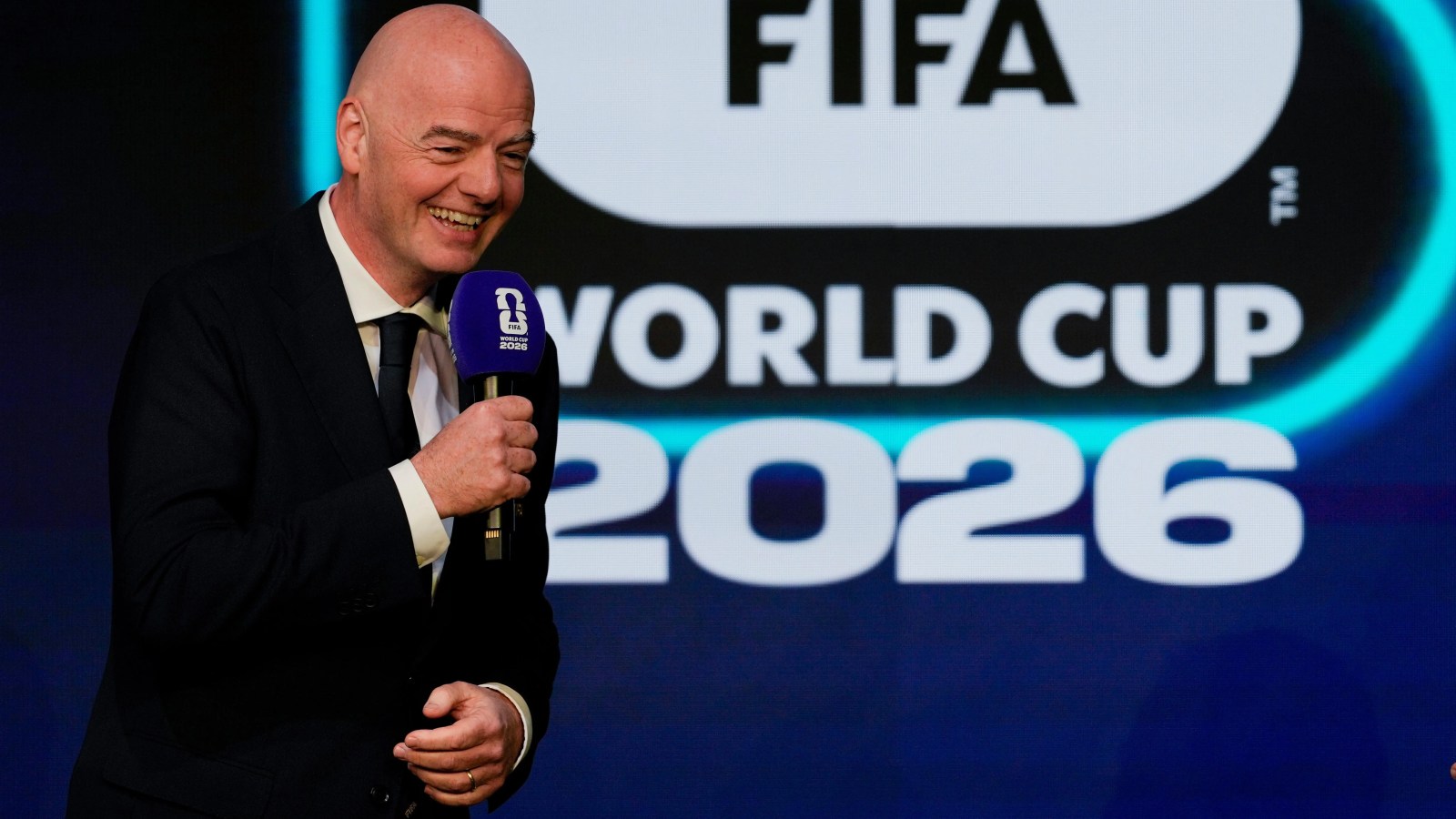
A fresh layer of uncertainty continues to hang over World Cup 2026 after UEFA’s member federations maintained a boycott threat tied to FIFA’s plans to sell ownership stakes in the World Cup and other competitions to private investors. The dispute matters because it cuts to the governance and future control of the sport’s biggest events, with Gianni Infantino’s proposal still at the center of the standoff. UEFA’s position, based on the verified information available, is that its member associations would boycott all FIFA competitions, including the men’s and women’s World Cups, if the privatization plan goes ahead. That leaves one of football’s most significant political flashpoints unresolved at a time when the next World Cup should be building steadily toward its sporting focus.
- UEFA’s member federations would boycott all FIFA competitions if FIFA proceeds with plans to sell ownership stakes in the World Cup and other tournaments to private investors.
- The threatened boycott covers both the men’s and women’s World Cups.
- The protest is directed at Gianni Infantino’s proposal to privatize or sell off part of FIFA’s competitions.
- FIFA has not backed away from the plan in the verified information available.
- Infantino remains in position, leaving the broader conflict over tournament ownership and control unresolved.
Why the threat still matters
The significance of this issue extends far beyond routine administrative tension between governing bodies. A boycott by UEFA members would strike directly at the competitive integrity, commercial strength and global credibility of FIFA tournaments, especially the World Cup. European nations have long occupied a central place in both the men’s and women’s international game, and any threat involving their absence immediately becomes a defining issue for the competition’s future. Even without a fresh formal escalation in the verified material, the fact that the boycott threat has not been withdrawn keeps the matter alive and highly consequential.
At the heart of the dispute is control. FIFA’s competitions are not merely sporting events; they are the crown jewels of the international calendar, carrying enormous financial, political and symbolic value. Any proposal to privatize or sell part of those assets shifts the conversation from tournament organization to tournament ownership, and that is clearly where resistance has hardened. UEFA’s stance reflects deep concern over what private investment could mean for how these competitions are run, who influences key decisions, and how future revenues and priorities are shaped.
That is why World Cup 2026 cannot be viewed in isolation from this governance battle. The tournament is meant to represent the broadest and most prestigious meeting point in world football, but its aura depends on universal participation and institutional stability. If the leading confederation in the European game is prepared to draw such a hard line, the issue is no longer theoretical. It becomes a live challenge to the unity FIFA depends on when presenting the World Cup as the undisputed center of the sport.
What it means for FIFA and the road to 2026
The verified information shows that FIFA has not stepped away from the underlying plan, which means the pressure point remains exactly where it was: whether the governing body will continue to pursue private investment in its competitions despite the scale of the opposition. That matters because unresolved disputes tend to grow more serious as major tournaments approach. Planning cycles for a World Cup are long, complex and highly sensitive to political stability, and any persistent threat of boycott creates uncertainty around the event’s image and long-term confidence. Even if no immediate operational change has been announced, the existence of the threat alone is enough to keep administrators, commercial partners and national associations on alert.
Infantino’s continued position is another important part of the picture. The verified material confirms that he remains in charge, which means the proposal associated with his leadership has not been neutralized by a change at the top. That does not, on its own, prove any new hardening of policy beyond the existing stance, but it does mean there has been no leadership reset to cool the confrontation. In practical terms, the same personalities and the same core disagreement remain in place, making this less a passing controversy and more an ongoing institutional struggle over the future shape of FIFA’s competitions.
For UEFA and its member federations, the boycott threat functions as leverage as much as it does a warning. By extending the potential action across all FIFA competitions, including both the men’s and women’s World Cups, the message is broad and deliberate. It signals that this is not a narrow objection to one commercial arrangement but a wider challenge to the principle of selling stakes in competitions that many within the game regard as collective sporting assets. The breadth of the threatened response also raises the stakes for any future negotiations, because it frames the issue as one of governance and stewardship rather than a routine business decision.
There is also a broader reputational risk for the World Cup itself. The tournament thrives on anticipation built around qualification races, host-city preparation and the promise of the strongest possible field. A governance dispute of this scale shifts attention away from football and toward boardroom conflict, which is exactly the kind of distraction FIFA would prefer to avoid in the run-up to 2026. While the verified material does not establish any new formal decision beyond the boycott threat remaining in place, it does make clear that the underlying conflict has not been resolved, and that alone is enough to keep the issue in the foreground.
The next phase will depend on whether FIFA presses ahead with the proposal to sell ownership stakes in its competitions or seeks a path that eases opposition from Europe. For now, the position remains tense and unresolved: UEFA’s boycott threat is still live, Infantino remains in office, and FIFA has not backed away from the plan at the center of the dispute. That leaves World Cup 2026 facing an unusual off-field cloud, with the sport’s biggest tournament caught in a wider argument about who should control football’s most valuable events. Until that question is settled, the road to 2026 will continue to carry political as well as sporting significance.

Leave a Reply