

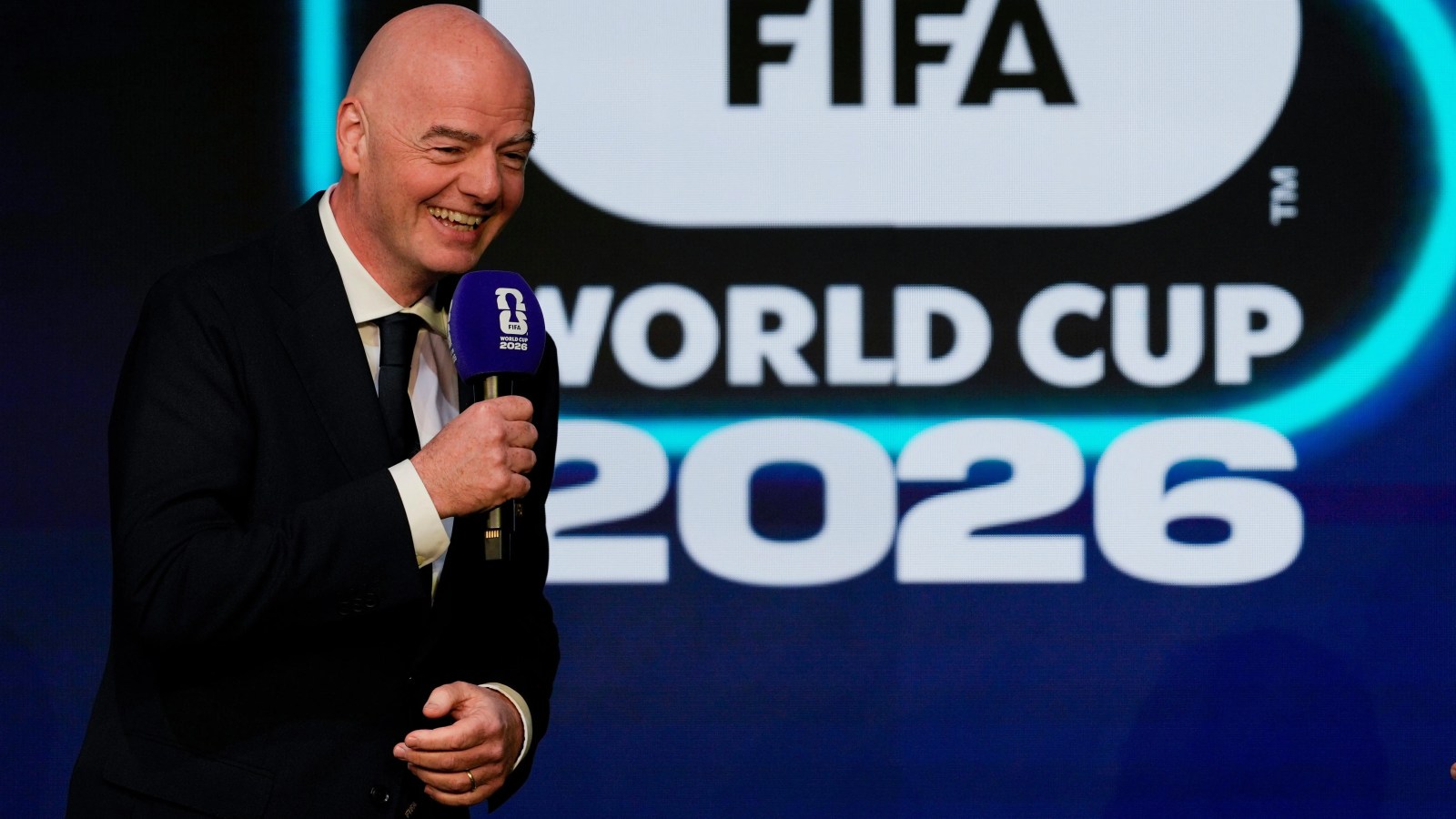
European football has moved into open conflict with FIFA after UEFA’s 55 member federations unanimously agreed to boycott all FIFA competitions, including the 2026 World Cup, in protest at Gianni Infantino’s plan to sell stakes in the tournament to private investors. The decision reaches far beyond administrative politics because it threatens the involvement of one of the game’s most powerful confederations in its biggest event. At the heart of the dispute is Infantino’s determination to press ahead with a broader private-equity strategy for major tournaments despite growing resistance. The unanimity of UEFA’s position gives the standoff unusual force and raises the prospect of a prolonged institutional battle with direct consequences for the World Cup’s competitive landscape and commercial future.
- UEFA’s 55 member federations have unanimously agreed to boycott all FIFA competitions, including the World Cup.
- The boycott is a protest against Gianni Infantino’s plan to sell stakes in the World Cup to private investors.
- The dispute is tied to FIFA’s broader private-equity plans for major tournaments.
- FIFA has not backed away from the proposals despite opposition from UEFA’s membership.
- The decision creates major uncertainty around the makeup, credibility and commercial direction of the 2026 World Cup.
Why UEFA’s stand carries such force
The significance of this move begins with the scale of the unity behind it. A unanimous decision by all 55 UEFA members removes any suggestion that this is a limited rebellion driven by only a handful of leading associations. Instead, it presents FIFA with a single collective front from Europe, the confederation that supplies many of the strongest national teams, deepest player pools and largest commercial markets in the global game. That unanimity also makes compromise harder to choreograph, because FIFA is not dealing with scattered dissent but with a bloc that has chosen to frame the issue as one of principle.
The immediate flashpoint is the proposed sale of stakes in the World Cup to private investors, but the disagreement extends beyond a single transaction. UEFA’s boycott is linked to FIFA’s wider private-equity plans for major tournaments, indicating that the concern is structural rather than temporary. In practical terms, that suggests European federations view the issue not merely as a financial arrangement but as a shift in how the sport’s flagship competitions are owned, governed and monetised. By escalating directly to a boycott of all FIFA competitions, UEFA’s members have signaled that they consider the proposals serious enough to justify the most disruptive response available to them.
For the 2026 World Cup, the implications are immediate and profound. A tournament without UEFA participation would be transformed at every level, from sporting quality to global interest and commercial value. The World Cup’s identity has long been built on the meeting of football’s major powers, and Europe’s absence would remove a vast share of that competitive prestige. Even before any final outcome is known, the boycott injects uncertainty into planning, qualification narratives and the broader credibility of the event.
What the standoff means for FIFA and the 2026 World Cup
FIFA’s refusal to back down is what turns this from a warning shot into a genuine crisis. Had the governing body softened its position, the boycott might have served as leverage in a negotiation. Instead, FIFA has maintained its course on the private-investment proposals, leaving both sides on a collision path. That hardening of positions matters because it suggests the dispute is no longer simply about consultation or presentation, but about who controls the strategic direction of the game’s biggest competitions.
From FIFA’s perspective, pressing ahead with broader private-equity plans may be tied to long-term revenue ambitions and a desire to reshape the financing of elite tournaments. Yet the political cost of that approach is now impossible to ignore. UEFA’s members have effectively challenged the legitimacy of turning the World Cup into an asset structure that includes outside investors, and they have done so with the strongest collective sanction available to them. The result is a governance confrontation in which every next step carries risk: FIFA risks diminishing its premier event, while UEFA risks forcing an unprecedented rupture in the international calendar.
There is also a strategic dimension to the timing and framing of the boycott. By extending the action to all FIFA competitions rather than isolating the World Cup, UEFA’s members have widened the pressure points and made clear that the issue is not confined to a single tournament cycle. That broad scope increases the leverage of the protest because it threatens disruption across FIFA’s entire competition system. It also reinforces the idea that the disagreement is about the future model of international football governance, not merely a dispute over one commercial decision. In that sense, the boycott is both a protest against a specific proposal and a warning about the direction of power in the sport.
For national teams, supporters and tournament organisers, the uncertainty is deeply unsettling because so much of the 2026 World Cup’s meaning depends on universal participation at the highest level. European nations are central to the tournament’s competitive drama, historical rivalries and global audience appeal. If the boycott holds, qualification pathways and expectations around the event would be transformed, while the tournament itself would face unavoidable questions about sporting legitimacy. Even if a compromise is eventually reached, the damage to trust between UEFA and FIFA could linger well beyond this cycle, shaping future debates over governance, commercialisation and the ownership of football’s premier properties.
The dispute also sharpens a broader tension that has been building in modern football: whether governing bodies can pursue increasingly aggressive commercial strategies without eroding confidence among their own members. UEFA’s unanimous response suggests many federations believe that line has now been crossed. The private-equity issue has become a proxy for a larger argument about stewardship, accountability and the limits of monetising competitions that carry enormous cultural and sporting significance. That is why this story extends beyond boardroom manoeuvring; it reaches the core question of who the World Cup is ultimately for and who gets to shape its future.
What happens next depends on whether either side is willing to retreat from a position already stated in stark terms. UEFA’s members have chosen a unified boycott, and FIFA has not backed away from the private-investment proposals that triggered it. Unless there is movement, the road to the 2026 World Cup will be dominated by confrontation rather than qualification alone, with every development scrutinised for signs of compromise or further escalation. For now, the tournament stands at the centre of a power struggle that could redefine not only its field of participants, but also the commercial and political model of international football itself.

Leave a Reply