

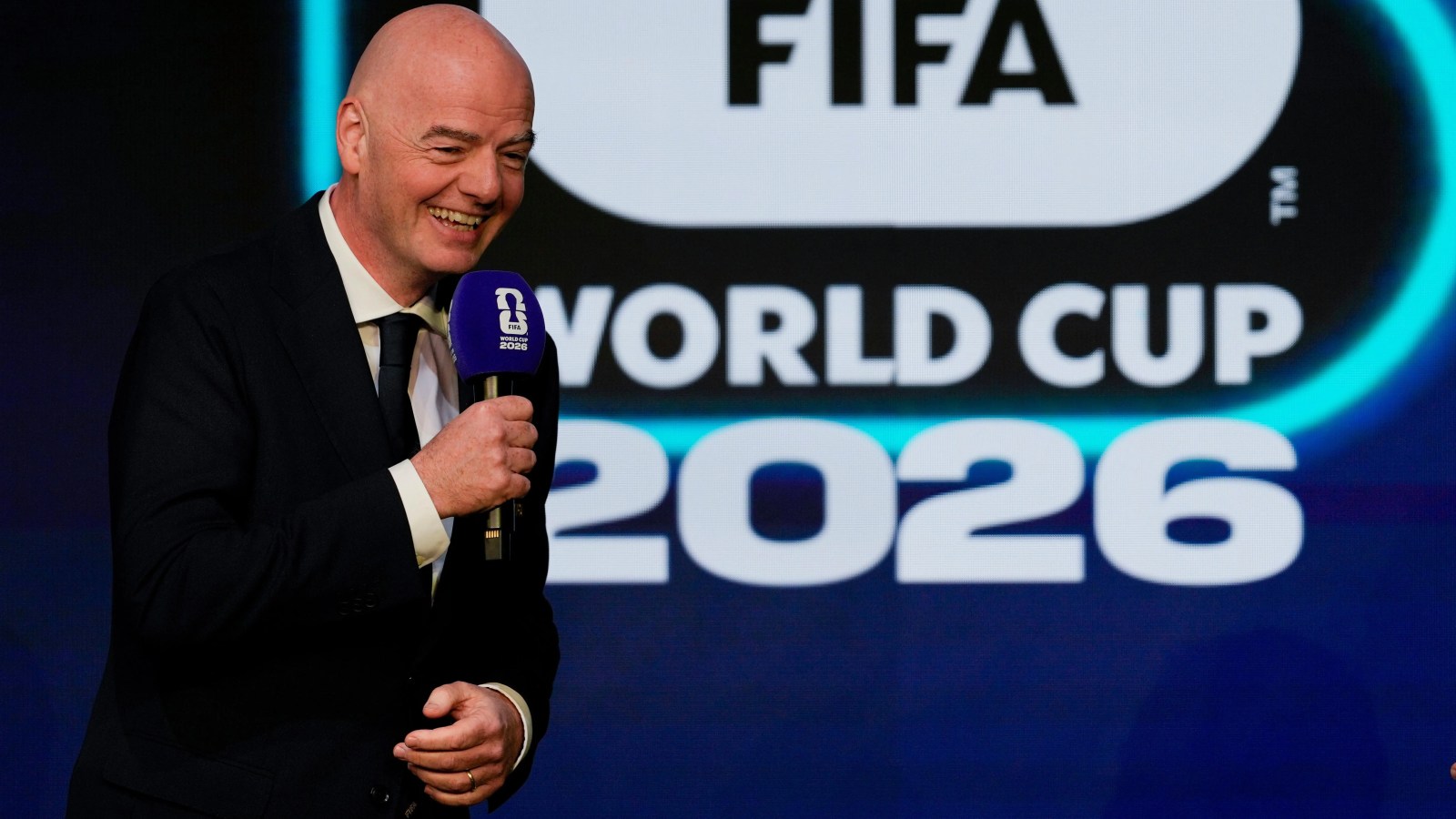
Donald Trump has publicly backed FIFA president Gianni Infantino and warned that removing him would be a “terrible mistake,” adding a sharp political dimension to the debate over football’s leadership after the 2026 World Cup. The intervention is significant because it comes at a time of uncertainty over Infantino’s future, with questions still hanging over whether he will remain in office or face a vote of no confidence. Trump’s remarks went beyond a routine endorsement, casting Infantino as central to FIFA’s continued strength and commercial success. In a World Cup cycle shaped not only by events on the pitch but also by the scale, profile and business of the tournament, that support places Infantino at the centre of a debate that could define the governing body’s next phase.
- Trump publicly supported Gianni Infantino during and after the 2026 World Cup.
- He warned that replacing Infantino would be a “terrible mistake.”
- Trump also said FIFA would “never be as successful or profitable again” if Infantino left.
- Infantino had praised Trump’s role in the 2026 World Cup.
- Uncertainty remained over whether Infantino would stay on as FIFA president or face a vote of no confidence.
Why Trump’s intervention matters
Trump’s comments stand out because they lift a football governance issue into a broader public discussion about leadership, stability and the business direction of the sport. The FIFA presidency is always influential, but support from a high-profile political figure during and after a World Cup intensifies the focus on the officeholder. By arguing that FIFA would suffer if Infantino were removed, Trump linked the leadership question directly to the organisation’s future performance rather than treating it as a routine internal matter. That framing turns any debate over Infantino’s position into a wider argument about continuity, confidence and the momentum generated around the tournament.
The language Trump used was especially forceful. Calling a possible replacement a “terrible mistake” signals more than simple approval; it presents Infantino’s leadership as something FIFA should preserve rather than revisit. His further warning that FIFA would “never be as successful or profitable again” if Infantino left pushes the case even harder, placing commercial strength and institutional performance at the heart of the argument for continuity. In football terms, that matters because the World Cup is not only the sport’s biggest competition but also the clearest expression of FIFA’s global reach, financial power and political influence. Any suggestion that those pillars could weaken without the current president gives the issue immediate weight.
It also changes the tone of the conversation around FIFA’s future. Leadership debates inside governing bodies are often framed in procedural or political terms, but Trump’s intervention recasts this one as a question of risk. The message is not simply that Infantino has support; it is that a change at the top could damage FIFA’s standing and blunt the momentum built around the 2026 World Cup. That is a powerful argument in any institution that measures itself not just by governance but by growth, visibility and commercial reach. By tying Infantino so directly to those outcomes, Trump has helped make the debate more consequential and more public.
What it says about FIFA’s current climate
The broader picture also shows that Trump’s support did not emerge in isolation. Infantino had praised Trump’s role in the tournament, underlining a visible alignment between the two figures around the staging and profile of the 2026 World Cup. That mutual public approval matters because major tournaments are shaped by more than matches alone; they also depend on coordination, presentation and the ability of football’s leadership to project confidence. When a FIFA president and a prominent political figure publicly reinforce one another, it sends a message of partnership and shared investment in the event’s wider narrative. In practical terms, that can strengthen perceptions of stability even when formal questions about leadership remain unresolved.
At the same time, the uncertainty around Infantino’s future means Trump’s endorsement arrives at a delicate moment. It remained unclear whether Infantino would continue as FIFA president or face a vote of no confidence, leaving the governing body in a position where public messaging carries unusual importance. In that setting, every statement about leadership becomes part of the struggle over how FIFA is perceived from the outside. Trump’s intervention does not resolve the issue, but it does seek to shape the atmosphere around it by presenting continuity as the safer and more successful path. For Infantino’s supporters, that is valuable reinforcement; for his critics, it raises the stakes of any challenge by making the consequences of change sound far-reaching.
There is also broader significance in the way the debate has been framed around success and profitability. World Cups are judged not only by what happens during the competition but also by the legacy they leave for the governing body and the sport’s global standing. Trump’s argument effectively links Infantino to those outcomes, suggesting that the current president should be credited with protecting or enhancing FIFA’s position. Whether that view gains wider traction will depend on how the leadership question develops, but the core message is clear: this is being presented as a choice between continuity with a proven figure and the risk of disrupting FIFA’s momentum. That is a potent line in any governance debate, especially so soon after a World Cup cycle.
For FIFA, the episode is a reminder that leadership disputes rarely stay confined to boardrooms. The organisation’s president is one of the most visible figures in world sport, and public endorsements or criticism can quickly become part of its political landscape. Trump’s comments ensure that any future discussion about Infantino’s position will unfold under a brighter spotlight, with increased attention on what a change would mean for FIFA’s image and commercial direction. Even without a final answer on whether Infantino remains secure in the role, the intervention has already sharpened the central question: is FIFA best served by preserving the leadership that oversaw the 2026 World Cup, or by testing a new direction despite the warnings attached to that choice?
What happens next will depend on how FIFA addresses the uncertainty surrounding Infantino’s status, but Trump’s position is now unmistakable. He has publicly backed the FIFA president, defended his value to the organisation and warned against any move to force him out. That support does not determine the outcome of any internal process, but it adds pressure and visibility at a moment when both matter greatly for governing bodies facing leadership questions. As the post-2026 World Cup landscape settles, the future of Infantino’s presidency remains one of the most closely watched issues in global football.

Leave a Reply