

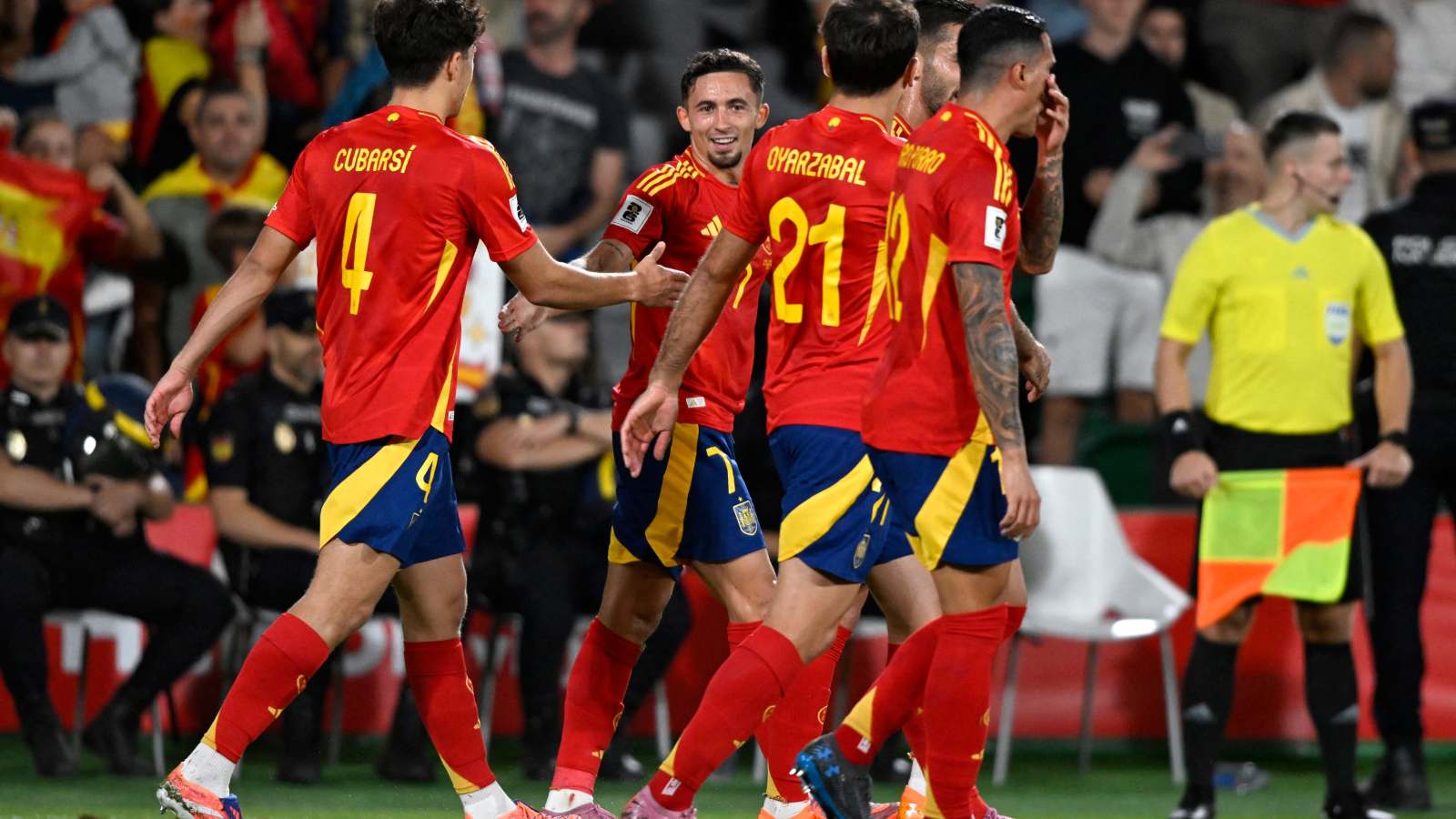
Coverage of the 2026 FIFA World Cup requires careful separation from unrelated competitions, because the material initially cited does not support a straight men’s tournament report. The item in question points instead to a generic women’s tournament hub page covering FIFA Women’s World Cup news, scores and standings, making it unsuitable as the basis for a men’s 2026 World Cup match story or breaking update. The clearest verified men’s 2026 detail available is that Spain beat Argentina 1-0 after extra time at New York New Jersey Stadium to win a second World Cup title, while a separate standings snippet lists Brazil first and Morocco second. That leaves Spain as the standout side in the confirmed material, but it also makes the broader story one of precision: separating verified 2026 men’s World Cup information from unrelated women’s tournament and qualifying references.
- The cited item is not supported as FIFA World Cup 2026 news and instead reflects a generic women’s tournament hub page.
- Verified men’s 2026 World Cup score information shows Spain beat Argentina 1-0 after extra time at New York New Jersey Stadium.
- That result gave Spain a second World Cup title.
- A separate 2026 standings snippet lists Brazil first and Morocco second.
- Another live result concerns 2026 FIFA Women’s World Cup qualifying standings in UEFA, which is a different competition from the men’s 2026 World Cup.
What the verified 2026 information actually shows
The central point in the available research is that not every page carrying World Cup branding belongs to the same tournament. In this case, the material under review was tied to a women’s tournament hub page rather than a reported development from the men’s 2026 World Cup. That distinction matters because tournament hubs often aggregate scores, standings and headlines across multiple competitions, and using them without separating the categories can produce a misleading account of what actually happened. For any article focused on the men’s 2026 event, the starting point has to be confirmed, competition-specific information and nothing beyond it.
Within that narrower frame, the strongest verified men’s 2026 result is Spain’s 1-0 extra-time win over Argentina at New York New Jersey Stadium. Even with limited supporting detail, that scoreline says plenty about the occasion. An extra-time final points to a match decided on fine margins rather than clear dominance, with concentration, game management and endurance likely proving decisive deep into the contest. The fact that the victory delivered Spain a second World Cup title turns it from a narrow result into a landmark achievement, making it the defining outcome in the material available here.
That is why Spain remains the clear focal point of the verified reporting. The available evidence does not identify the goalscorer, the decisive tactical adjustment or the key individual moment, but it does establish the essentials. Spain found the breakthrough when regulation time was not enough, and that breakthrough secured another world title. In a dataset otherwise complicated by crossover references and mislabeled competition material, that result stands out because it is both specific and consequential.
Why the standings and competition split matter
The separate standings snippet listing Brazil first and Morocco second adds another layer of context, even if the research does not provide the full table, points totals or the match-by-match route to those positions. Brazil being first suggests a team that handled its phase of the tournament strongly enough to set the pace, while Morocco in second points to a significant level of competitiveness and resilience. Without stretching beyond the verified information, the key takeaway is that the men’s 2026 competition picture includes both an eventual champion in Spain and a standings snapshot in which Brazil and Morocco occupied the top two places in another part of the tournament structure. That underlines the breadth of the competition and the risk of reducing it to a single page or mislabeled hub.
Just as important is the research note about a live result referring to 2026 FIFA Women’s World Cup qualifying standings in UEFA. That is a different competition entirely from the men’s 2026 World Cup, and the distinction is not cosmetic. Qualifying standings, final tournament standings, and separate men’s and women’s competitions each carry their own timelines, participants and stakes. Blending them together would distort the competitive picture and could wrongly assign significance to teams or results that belong to another pathway altogether. For readers trying to understand the men’s 2026 tournament, precision is not a technicality; it is the foundation of accurate reporting.
Spain’s verified triumph over Argentina remains the central football story in the material, and even the limited facts available help explain why it stands out. Winning 1-0 after extra time indicates a contest that resisted easy resolution and demanded patience as much as quality. Finals decided that way often become tests of structure, discipline and nerve, because one moment can outweigh long stretches of parity. While the research does not identify the scorer, the tactical turning points or the decisive individual action, it does confirm the essentials: Spain found the winning edge after 90 minutes were not enough, and that edge delivered a second world title.
For Argentina, the same scoreline points to the narrowest kind of defeat on the biggest stage. Losing after extra time means staying alive deep into the match and falling only after the contest had already stretched beyond the standard 90 minutes. That usually reflects a side capable of competing evenly for long periods, even if it ultimately leaves without the trophy. With no verified player-specific or tactical detail available, the fairest reading is that Argentina pushed the final to its limits but could not stop Spain from taking the decisive step at New York New Jersey Stadium.
The road ahead in covering the 2026 World Cup is therefore as much about discipline in interpretation as it is about the results themselves. The confirmed record from this research is clear on Spain’s title-winning 1-0 extra-time victory over Argentina and on a standings snapshot with Brazil first and Morocco second, but it is equally clear that unrelated women’s tournament and qualifying pages cannot be folded into the same story. Future updates will require the same separation of competitions and the same refusal to overstate what the evidence does not show. For now, the verified men’s 2026 headline belongs to Spain, whose extra-time win delivered a second World Cup crown and stands as the clearest confirmed development in the material available.

Leave a Reply