

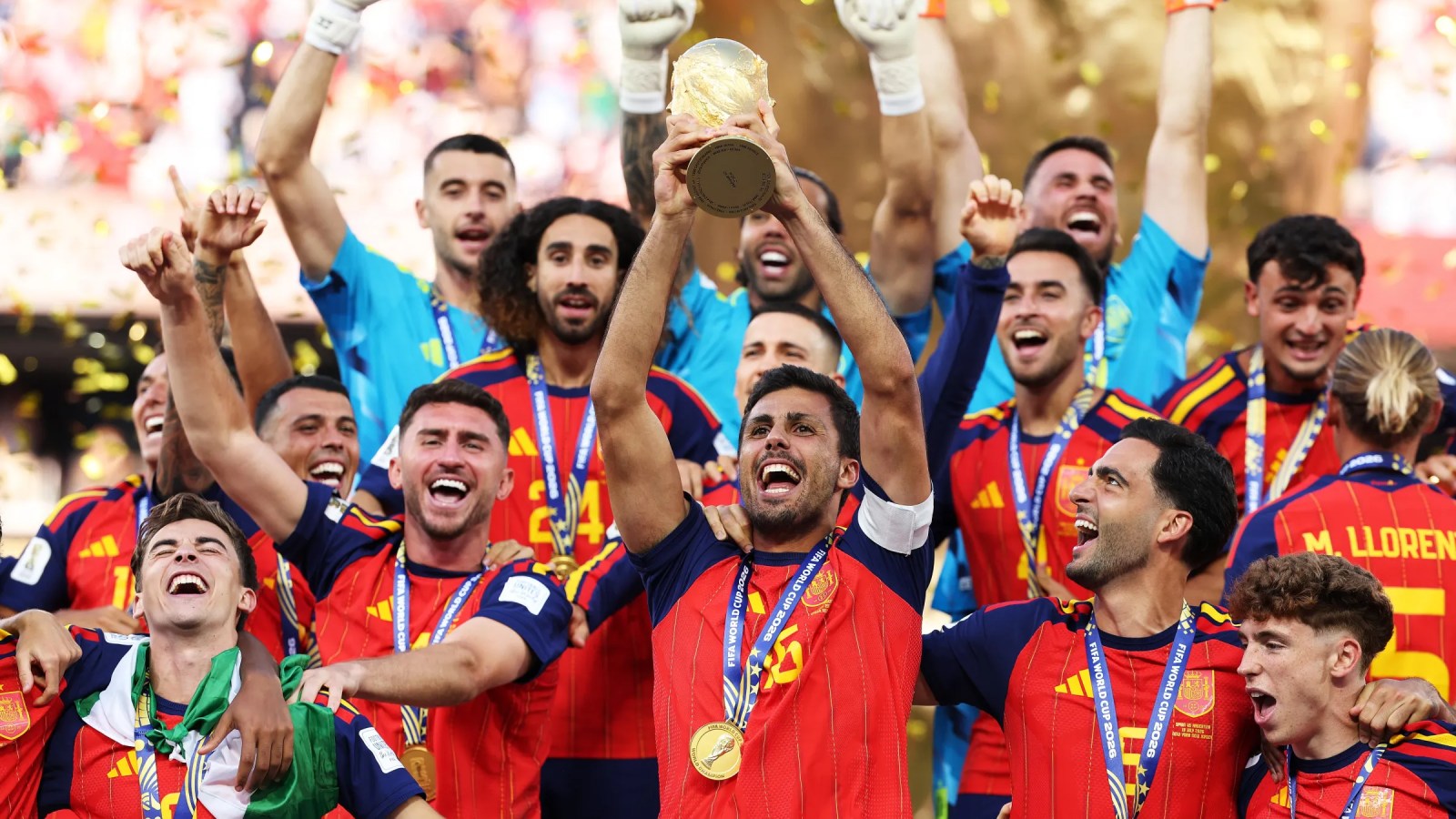
Spain are world champions once again after a 1-0 victory over Argentina in the 2026 FIFA World Cup final at New York/New Jersey Stadium, sealing the nation’s second title on football’s biggest stage. The result brought a landmark tournament to a close after running from June 11 to July 19, with added significance as the first World Cup to feature 48 teams. In a final decided by the finest margin, Spain found the breakthrough that mattered most and then held firm to complete a triumph that will define this edition of the competition. The narrow scoreline underlined how little separated the finalists, but the outcome left Spain alone at the summit and gave the expanded tournament a champion worthy of its historic scale.
- Spain beat Argentina 1-0 in the 2026 FIFA World Cup final at New York/New Jersey Stadium on July 19, 2026.
- The victory gave Spain their second FIFA World Cup title.
- The 2026 tournament ran from June 11 to July 19.
- This was the first FIFA World Cup to feature 48 teams.
- Kylian Mbappé finished the tournament with another Golden Boot.
Spain’s narrow win delivers the biggest prize
A one-goal final always carries a particular tension, and Spain’s victory over Argentina reflected that reality from start to finish. World Cup finals are rarely defined by openness alone; they are remembered for control, composure and the ability to survive the moments when the match can turn. Spain did exactly that, turning one decisive edge into the difference between glory and heartbreak. By lifting the trophy, they not only won the final match of the tournament but also reclaimed a central place in World Cup history.
The significance of the result is heightened by the context of the competition itself. This was the first 48-team World Cup, a structural change that brought a wider field, more matches and a fresh layer of complexity to the road to the title. Winning such an edition demands consistency across a longer and more demanding landscape, and Spain emerged from that challenge as the last team standing. Their success therefore carries added historical weight, because they are the first side to navigate this expanded format all the way to the trophy.
For Argentina, the defeat is especially painful because the margin was so small. Losing a World Cup final by a single goal leaves little room for consolation, particularly when one moment can define the entire night. Yet the closeness of the contest also speaks to Argentina’s quality and competitiveness on the biggest stage. They pushed all the way to the final and remained within touching distance of forcing a different ending, only for Spain to seize the one advantage that mattered.
A historic tournament ends with Spain on top
The 2026 World Cup was always going to be judged through two lenses: the quality of the football and the success of the new 48-team format. Its conclusion, with a tightly contested final and Spain as the first champion of the expanded era, gives the tournament a clear narrative arc. From June 11 to July 19, the competition stretched across more than a month, asking teams to combine squad depth, tactical flexibility and emotional resilience. Spain’s 1-0 win in the final showed that, even in a larger tournament with more participants, the title can still come down to discipline, patience and one decisive moment.
That broader format also changed the meaning of progression and survival throughout the event. More teams meant a wider range of styles, greater logistical demands and a longer route to the trophy, all of which increased the value of balance over the course of the competition. Spain’s title therefore stands as more than a single-night achievement; it is the culmination of mastering a tournament designed to be more inclusive and, by extension, more difficult to control. Argentina’s run to the final likewise demonstrated the standard required to thrive in this new environment, even if the last step proved just beyond reach.
Another notable thread running through the tournament was Kylian Mbappé’s capture of another Golden Boot. That individual honour adds a separate layer to the story of 2026, highlighting that while Spain claimed the team prize, the competition also produced a familiar attacking standout. The coexistence of those two narratives is part of what gives every World Cup its depth: one nation lifts the trophy, while individual excellence leaves its own mark on the record books. Mbappé’s achievement ensures that the tournament will be remembered not only for Spain’s title but also for a leading scorer who once again finished above the field.
Spain’s second World Cup title now stands as the defining endpoint of this edition, and it will inevitably shape how the tournament is discussed in the years ahead. The first champion of the 48-team era carries symbolic importance that extends beyond the medal ceremony, because future winners will be measured against the standard set here. A 1-0 final may look slender on paper, but such scorelines often speak to concentration and maturity rather than caution alone. Spain found the balance required to win the most pressurised match in football, and that is ultimately the quality every champion must show.
Looking ahead, Spain move forward as the team that set the benchmark for the World Cup’s expanded future, while Argentina must absorb the disappointment of falling one result short after reaching the final. The 2026 tournament is now complete, its place in history secured by a new format, a narrow final and a champion that seized the decisive moment. Spain leave New York/New Jersey Stadium with the trophy and the distinction of being the first winners of a 48-team World Cup. That achievement, together with Mbappé’s Golden Boot, gives this tournament a clear legacy as the game turns toward its next global cycle.

Leave a Reply