
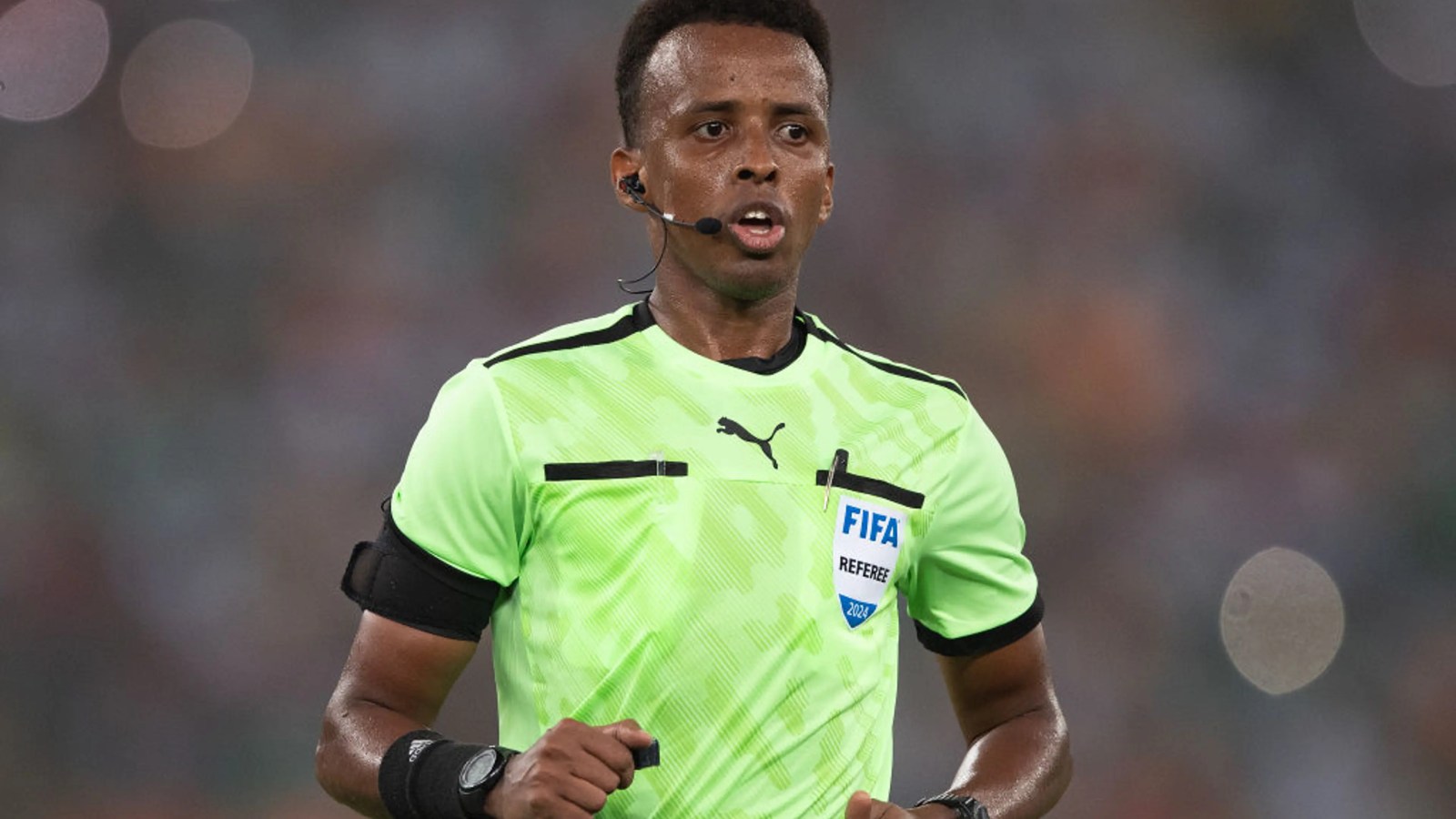
Omar Artan’s route to the 2026 FIFA World Cup took a painful and unexpected turn when visa issues prevented him from entering the United States, denying the Somali official the chance to take charge at the tournament and delaying what would have been a landmark moment in football history. Artan had been set to become the first Somali referee to officiate at a World Cup finals match, a breakthrough with significance far beyond a single appointment. Instead, the episode became, in his own words, a very tough period, interrupting years of work and preparation at the highest level. His appointment to the 2026 UEFA Super Cup now offers an important measure of recognition and renewal, giving Artan a major stage on which to reassert his standing after one of the most difficult setbacks of his career.
- Omar Artan was due to officiate at the 2026 FIFA World Cup but was refused entry to the United States because of visa issues.
- Artan had been set to become the first Somali referee to officiate at a World Cup finals match.
- He has described the episode surrounding his inability to enter the United States as a very tough period.
- Artan has now said he is grateful for the opportunity to work the 2026 UEFA Super Cup after being appointed to that match.
- FIFA will still pay Artan for his World Cup match assignments despite his inability to enter the United States.
A landmark moment interrupted
The significance of Artan’s missed World Cup role cannot be separated from the wider meaning it held for Somali football. Refereeing appointments at a World Cup finals are among the clearest markers of trust, consistency and elite performance in the international game, and Artan’s selection showed that he had earned a place in that company. For Somalia, the appointment represented visibility at the highest level of the sport, with one of its officials poised to break new ground on the global stage. That is why the visa issue did not merely alter a travel plan or tournament assignment; it stopped a historic sporting first from being realised at the moment it was meant to happen.
There is a particularly harsh quality to this kind of setback because it sits outside football’s normal competitive framework. Referees prepare for years through assessments, fitness work, technical development and performance reviews, all with the aim of being trusted with the biggest matches. When an opportunity of that scale is lost for administrative reasons rather than anything connected to form or merit, the disappointment can feel especially acute. Artan’s description of the period as very tough captures that reality. The issue was not a decision made on the field or a place lost through performance, but an inability to access the tournament at all.
That context makes FIFA’s decision to still pay Artan for his World Cup match assignments more than a procedural detail. Financially, it ensures he is not penalised for circumstances that prevented him from carrying out the role despite having been selected for it. Symbolically, it reinforces that his appointment remained valid in sporting terms, even if practical barriers to entry meant he could not complete the assignment. In a profession where recognition is often tied to visible participation, that matters because it preserves the legitimacy of the achievement he had already earned.
Recognition restored on another major stage
Artan’s appointment to the 2026 UEFA Super Cup now shifts the tone of the story from pure frustration to one of recovery and continued esteem. The Super Cup is not a substitute for a World Cup finals match, and nothing can fully recreate the significance of becoming the first Somali referee to officiate on that stage. Even so, it is a high-profile fixture that confirms Artan remains trusted with major occasions. His gratitude for the opportunity suggests a professional determined to move forward, using the appointment not simply as compensation for what was lost, but as a fresh chance to demonstrate the quality that brought him to the brink of World Cup history in the first place.
For officials, momentum and visibility matter almost as much as individual appointments. A major match can reaffirm status within the refereeing structure, restore confidence after disappointment and remind the wider football world that one setback has not altered the underlying level of performance. That is what makes the Super Cup assignment so meaningful in this case. It places Artan back in the conversation around elite officiating and ensures that the defining image of his year is not only the visa refusal, but also his return to a prominent role in one of the game’s showcase fixtures.
The episode also highlights how international football remains shaped by factors beyond the pitch, including travel access and administrative clearance. Players, coaches and supporters often dominate discussions around major tournaments, but referees are equally dependent on the same logistical systems in order to perform their roles. Artan’s case exposed how vulnerable even the most accomplished officials can be when those systems fail or become obstacles. At the same time, the response to his situation, including payment for his World Cup assignments and a subsequent elite appointment, suggests a clear effort to acknowledge both the injustice of the missed opportunity and the value of the official involved.
There is broader resonance here for emerging football nations and for representation within the game’s institutions. Artan’s near-milestone showed that pathways to the top are open, even for officials from countries that do not often occupy the sport’s central spotlight. The disappointment of the World Cup absence does not erase that progress, but it does underline how fragile historic breakthroughs can be when they depend on more than sporting merit alone. His next appointment therefore carries a dual significance: it is a personal comeback for Artan, and it is also a reminder that Somali football still has a figure capable of operating at the highest level of international officiating.
What comes next is less about rewriting the disappointment of the World Cup and more about building from it. Artan now has the opportunity to approach the UEFA Super Cup as both a professional challenge and a statement of resilience after a very tough period. His presence there will not change what was lost in the United States, but it will show that his standing in the game endures and that the historic significance attached to his rise has not faded. For Artan, for Somali football and for those who follow the progress of underrepresented nations in world football, the next whistle he blows on a major stage will carry meaning well beyond the match itself.



Leave a Reply