

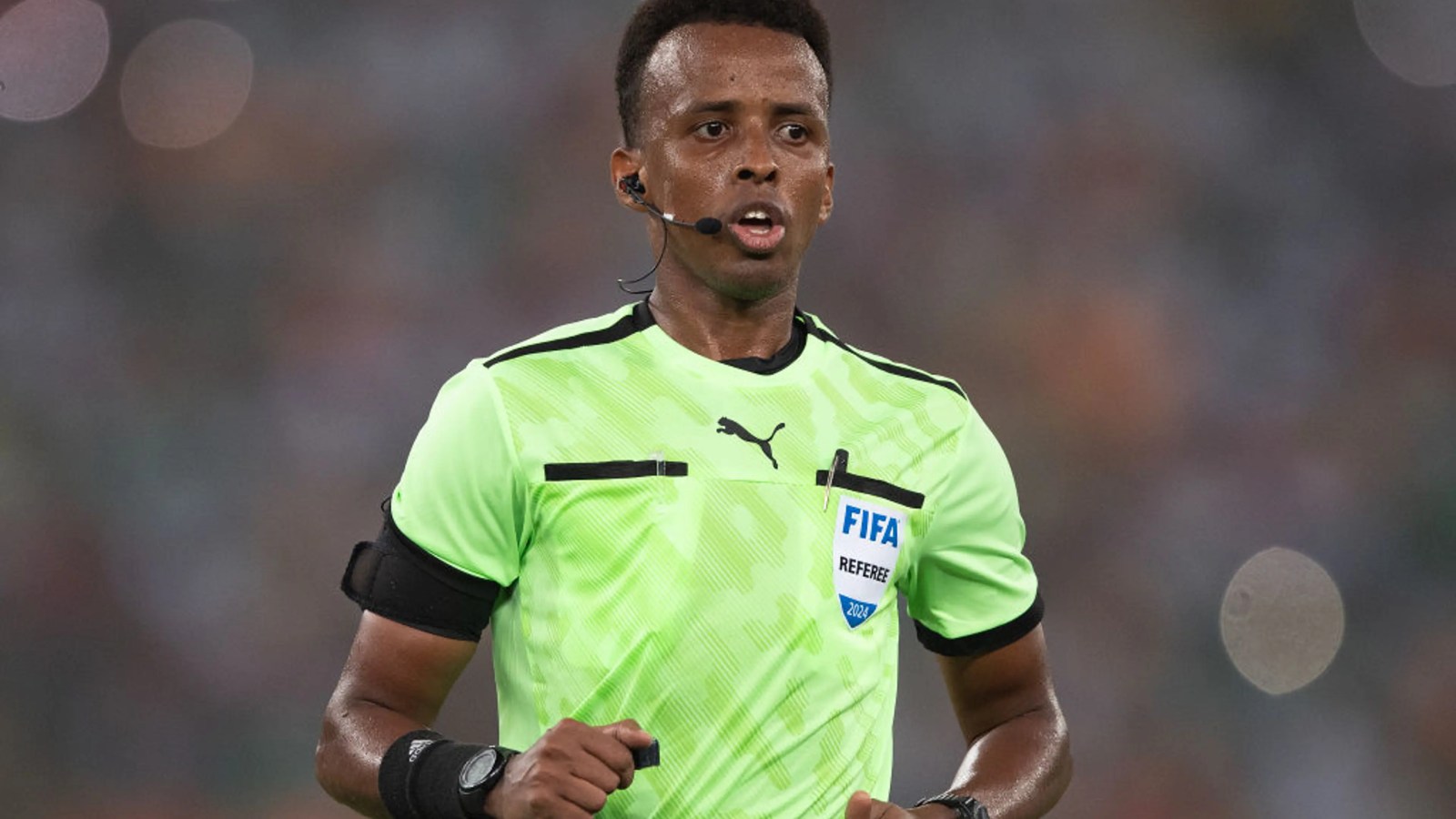
Omar Artan has been appointed to officiate the 2026 UEFA Super Cup, a significant assignment that restores the Somali referee to a major international stage after he missed the FIFA World Cup in North America. The appointment, announced on June 11, 2026, places Artan at the center of one of European football’s highest-profile curtain-raisers after a difficult World Cup summer in which he was unable to take up his refereeing duties. His selection carries significance well beyond a single fixture because it signals renewed confidence in his standing at elite level. Artan is the central figure in this story not only because of the match itself, but because the appointment follows a sharp professional setback and offers an immediate return to the spotlight.
- Omar Artan has been appointed to officiate the 2026 UEFA Super Cup.
- The appointment was announced on June 11, 2026.
- Artan missed the FIFA World Cup in North America after being denied entry to the United States in Miami.
- The 2026 UEFA Super Cup is listed as Paris Saint-Germain vs Aston Villa on Aug. 12.
- Salzburg is named as the venue in one result, and Artan said he was “really proud” of the appointment.
A major return after World Cup disappointment
The significance of Artan’s appointment cannot be separated from what happened earlier in the summer. Missing the World Cup was a major blow for any official selected for the tournament, particularly one preparing for the demands, scrutiny and prestige that come with football’s biggest global event. In Artan’s case, the issue was not an on-field controversy or any loss of confidence in his ability. He was denied entry to the United States in Miami and therefore could not assume his World Cup responsibilities. That context makes this UEFA Super Cup assignment far more than a routine designation; it reads as a swift and meaningful return to one of the game’s biggest stages.
There is also a broader professional message in the timing. The announcement came on June 11, 2026, ensuring that Artan’s next major appointment became part of the conversation almost immediately after the disappointment of missing the World Cup. For referees, momentum and visibility matter, especially at the top end of the international game, where appointments are both a reward and a statement of trust. Being handed the Super Cup indicates that Artan remains firmly in that upper tier. It turns a narrative of absence into one of reinstatement and recognition.
The speed of that shift is especially striking. A summer that might have been defined solely by frustration now has a very different frame. Rather than being left on the margins after an unusual and disruptive setback, Artan has been restored to a match of major importance. That does not erase the disappointment of missing the World Cup, but it does show that his standing has not been diminished by circumstances beyond the field. In practical terms, the appointment is a clear endorsement of his credibility, readiness and authority at the highest level of officiating.
What the Super Cup assignment represents
The UEFA Super Cup is not simply another fixture on the calendar. It is a one-off match that brings together elite opposition, significant attention and the expectation of precise game management from the referee and officiating team. This year’s match is listed as Paris Saint-Germain against Aston Villa on Aug. 12, with Salzburg named as the venue in one result, and that pairing alone underlines the visibility of the occasion. A referee in that environment must manage top-level players, intense emotional swings and the unique rhythm of a season-opening final, where both teams are chasing silverware and an early statement.
For Artan, that makes the appointment especially resonant. The World Cup is the pinnacle, but the Super Cup remains a major European showpiece that places the referee under sustained scrutiny from the opening whistle to the final decision. It demands authority, calm and the ability to interpret key moments in a match where the margin between celebration and frustration can be very small. Coming after the frustration of missing the World Cup, this is the kind of assignment that can quickly re-establish a referee’s profile in the minds of players, coaches and administrators. It offers a platform not just to participate, but to demonstrate resilience and composure after a highly unusual setback.
Artan’s own reaction captures the emotional importance of the moment. He said he was “really proud” of the appointment, a concise but telling response that reflects both relief and satisfaction. Pride is an understandable sentiment here because the role acknowledges his place among the officials trusted for marquee occasions. It also suggests that, despite the disappointment of the World Cup, the appointment has given him a chance to refocus on performance rather than frustration. In elite sport, that shift matters. The next assignment often becomes the clearest measure of whether a setback has altered a career trajectory, and this one points strongly in the right direction.
The appointment also carries significance beyond the individual level. A Somali referee taking charge of the UEFA Super Cup is notable in itself, and the visibility of that role matters in a sport where representation at the highest levels of officiating carries real symbolic value. Major appointments can broaden perceptions of who is present and trusted in the game’s most demanding spaces. They can also inspire officials from emerging football regions by showing that the pathway to top-level matches remains open. In that sense, Artan’s selection is both a professional endorsement and a moment with wider resonance.
There is a practical football dimension as well. Paris Saint-Germain and Aston Villa will enter the match with silverware at stake and with the competitive edge that often defines early-season finals. The referee’s task in those games is to set the tone quickly, balance control with flow, and ensure that the occasion does not overwhelm the contest. While no tactical details are provided here about the teams, it is clear that a fixture of this profile requires an official trusted to handle pressure and complexity. Artan’s appointment indicates that he is viewed as exactly that kind of referee.
Seen in full, the story is one of recovery and reaffirmation. The World Cup absence could have left Artan’s summer defined by what did not happen, but the Super Cup now gives it a very different shape. Instead of being remembered only for the missed opportunity in North America, he now heads toward a major European final with the chance to write a more positive chapter almost immediately. That shift does not erase the disappointment of missing the World Cup, but it does place it in a new context: one where setback is followed by trust, visibility and another elite appointment.
What comes next is clear. Artan will now prepare for the UEFA Super Cup on Aug. 12, when Paris Saint-Germain and Aston Villa are listed to meet, with Salzburg named as the venue in one result. The match offers him an immediate chance to turn a difficult World Cup story into a statement of resilience on a major stage. If he handles the occasion as expected, the appointment could stand as one of the most important moments of his refereeing career. For now, the headline is straightforward: after missing the World Cup, Omar Artan is back in the spotlight with a prestigious final to officiate.

Leave a Reply