
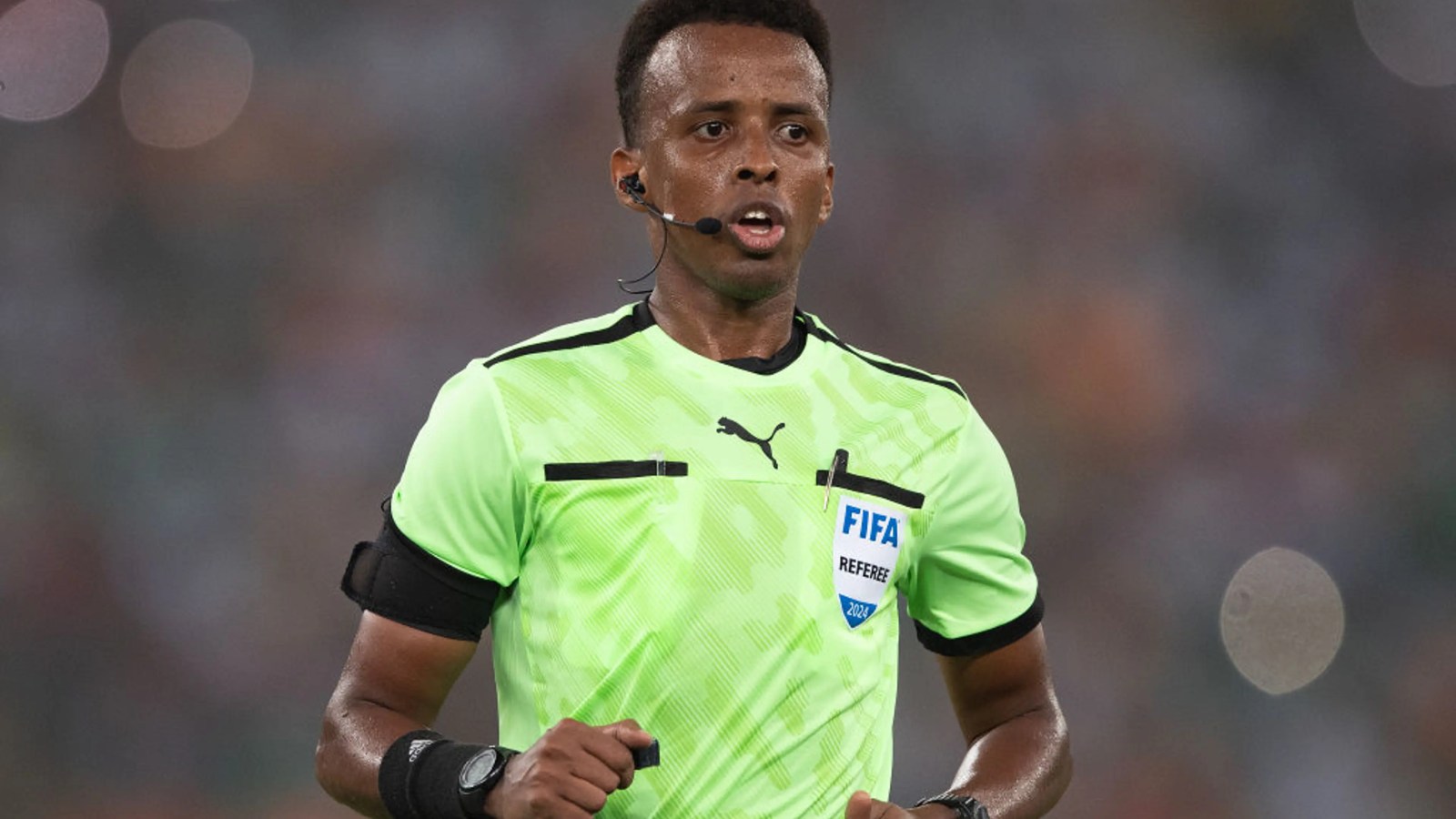
Omar Artan’s World Cup 2026 story has become one of the tournament’s most striking off-field developments, with the Somali referee denied entry to the United States because of visa issues and therefore unable to take up the assignment that would have made him the first Somali official to referee a match at the World Cup finals. The setback carried obvious personal and symbolic weight, given the significance of that milestone for Somali football and for African officiating on the global stage. Yet the aftermath has also brought a measure of recognition, with UEFA appointing Artan to officiate the Super Cup final after his missed World Cup opportunity. That decision ensures his name remains attached to a major international occasion, even if the World Cup breakthrough itself was denied at the last moment.
- Omar Artan was due to work at the 2026 World Cup but was refused entry to the United States because of visa issues.
- His absence meant he could not take up the tournament assignment that would have made him the first Somali official to referee a match at the World Cup finals.
- UEFA has since appointed Artan to officiate the Super Cup final, handing him a major international assignment after the World Cup disappointment.
- Artan is still set to receive payment for his World Cup match assignments despite being unable to enter the United States.
A missed World Cup milestone
The immediate significance of Artan’s absence lies in what the appointment represented beyond a single match. Refereeing at the World Cup finals is one of the highest honours in football officiating, and for Artan it would have marked a historic first for Somalia. That matters because referees, like players and coaches, carry the visibility of their football cultures onto the game’s biggest stages. In this case, the loss was not simply a professional inconvenience; it was the removal of a landmark moment that would have resonated far beyond the tournament itself.
World Cup appointments are the product of years of development, assessment and trust, and they place officials under intense scrutiny before a ball is even kicked. To reach that point and then be prevented from travelling because of visa issues makes the episode especially stark. There is no suggestion in the verified details that the obstacle was related to performance, readiness or standing within the game. Instead, a bureaucratic barrier intervened at the exact moment Artan was poised to step into football history.
That is why the story has carried such force during the tournament. The World Cup is designed to showcase football’s global reach, and refereeing selections are part of that picture just as much as team line-ups and star players. Artan’s expected role would have underlined the widening representation within elite officiating, particularly for nations that do not often feature prominently in the latter stages of the sport’s biggest events. Missing that chance leaves a sense of unfinished business, because the significance of his selection remains intact even if the match itself never came.
There is also a broader resonance to the episode. The World Cup is built on the idea that football can bring together nations, cultures and pathways from every corner of the sport. Artan’s appointment embodied that principle. His absence, by contrast, highlighted how quickly that promise can be disrupted by issues outside the game itself. For Somalia, the moment was supposed to be one of visibility and progress. Instead, it became a reminder that even the clearest sporting achievement can still be vulnerable to administrative barriers beyond an official’s control.
Recognition after disappointment
UEFA’s decision to appoint Artan to the Super Cup final gives the story an important second chapter. It does not replace the World Cup, and it cannot recreate the unique historical meaning of becoming the first Somali official to referee at the finals, but it does provide a clear statement about his standing. A Super Cup final is a major international assignment in its own right, one that places an official in a high-pressure environment with global attention and little margin for error. In practical terms, it returns Artan to a prominent stage and confirms that his trajectory at the top level remains very much alive.
That matters because elite refereeing careers can be shaped as much by momentum and visibility as by technical quality. Missing the World Cup risked turning Artan’s name into a story defined only by absence, framed by what he could not do rather than by the level he had reached. The Super Cup appointment changes that narrative. Instead of being remembered solely for a lost opportunity, he now moves directly into another prestigious fixture, preserving both his profile and the broader sense that he belongs among the game’s leading officials.
There is also significance in the financial detail that Artan will still receive payment for his World Cup match assignments despite being unable to enter the United States. That does not erase the sporting disappointment, but it does indicate that the work he did to earn the appointment has not been disregarded. Payment in these circumstances acknowledges that the assignment was real, deserved and lost for reasons outside the act of refereeing itself. For Artan, that distinction is meaningful because it separates the administrative failure from his professional merit.
From a wider tournament perspective, the episode is a reminder that the World Cup depends on far more than the teams on the pitch. Officials are central to the competition’s credibility, rhythm and fairness, and their preparation is every bit as exacting as that of the players they oversee. When a selected referee cannot even reach the host nation, it exposes how vulnerable major sporting events can be to problems beyond football. In Artan’s case, the consequences were deeply personal, but the broader lesson is about how fragile historic moments can be when logistics and access break down at the wrong time.
For Somalia, the emotional impact should not be understated. Even without the match itself, Artan’s original appointment still stands as evidence that Somali representation had reached a new level in world football officiating. The missed debut delays, rather than erases, the possibility of that barrier being broken in the future. His subsequent Super Cup role strengthens that idea, suggesting that while one door closed at the World Cup, his place in the upper tier of international refereeing has not been diminished.
What comes next is likely to define how this chapter is ultimately remembered. If Artan handles the Super Cup final successfully, the conversation will shift further from what was lost in the United States toward what still lies ahead in his career. The World Cup 2026 assignment will remain a painful near-miss and a historic opportunity denied by visa issues, but it no longer looks like a stopping point. Instead, it appears to be a detour in a career that continues to command major trust, major appointments and the possibility of future milestones on football’s biggest stages.


Leave a Reply