

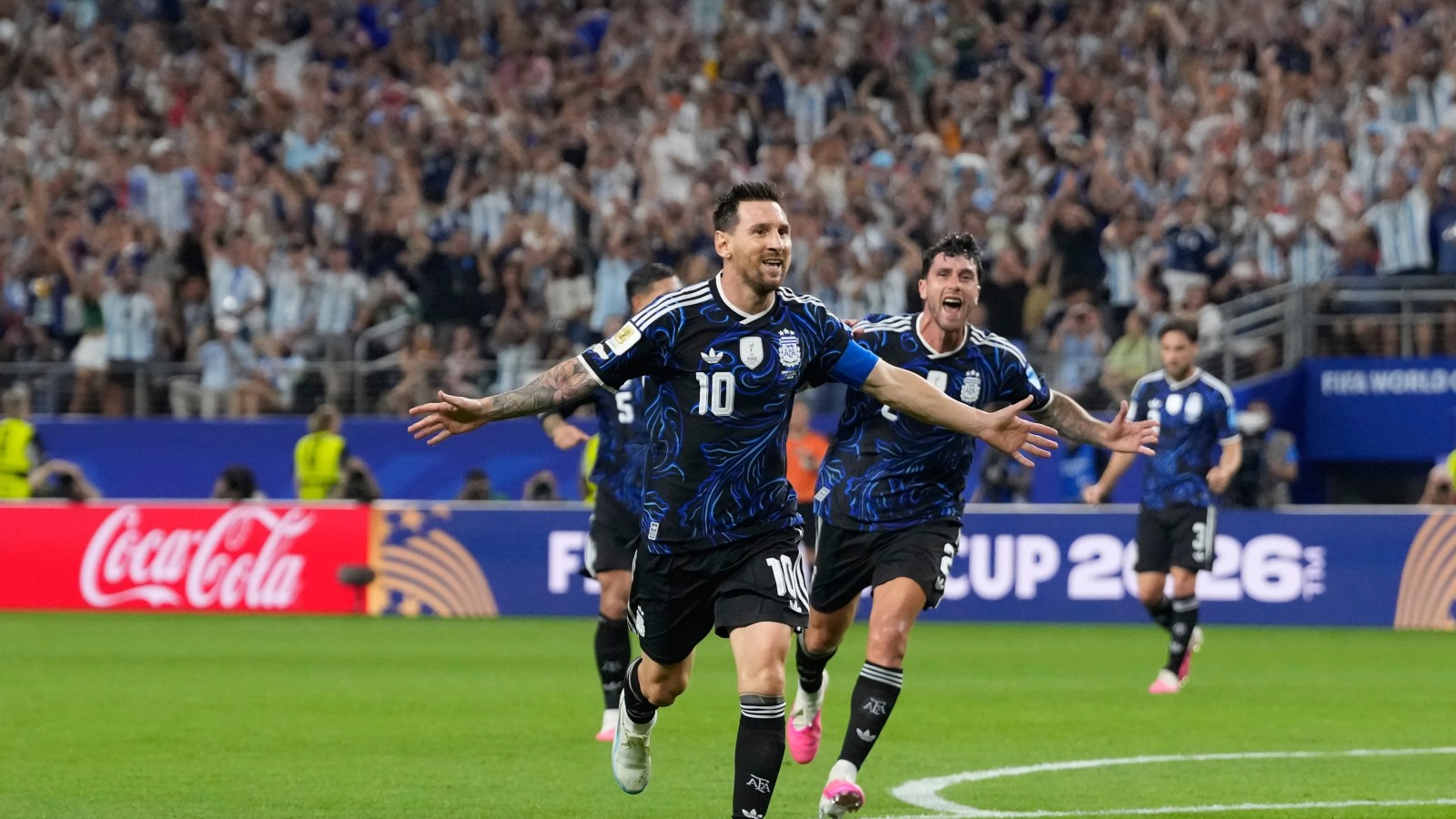
Argentina edged past Cape Verde 3-2 at the 2026 FIFA World Cup, surviving a demanding contest that highlighted both their attacking quality and their vulnerability when games become stretched. The defining moment came when Lionel Messi opened the scoring to put Argentina 1-0 ahead with what was described as his 20th FIFA World Cup goal, another landmark strike that placed him at the centre of the biggest stage. While the final margin was narrow, the result carried major weight because Argentina found a way through a difficult test and kept moving forward in the tournament. For Cape Verde, the scoreline showed they were far more than passengers, pushing one of the competition’s heavyweights all the way.
- Argentina defeated Cape Verde 3-2 in a 2026 FIFA World Cup match.
- Lionel Messi scored to put Argentina 1-0 ahead.
- Messi’s opener was described as his 20th FIFA World Cup goal.
- Highlights of the match were available on 4 July 2026.
- The result confirmed Argentina came through a close and competitive contest rather than a routine victory.
Messi sets the tone in a match that never settled
Messi’s early impact gave Argentina the platform they wanted, but the final score made clear this was not a game they controlled from start to finish. His opener mattered for more than the immediate lead because it established the rhythm of a night in which Argentina’s attacking stars were expected to carry the burden. Reaching a 20-goal mark in FIFA World Cup play is a significant milestone in itself, and it added another layer of importance to a match that already carried knockout-level tension in the way it unfolded. Yet the 3-2 outcome also suggested Argentina had to keep solving problems after going in front rather than settling into the kind of command they would have preferred.
That is what made the result so compelling. A one-goal victory in a five-goal game usually points to shifts in momentum, pressure at both ends and a contest that remained alive deep into the second half. Argentina did enough to score three times, which speaks to the enduring threat in their forward play, but conceding twice showed Cape Verde were able to disrupt them and turn the match into a genuine fight. Even without every scoring detail, the shape of the result tells its own story: Argentina had quality, Cape Verde had belief, and neither side allowed the game to drift into predictability.
There was also a clear sense that Messi’s contribution framed the entire evening. When a player of his stature delivers the opening goal in a match that ends with only a one-goal margin, the significance naturally grows. His strike gave Argentina the first foothold in a contest that never fully settled, and it reinforced how often the team still looks to him for the decisive touch when tension rises. The milestone attached to the goal only sharpened that feeling, turning an already important moment into one that carried both competitive and historical weight.
What the result says about both teams
For Argentina, the positive is obvious. Tournament football is often defined not by perfect performances but by the ability to win when the game becomes uncomfortable, and this was clearly one of those nights. Scoring three goals in a World Cup match reflects attacking sharpness and the capacity to create decisive moments, especially when led by a player as influential as Messi. At the same time, allowing Cape Verde to stay within a single goal to the finish is a reminder that margins can become dangerously thin against opponents willing to attack with conviction.
There is also broader psychological value in a result like this. Teams with championship ambitions are tested in different ways across a World Cup, and not every challenge comes in the form of a glamorous heavyweight opponent. Sometimes the real examination is whether a favourite can absorb resistance, respond to setbacks within the game and still leave with the win. Argentina did that here, but the narrow scoreline suggests there will be internal reflection as well as satisfaction, because a side aiming to go deep in the tournament will know that cleaner control can make the road ahead less hazardous.
Cape Verde, meanwhile, can take genuine encouragement from the performance despite the defeat. Scoring twice against Argentina on this stage is an achievement that signals courage, execution and a refusal to be overawed by reputation. The result indicates they were able to ask difficult questions of a team expected to dominate the ball and dictate territory, and that alone gives this match significance beyond the final standings. Even in defeat, pushing Argentina to a 3-2 finish sends a message that Cape Verde were competitive, organised enough to stay in touch and dangerous enough to make every Argentine lead feel vulnerable.
That competitive edge matters because World Cup narratives can shift quickly. A side that proves it can trouble one of the tournament’s biggest names earns respect from every future opponent, and it also gives itself a platform of belief. Cape Verde may not have taken points from this match, but they showed they could participate on meaningful terms rather than simply react to events. In tournaments, displays like this can become defining moments for a squad’s identity, especially when they reveal resilience and attacking ambition under pressure.
Another notable aspect of the match is how strongly it reinforced Messi’s enduring importance to Argentina. His goal did not merely open the scoring; it framed the contest around his ability to provide the breakthrough when tension is highest. Milestone goals often become shorthand for longevity, but in this case the strike also had immediate competitive value, giving Argentina the first decisive push in a game that remained tight. When a team wins by a single goal and its most iconic player scores first, it is difficult to overstate how central that contribution feels to the final outcome.
The availability of highlights on 4 July 2026 also reflects the wider significance of the contest, because this was the kind of game that invited repeat viewing. A 3-2 World Cup result involving Argentina naturally carries drama, and Messi’s landmark goal only heightened that sense of occasion. Supporters will remember the scoreline for its tension and entertainment, but they will also remember it as another chapter in Messi’s tournament legacy.
Looking ahead, Argentina will view this win as both a boost and a warning. The boost comes from scoring three goals and taking victory from a high-pressure World Cup fixture, with Messi again delivering a defining moment. The warning comes from the fact Cape Verde stayed close enough to keep the contest in doubt, a reminder that every phase of concentration matters as the tournament intensifies. Cape Verde leave without the result but with evidence that they can compete boldly on this stage, while Argentina move on knowing they still have gears to find despite getting the job done.



Leave a Reply