
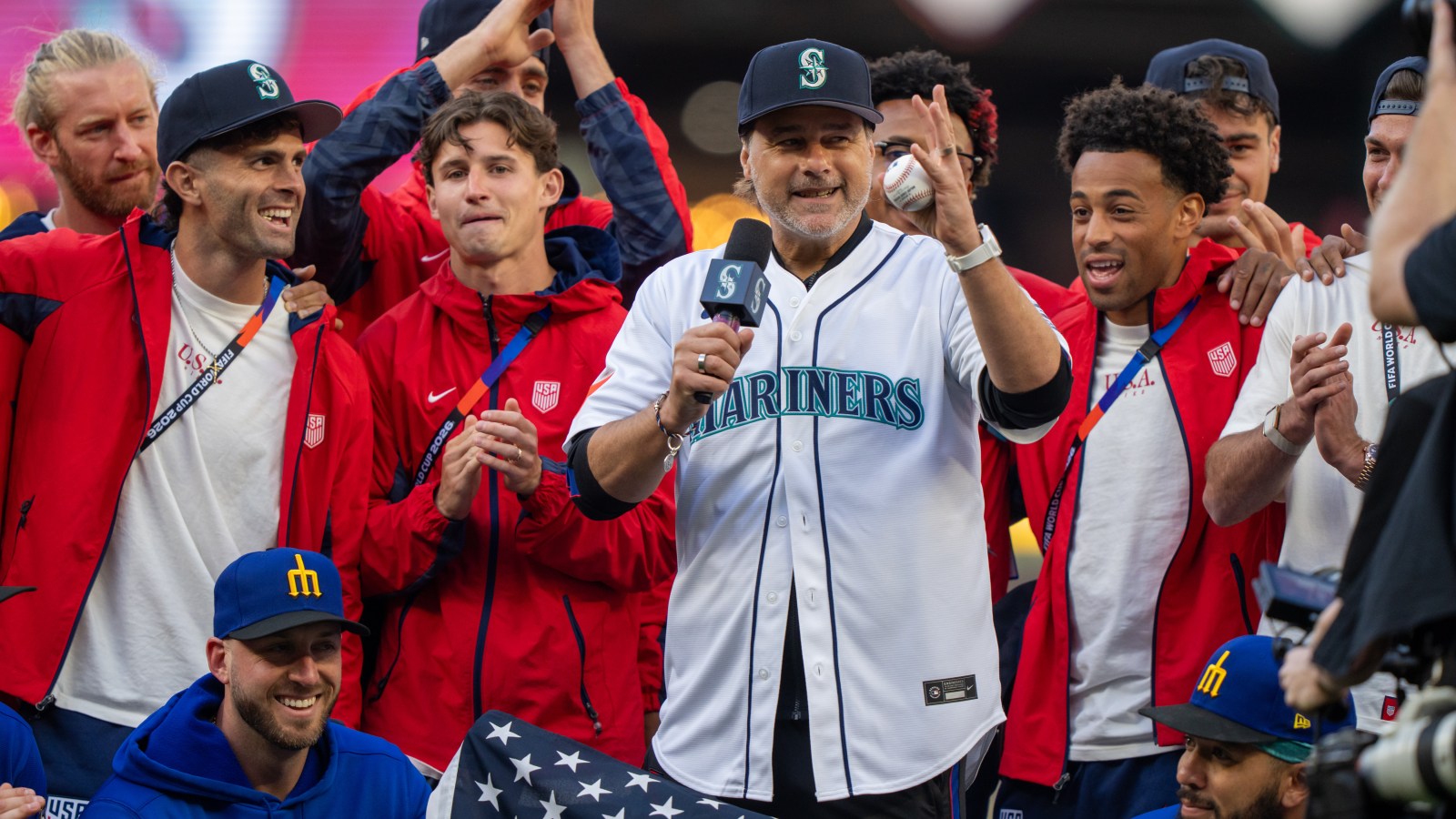
Mauricio Pochettino is set to remain in charge of the United States men’s national team through the 2030 World Cup, a significant decision that extends his role beyond the cycle many had expected to define his tenure. Rather than a dramatic change of course, the move represents a clear commitment to continuity, with the United States choosing to keep its current coach in place for another World Cup project. That matters because it gives the program a longer runway for planning, squad development and identity-building after the 2026 tournament on home soil. It also places Pochettino at the center of two major World Cup cycles in succession, making him one of the most influential figures in shaping the team’s medium-term future.
- Mauricio Pochettino is set to remain coach of the United States men’s national team through the 2030 World Cup.
- He signed a four-year contract, based on the verified details available.
- Pochettino had previously been expected to leave after the 2026 World Cup, making this continuation a notable shift in expectations.
- The strongest verified angle is his continuation into the next World Cup cycle rather than any detailed personal remarks about 2030.
- The 2030 World Cup will be co-hosted by Morocco, Portugal and Spain, with three centenary games in South America.
What the decision means for the United States
The significance of this development lies in stability. International football is often shaped by short windows, abrupt coaching changes and the pressure of tournament cycles, so extending a manager’s influence beyond one World Cup usually signals a broader strategic view. For the United States, that wider perspective is especially relevant because the team is navigating not only a major home tournament in 2026 but also the challenge of sustaining progress after it. Keeping Pochettino in place through 2030 suggests the federation sees value in continuity rather than treating 2026 as a hard endpoint.
That continuity can matter in several ways without relying on unverified promises or predictions. A national team coach working across two cycles has more time to refine tactical ideas, assess emerging players and build a squad culture capable of surviving the natural turnover that follows a World Cup. The United States will inevitably have to balance immediate expectations with longer-term squad evolution, and a coach who remains in place can connect those two objectives. Instead of resetting after 2026, the team now appears positioned to move into the next phase under the same leadership and with a more coherent sense of direction.
The fact Pochettino had previously been expected to leave after the 2026 World Cup gives this story much of its weight. Expectations around coaching tenures often shape how every result is interpreted, especially when a World Cup on home soil is involved. If a manager is viewed as a short-cycle appointment, the focus naturally narrows to immediate tournament performance. By staying on into 2030, Pochettino’s role becomes larger than one event, and his work can be judged not only on what the United States achieves in 2026 but also on how effectively the program develops beyond it.
Context around 2030 and the longer horizon
The 2030 World Cup itself adds another layer of significance to the decision. That tournament will be co-hosted by Morocco, Portugal and Spain, with three centenary games in South America, giving the next cycle a distinctive global backdrop and a very different competitive environment from 2026. For the United States, planning for that event begins well before qualification and tournament preparation come fully into focus. A coach who is already embedded in the program can help bridge the gap between the end of one World Cup and the beginning of the next, reducing the disruption that often comes with a managerial transition.
There is also a practical side to the timeline. A four-year contract provides a clear structure, and the verified detail around that agreement reinforces the idea that this is not a vague possibility but a defined commitment. In football terms, four years is enough time to oversee a full cycle of player emergence, tactical adjustment and competitive testing. For the United States, that could prove crucial because international squads rarely remain static across tournaments; players rise, roles change and the demands of one World Cup can differ sharply from the next. Continuity at coach level offers a framework for managing that change more smoothly.
Just as important is what cannot be claimed. The verified material supports the fact that Pochettino is staying on into the 2030 cycle, but it does not firmly support detailed personal declarations about how he expects to feel or what he specifically believes 2030 will represent for him as a coach. That distinction matters because the strongest version of the story is already substantial without stretching beyond the confirmed facts. The headline is the extension of his role into another World Cup cycle, and that alone carries major implications for the United States program.
From a football perspective, the move gives the national team a chance to think in phases rather than deadlines. The 2026 World Cup remains a pivotal target, but it no longer appears to be the end of Pochettino’s mission. That can influence everything from player integration to the way the team absorbs setbacks and progress over time. When a coach is expected to remain after a major tournament, decisions can be made with a wider lens, and the pressure to chase only short-term fixes may be reduced.
It also changes the conversation around accountability. Staying through 2030 means Pochettino’s tenure will be measured over a longer arc, one that includes preparation, tournament performance and the ability to refresh the team afterward. That can be demanding, but it also creates the possibility of a more complete project. Rather than being defined by a single summer, his time with the United States now appears set to be judged by whether he can build something durable across two World Cup cycles.
Looking ahead, the immediate focus will still center on how the United States develops under Pochettino before 2026, but this decision ensures the conversation will not stop there. With the 2030 World Cup set for Morocco, Portugal and Spain, plus three centenary games in South America, the next chapter is already taking shape. For the United States, keeping Pochettino in place offers continuity, structure and a clearer long-term pathway. The significance of the move is straightforward: the coach once expected to finish after 2026 is now set to lead the program into the next World Cup era as well.


Leave a Reply