

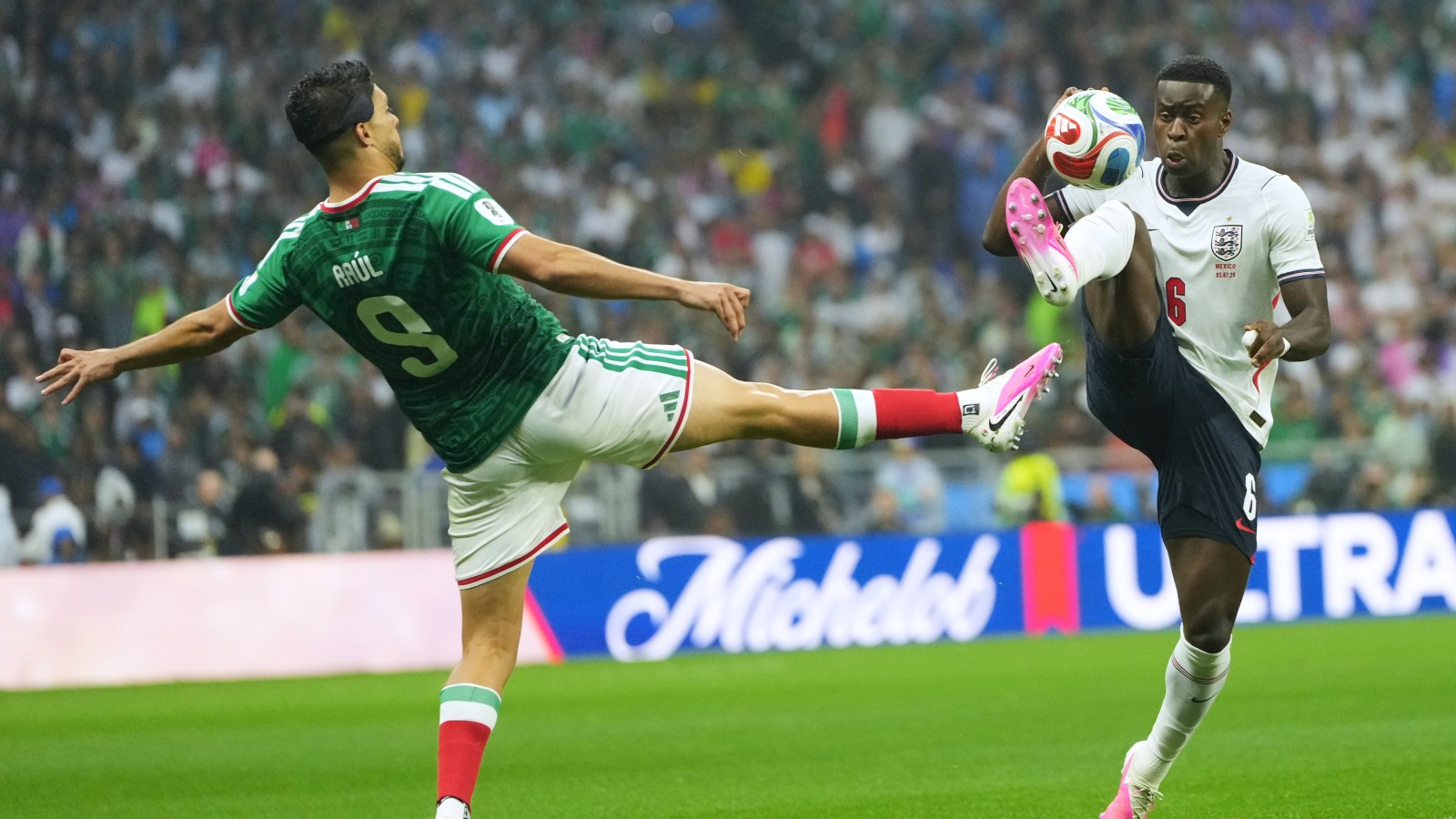
England’s build-up to Saturday’s World Cup quarter-final against Norway has been unsettled by growing concern over Marc Guehi, who is a serious doubt with a hamstring problem sustained after the win over Mexico. His fitness has quickly become one of the defining issues before the last-eight tie, not only because of his importance to England’s defensive structure but also because knockout matches are often decided by the smallest shifts in balance and availability. The central point is clear: Guehi is dealing with slight hamstring tightness, or a slight strain, and there is a genuine possibility he could miss the match. For England, the coming days are now as much about managing risk as refining the tactical plan for Norway.
- Marc Guehi is a serious injury doubt for England’s World Cup quarter-final against Norway on Saturday.
- He is dealing with a hamstring problem after England’s win over Mexico.
- The issue has been described as slight tightness or a slight strain.
- There is a possibility Guehi could miss the quarter-final, though the available information does not firmly establish that he has been ruled out.
- England also have concern over the fitness of Declan Rice, adding another layer of uncertainty before the knockout tie.
England face an unwelcome defensive concern
The timing of Guehi’s issue is what gives it such significance. A quarter-final leaves little room for compromise, and any doubt around a starting centre-back naturally affects both selection and preparation. Even when a hamstring complaint is described as slight, the demands of a high-intensity knockout match can turn a manageable issue into a major risk if it is pushed too far. England’s coaching staff must now weigh the value of having Guehi available against the danger of aggravating the problem in a contest that could go deep and demand repeated recovery runs, duels and sharp changes of direction.
That uncertainty matters because defensive continuity is often one of the strongest assets a side can carry into the latter stages of a World Cup. Centre-back partnerships rely on timing, communication and trust, and any late disruption can alter the shape of the team. If Guehi is unavailable, England would not simply be replacing one player with another; they would be adjusting the rhythm of the back line and potentially the confidence with which the side defends space. Against a quarter-final opponent, even a subtle loss of familiarity can have consequences, especially in transition and in set-piece defending, where split-second decisions are crucial.
There is also a broader psychological dimension to the issue. In knockout football, certainty has value of its own. Teams want clarity over roles, pairings and responsibilities as early as possible, particularly in central defensive areas where hesitation can be costly. If Guehi cannot train fully or remains a late call, England may be forced to prepare more than one version of their defensive setup. That is not ideal at this stage of a tournament, when the priority is usually to sharpen established patterns rather than rehearse contingency plans.
Even so, the nature of the problem means caution is unavoidable. Hamstring injuries are among the most delicate issues to manage in elite football because a player may feel capable of contributing without being truly ready for the explosive demands of competition. In a quarter-final, where intensity is high from the first whistle and every duel carries weight, England cannot afford to make a decision based on optimism alone. The medical balance is straightforward in principle, even if difficult in practice: if there is meaningful risk of the problem worsening, the cost of starting Guehi could outweigh the benefit of having him on the pitch.
What Guehi’s fitness means for the Norway tie
The nature of the injury makes this a story of uncertainty rather than certainty. The broad picture is that Guehi is a serious doubt, but there is not enough to say he has definitively been ruled out. That distinction matters because it shapes how England approach the next phase of preparation. A player carrying slight tightness may still have a path to involvement if the response to treatment is positive, but the margin is narrow and medical judgment becomes central when the issue involves a hamstring. England are therefore likely to spend much of the run-up assessing whether Guehi can train freely, recover properly and handle the physical demands a knockout match will place on him.
Norway’s presence in the quarter-final only sharpens the significance of the situation. England were already preparing for a match of considerable stakes, and any defensive uncertainty adds another layer to the contest. A team entering the last eight wants clarity in selection and roles, yet this issue introduces the possibility of late adjustments in personnel and structure. That can affect not just the back line but the whole side, because defenders and midfielders work in tandem when controlling space, protecting central areas and deciding when to step forward or hold their positions.
The concern over Declan Rice’s fitness adds to that wider picture. Even without firm detail beyond the concern itself, the combination of a possible defensive absence and a question mark in midfield is enough to place England’s spine under the spotlight. In knockout football, the central corridor of the pitch is where matches are often stabilised or lost, and any disruption there can alter how aggressively a team presses, how securely it protects second balls and how confidently it builds from deeper areas. If both situations require careful management, England may need to be more flexible than they would ideally want before a quarter-final of this magnitude.
From a strategic standpoint, the challenge for England is to avoid allowing one injury concern to define the entire occasion. The quarter-final against Norway remains an opportunity to reach the final four, and the broader task is to ensure any adjustment does not erode the team’s identity. If Guehi is not fit enough to start, England will need a solution that preserves defensive calm and keeps the rest of the side connected. If he is available, the decision will still revolve around whether he can perform at full intensity rather than simply get through the match. That is the reality of hamstring issues at this stage of a tournament: caution is essential, but so is honesty about the level required to compete in a World Cup quarter-final.
What comes next is a waiting game shaped by recovery, assessment and risk management. England will continue to monitor Guehi ahead of Saturday’s meeting with Norway, with the defender still best described as a major doubt rather than a confirmed absentee. The same applies to the wider concern around Rice, which leaves England with at least some uncertainty in key areas as the knockout pressure rises. By the time the quarter-final arrives, the central question will be whether England can take the field with their preferred spine intact or whether they must adapt on one of the biggest nights of their campaign.


Leave a Reply