

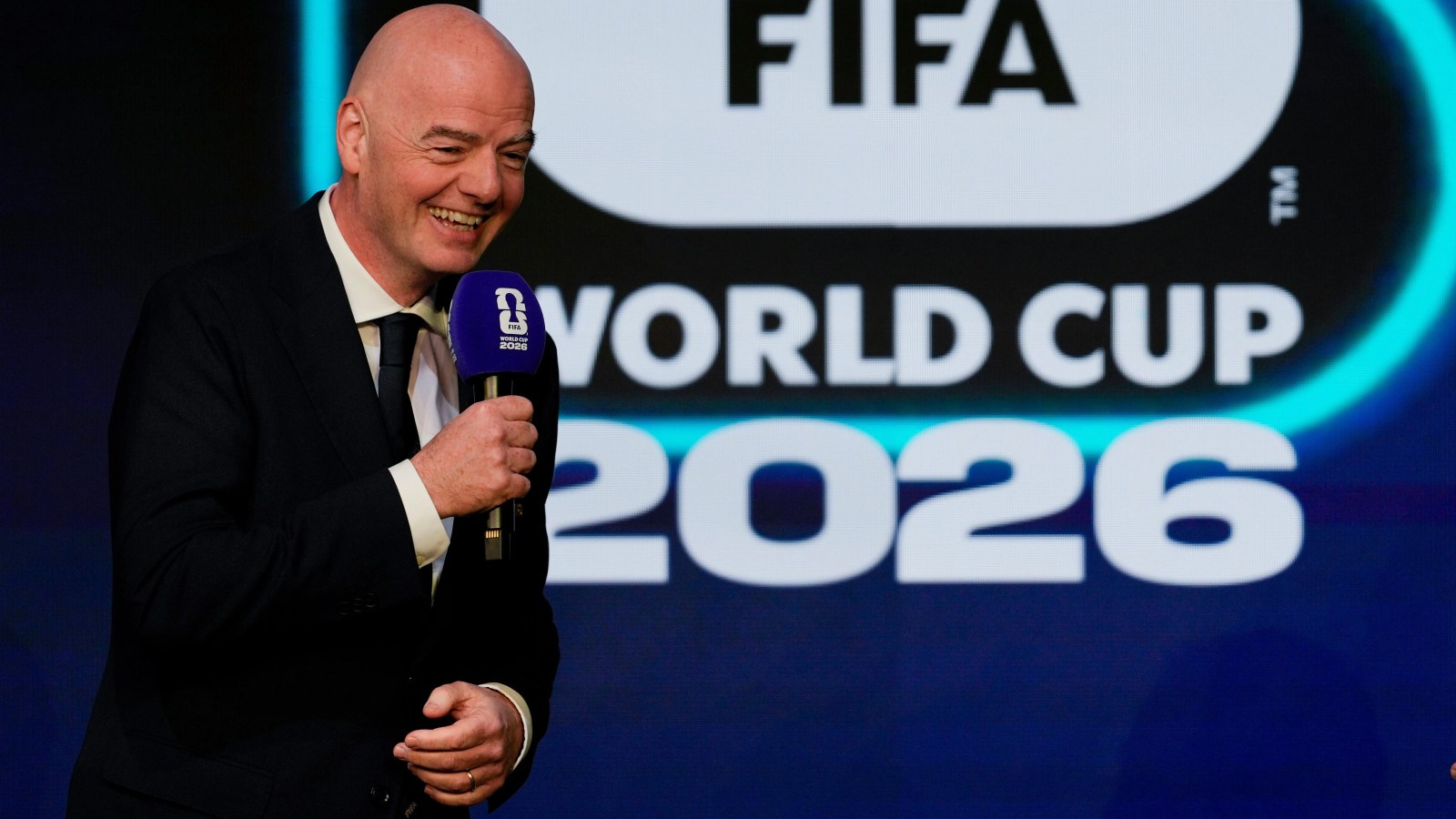
Gianni Infantino is facing renewed scrutiny after the International Olympic Committee received a complaint alleging repeated breaches of political neutrality in connection with the Folarin Balogun affair, but the available picture suggests the FIFA president is unlikely to face sanctions. The complaint, filed by advocacy group FairSquare, asked the IOC to examine whether Infantino was involved in the decision to suspend the United States forward. The allegation cuts to the heart of sporting governance, raising questions about the separation between political influence and disciplinary process at a time when FIFA is under intense focus ahead of the 2026 World Cup. Infantino has denied interfering and has maintained that FIFA’s judicial bodies act independently, leaving the central issue not as a proven breach but as a dispute over whether the matter falls within the IOC’s remit at all.
- The IOC received a complaint alleging Gianni Infantino repeatedly breached rules on political neutrality in connection with the Folarin Balogun affair.
- The complaint was filed by advocacy group FairSquare and asked the IOC to investigate whether Infantino was involved in the decision to suspend the U.S. forward.
- Infantino has denied interfering and has said FIFA’s judicial bodies act independently.
- The current position indicates Infantino is unlikely to face IOC sanctions.
- The complaint has been described as outside the IOC’s scope, and there is no stronger confirmed conclusion about formal punishment or a full IOC probe beyond the filing and handling of the complaint.
Why the complaint matters
The significance of the complaint lies less in any immediate disciplinary threat than in what it says about the pressure on football’s leadership before the next World Cup. Political neutrality is among the most sensitive principles in international sport, especially when major governing bodies are expected to show that disciplinary decisions are insulated from outside influence. By linking its filing to the Balogun affair, FairSquare has pushed a governance issue into the spotlight, asking whether the formal structures designed to protect independence were respected. Even without evidence in the available record of a formal IOC punishment process, the filing itself ensures the matter remains part of the broader conversation around accountability.
That context is especially important because the complaint does not establish wrongdoing on its own. What is verified is that the IOC received the filing, that the allegation concerns repeated breaches of political neutrality, and that it specifically sought scrutiny of whether Infantino was involved in the suspension decision. What is not established in the available material is any confirmed finding by the IOC, any formal charge, or any sanction. That distinction matters because governance disputes can quickly become clouded by implication, and in this case the verified position remains limited to the complaint, Infantino’s denial, and the indication that the issue sits outside the IOC’s scope.
Infantino’s position and the broader governance picture
Infantino’s response is direct and central to understanding the state of play. He has denied interfering and said FIFA’s judicial bodies act independently, a crucial point because it frames the issue as one of institutional process rather than personal intervention. If FIFA’s disciplinary structures are operating independently, that would undercut the core allegation that outside influence shaped the Balogun suspension. At the same time, the existence of the complaint shows there is enough concern among critics to challenge that separation and seek a review from another major sporting authority.
The indication that Infantino is unlikely to face IOC sanctions also shapes how this story should be read. It suggests that, whatever the political and reputational weight of the allegations, the procedural path toward punishment is weak on the information currently available. The complaint has been described as outside the IOC’s scope, which is significant because jurisdiction is often decisive in cases involving overlapping sports institutions. If the IOC does not regard the matter as one it can meaningfully adjudicate, then the practical outcome may be limited to the complaint being received and handled without any deeper investigative or disciplinary step.
For the United States and the wider World Cup landscape, the Balogun element ensures this remains more than an abstract administrative issue. Any case involving a U.S. player inevitably draws added attention with the 2026 tournament approaching, particularly given the event’s importance to football in North America. Still, the verified information does not support broader claims about the suspension itself beyond the complaint’s request for the IOC to examine whether Infantino was involved in that decision. That means the most responsible reading is a narrow one: the governance question is live, the denial is clear, and the prospects of IOC action appear limited.
There is also a wider institutional lesson in how this episode is unfolding. Complaints of this kind can carry major reputational consequences even when they do not produce formal sanctions, because they force governing bodies to confront public doubts about transparency and independence. In football, where decisions at the top are constantly examined for political undertones, the appearance of neutrality can be almost as important as the legal or procedural outcome. The current evidence does not go beyond the filing and handling of the complaint, but that alone is enough to keep attention on how FIFA explains the independence of its judicial mechanisms.
What comes next is likely to be defined by restraint rather than escalation unless new verified information emerges. On the present record, there is no stronger conclusion available about a confirmed IOC investigation, formal punishment, or any sanction against Infantino beyond the fact that the complaint was lodged and considered. That leaves FIFA’s internal independence claims and the IOC’s apparent lack of scope as the two key pillars of the story for now. With the 2026 World Cup drawing closer, scrutiny of governance issues will only intensify, but at this stage the complaint appears more significant as a test of institutional credibility than as the start of a disciplinary case likely to alter football’s leadership picture.
Leave a Reply