

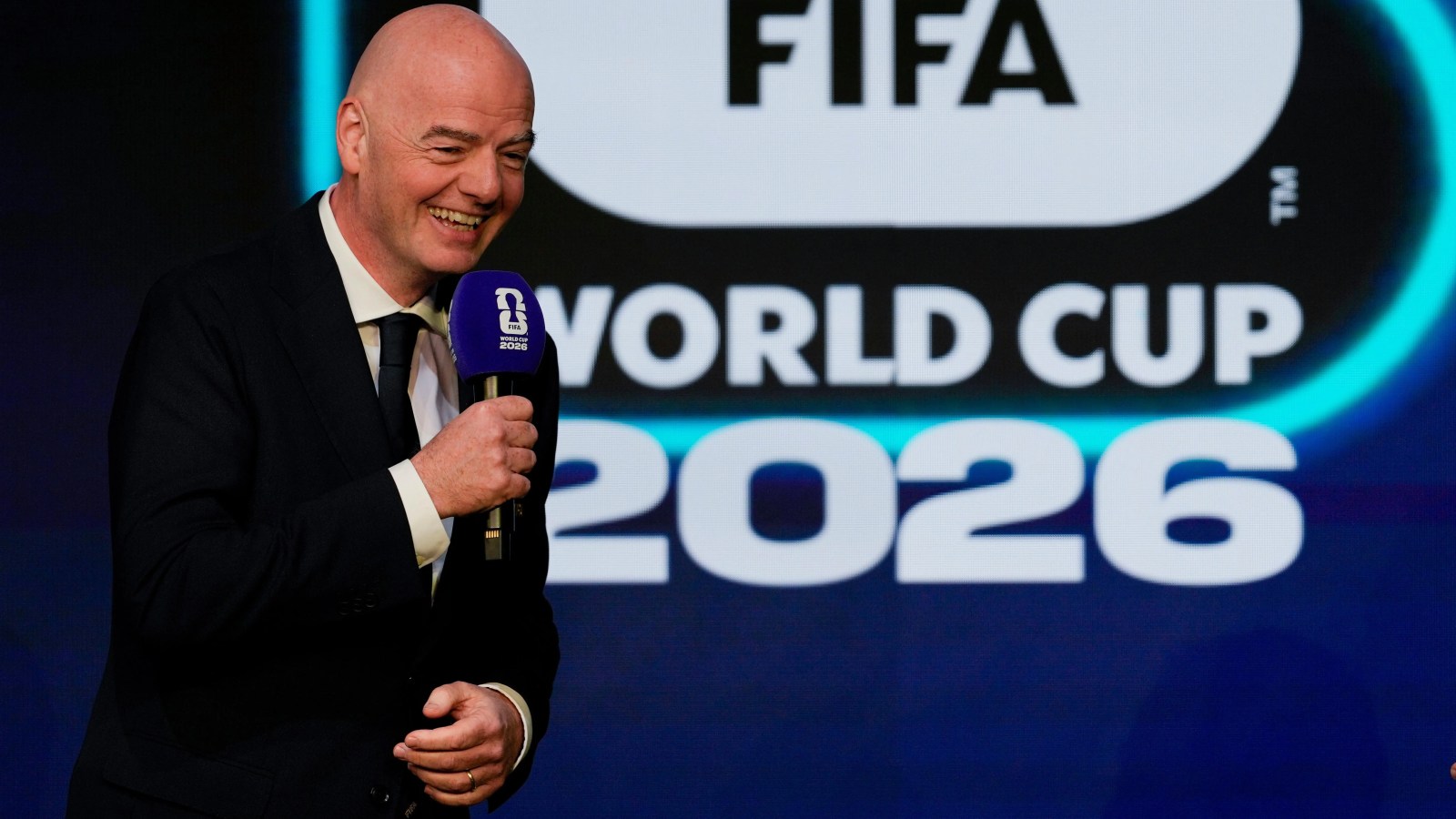
Gianni Infantino has come under renewed scrutiny after a complaint submitted to the International Olympic Committee alleged repeated breaches of political neutrality rules, placing the FIFA president at the center of a widening governance issue with implications far beyond any single tournament. The complaint focuses on Infantino’s dealings with U.S. President Donald Trump and also links those concerns to Infantino’s role in the Balogun case, presenting a broader picture of conduct now being tested against Olympic standards. The development carries added significance because the IOC received the complaint and referred it to Olympic ethics investigators, elevating the matter from political criticism to a formal ethics process. For world football, and with the 2026 World Cup approaching in the United States, Canada and Mexico, the central figure is unmistakably Infantino as questions intensify around leadership, neutrality and institutional credibility.
- The complaint alleges repeated breaches of political neutrality rules by FIFA president Gianni Infantino.
- The allegations center on Infantino’s dealings with U.S. President Donald Trump.
- The complaint also links the neutrality concerns to Infantino’s role in the Balogun case.
- The International Olympic Committee received the complaint and referred it to Olympic ethics investigators.
- A claimed outcome that the IOC decided not to investigate because the matter was outside its scope is not verified by the available evidence.
Why the complaint matters now
The timing of the complaint is significant because football’s global leadership is already operating under intense scrutiny as preparations continue for the 2026 World Cup. Any allegation involving political neutrality carries particular weight when the sport’s most powerful administrator is working in close proximity to major state actors and high-profile political figures. In that setting, the complaint is not simply about appearances; it raises the deeper question of whether football governance can preserve an image of independence while engaging with governments that shape hosting, security and commercial conditions around the game. Even before any outcome is known, the referral to ethics investigators means the matter cannot be brushed aside as background noise.
The substance of the complaint is equally important because it presents the issue as repeated conduct rather than an isolated lapse. That distinction changes the tone of the discussion around Infantino, shifting it from a debate over judgment in a single moment to a broader examination of patterns and boundaries. Political neutrality rules are intended to protect sporting institutions from becoming extensions of partisan agendas, and allegations of repeated breaches strike directly at that principle. For FIFA, whose authority rests heavily on claims of universality and independence, that level of scrutiny can become a reputational problem even before any formal finding is made.
There is also a procedural element that gives the complaint added force. The fact that the IOC received it and referred it onward matters in itself, because it places the issue within an ethics framework rather than leaving it in the realm of commentary or political dispute. That does not amount to a finding against Infantino, nor does it predetermine the outcome of any review. But it does mean the matter has crossed an important threshold, one that demands greater precision and seriousness in how it is assessed.
At a time when governance standards across international sport remain under constant examination, any challenge involving neutrality has the potential to resonate beyond the immediate individuals involved. Football’s commercial reach and political visibility make that especially true for FIFA. When concerns are raised about the conduct of its president, the implications are not confined to one officeholder; they extend to the credibility of the institution and to confidence in how it manages relationships with political power.
The wider implications for FIFA and the 2026 landscape
The reference to Infantino’s dealings with Donald Trump gives the complaint a particularly sensitive edge because the United States is central to the next World Cup cycle. The 2026 tournament will unfold in an environment where football administration, state interests and political symbolism are likely to intersect repeatedly, making neutrality both a practical and an ethical concern. If the governing body’s president is perceived to be too closely aligned with one political figure or current, that perception could complicate FIFA’s effort to present the World Cup as a shared international event rather than a stage shaped by domestic political relationships. The complaint therefore arrives at a moment when governance optics are inseparable from tournament planning and public trust.
The Balogun case link broadens the scope of the complaint beyond a single political relationship and suggests the concerns being raised are intended to be read as part of a larger pattern. Based on the verified information available, the complaint connects Infantino’s role in that case to the same neutrality questions now before Olympic ethics investigators. That does not establish wrongdoing, and the available evidence does not provide a final judgment on the merits. It does, however, show that the challenge to Infantino is being framed across multiple episodes, which is often how pressure builds around senior sports administrators: not through one allegation alone, but through the accumulation of related concerns.
Just as important is what cannot yet be said with confidence. The available information confirms that the IOC received the complaint and referred it onward, but it does not verify the specific claim that the IOC decided not to investigate because the complaint fell outside its scope. That distinction is crucial because an unverified assertion of no investigation would dramatically alter the perceived seriousness of the matter. Without that confirmation, the most accurate reading is that the complaint triggered an ethics referral and that the status or ultimate outcome beyond that remains unclear on the evidence currently available. In a story shaped by governance procedure, precision matters as much as the allegation itself.
For FIFA, the immediate challenge is less about events on the pitch and more about institutional authority at a delicate stage of the World Cup build-up. The organization needs confidence from member associations, commercial partners and host stakeholders that its leadership can navigate political realities without appearing politically captured. Any ethics-related scrutiny involving the president risks distracting from operational priorities and inviting renewed debate over how football’s global bodies police conduct at the top. While no verified final decision has emerged from the process described here, the existence of the complaint and the ethics referral are enough to keep the issue alive and ensure that Infantino’s actions will continue to be examined through the lens of neutrality.
What happens next depends on the ethics process and on whether any further verified findings emerge, but the short-term picture is already clear: this is a governance story with direct relevance to the atmosphere surrounding the 2026 World Cup. Infantino remains the central figure, and the complaint ensures that his political relationships and decision-making will be judged not only by football standards but also against wider expectations of neutrality in international sport. Until there is a confirmed resolution, caution remains essential, especially around any claim that the matter has already been dismissed or closed. For now, the key developments are the complaint itself, the ethics referral that followed and the renewed pressure on FIFA’s leadership as world football moves toward its biggest event.

Leave a Reply