

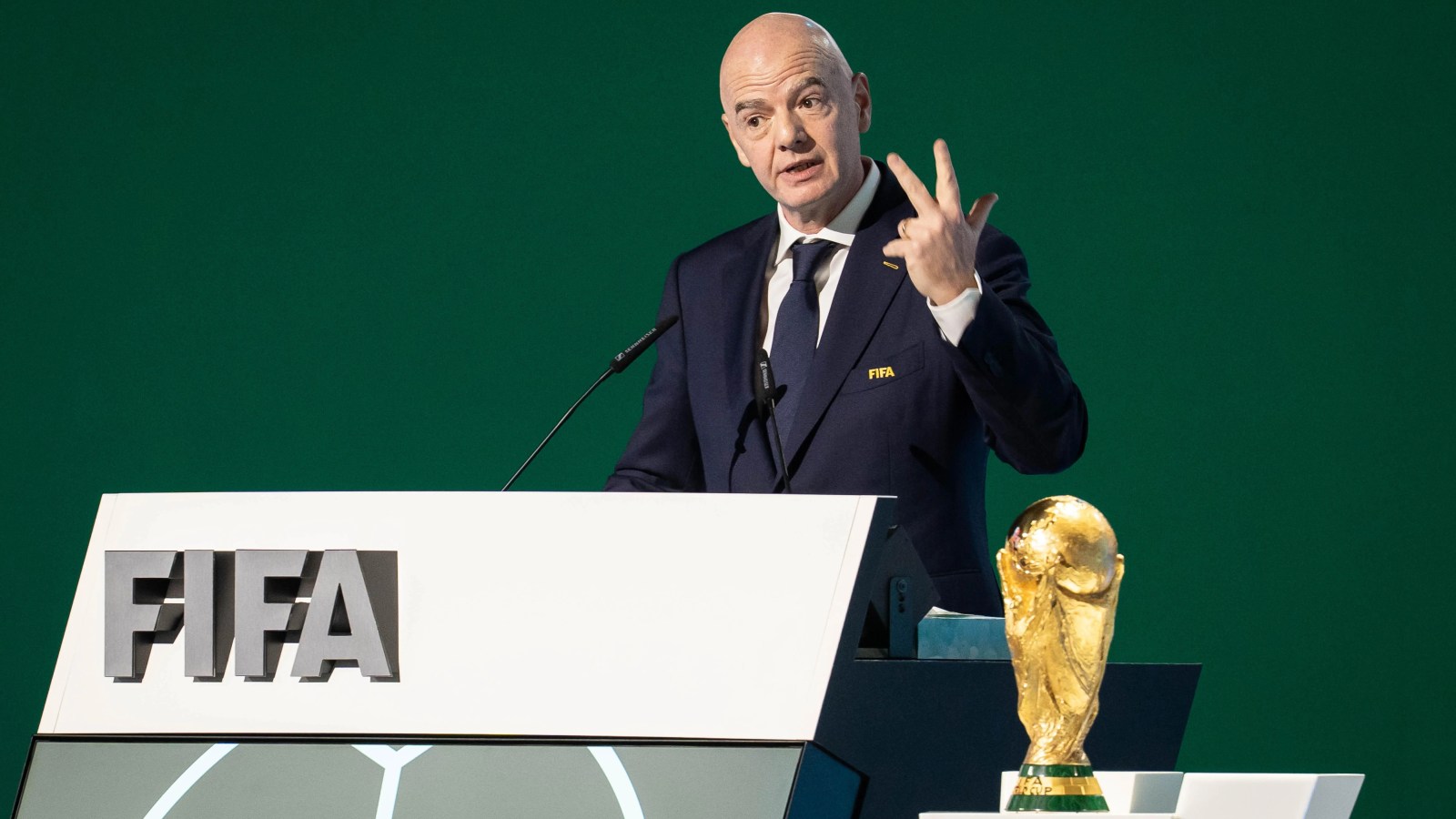
Gianni Infantino is under renewed pressure during the 2026 World Cup, with public calls for the FIFA president to resign gaining momentum amid anger over Folarin Balogun’s red card and broader dissatisfaction with how the governing body is run. The controversy has become one of the tournament’s most politically charged storylines, stretching beyond on-field debate into deeper concerns about accountability at the top of world football. Although frustration has intensified in recent days, there is no evidence that Infantino is preparing to step down. For now, the significance lies in the scale and visibility of the backlash, and in the way one disputed incident has evolved into a wider referendum on FIFA’s leadership.
- Gianni Infantino is facing renewed criticism during the 2026 World Cup, including public calls for him to resign.
- The backlash is tied in part to controversy surrounding Folarin Balogun’s red card.
- Criticism also reflects broader complaints about FIFA’s governance and leadership structure.
- One rights group described Infantino as “a symptom” of an organisation with a “rotten governance structure.”
- There is no evidence that Infantino is stepping down, despite growing pressure and public anger.
Balogun flashpoint becomes bigger than one decision
The immediate trigger for the latest wave of anger has been the fallout from Balogun’s red card, an incident that has reinforced a belief among critics that major decisions at this World Cup are being absorbed into a broader climate of mistrust. Even when a tournament is defined by events on the pitch, certain moments come to symbolise something larger, and this has clearly become one of them. The reaction has not remained confined to debate over a single dismissal or its direct sporting consequences. Instead, it has widened into a challenge to FIFA’s credibility, with Infantino becoming the central target as the organisation’s most visible figure.
That matters because football governance is often judged less by isolated incidents than by how those incidents are received. A contentious decision can be absorbed if trust in the system is strong, but it becomes combustible when supporters, campaigners and observers already feel alienated from the institution making the rules. In this case, the Balogun controversy appears to have landed in exactly that environment. The result is that criticism of the decision and criticism of FIFA itself are now moving in tandem, reinforcing each other and keeping the issue alive well beyond the original moment.
The language used by one rights group captures the depth of that frustration. By describing Infantino as “a symptom” of a “rotten governance structure,” the criticism shifts the focus away from personality alone and toward the system beneath him. That distinction matters because it suggests opponents do not view the current anger as a temporary public-relations problem. They see it as evidence of structural weakness inside FIFA, where leadership style, accountability and decision-making are all being questioned at once.
Governance concerns return to the centre of the tournament
The 2026 World Cup was always likely to attract scrutiny beyond football simply because the tournament is so large and so visible. What has happened now is that existing unease over governance has found a fresh focal point. Social media posts and wider online discussion have reflected anger not only at the Balogun situation but also at Infantino’s conduct more generally, underlining how quickly dissatisfaction can spread during a global event. Once that mood takes hold, every controversy risks being interpreted as further proof that the leadership has lost the confidence of a significant section of the football public.
For Infantino, the challenge is not just that criticism exists, but that it is arriving in a form that is difficult to contain. Public calls for resignation carry symbolic weight even when they do not produce immediate institutional consequences. They create an atmosphere in which every appearance, every decision and every disputed episode is viewed through the lens of legitimacy. During a World Cup, when FIFA would ideally be controlling the narrative through the football itself, that is a damaging position to occupy.
At the same time, the verified picture remains clear: there is no sign that Infantino is going anywhere. That gap between public anger and practical consequence is a familiar feature of football politics. FIFA’s leadership structure does not shift simply because criticism grows louder, even during the sport’s biggest competition. The current moment therefore looks less like an imminent change in power and more like an escalation in the long-running argument over who governs football, how they govern it and how insulated they are from pressure when controversy erupts.
That does not make the backlash insignificant. On the contrary, sustained criticism during a World Cup can shape the legacy of the tournament and influence how future decisions are received. If supporters and campaign groups believe concerns are being dismissed rather than addressed, distrust tends to harden rather than fade. In that sense, the political cost of this episode may be measured not by whether Infantino resigns, but by whether FIFA emerges from the tournament with its authority weakened in the eyes of many who follow the game most closely.
There is also a broader institutional risk in allowing one controversy to become a proxy for everything critics dislike about the governing body. When that happens, the issue is no longer confined to disciplinary debate or tournament administration. It becomes a story about culture, responsiveness and whether football’s most powerful organisation can persuade people that it operates in a fair and transparent way. The louder the resignation calls become, the harder it is for FIFA to separate the immediate noise from the deeper questions underneath it.
What happens next will depend less on whether the anger fades quickly and more on whether new flashpoints emerge to sustain it. For now, the verified position is straightforward: Infantino is facing growing calls to resign, those calls are being driven by the Balogun red card controversy and wider governance complaints, and there is no evidence of any departure. That leaves FIFA carrying a political storm into the latter stages of the World Cup, with the football continuing but the leadership debate refusing to slip from view. Unless the temperature drops significantly, this issue is likely to remain part of the tournament’s story for as long as the competition lasts.
Leave a Reply