


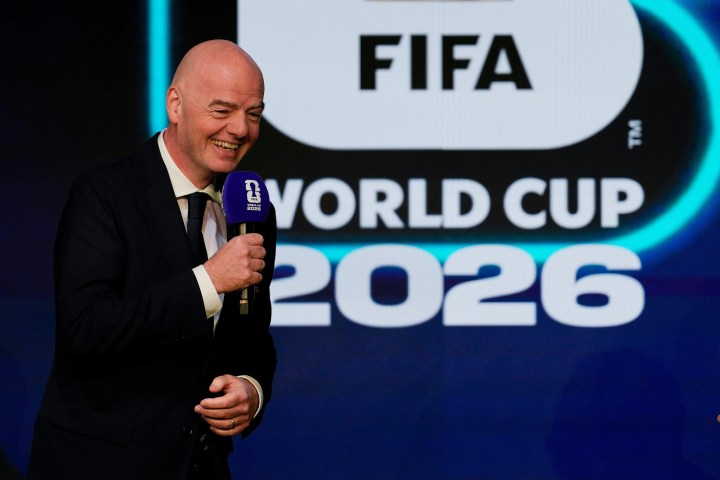
Pressure is mounting on FIFA president Gianni Infantino as resistance grows to proposals to sell stakes in a World Cup-related company to private investors, in a dispute that is rapidly becoming one of the most significant off-field issues ahead of FIFA World Cup 2026. The controversy matters because it strikes at the heart of who controls the tournament’s commercial future and how its profits could be structured in the years ahead. With UEFA no longer backing Infantino on the plan and concerns spreading beyond Europe, the issue has evolved from an internal disagreement into a broader challenge over leadership and governance. At the centre of the storm is the future of the World Cup’s business model, making this a defining moment in the build-up to the 2026 cycle.
- Gianni Infantino is under growing pressure over proposals to sell stakes in a World Cup-related company to private investors.
- UEFA no longer backs the plan, marking a major shift in support around FIFA’s leadership.
- Opposition is not limited to Europe, with leaders in North and Central America and the Caribbean also publicly questioning FIFA’s leadership.
- There are calls for an urgent or full review of FIFA’s governance as the dispute escalates.
- The row centres on the future commercial structure and profits of the World Cup ahead of the 2026 tournament cycle.
A commercial dispute with major political consequences
The significance of this row lies in the scale of the asset under discussion. The World Cup is FIFA’s flagship competition and the engine of its commercial power, so any proposal involving outside investment immediately raises questions about control, transparency and long-term priorities. Selling stakes in a World Cup-related company is not a routine administrative matter; it affects the central revenue stream that underpins the governing body’s influence across the global game. That is why the current backlash has become so politically charged, with the debate extending far beyond a narrow financial proposal.
UEFA’s withdrawal of support is especially significant because European football remains one of the most powerful blocs in the sport’s decision-making landscape. If Infantino has indeed lost the confidence of European football’s governing body on this issue, it points to a serious fracture in the coalition normally required to carry a contentious commercial reform. Such a shift also gives greater force to concerns that might previously have been managed behind closed doors. Once opposition hardens at confederation level, the dispute becomes less about a single proposal and more about whether FIFA’s leadership still has the authority to push through major structural change.
The widening backlash adds another layer of difficulty for FIFA. Concerns are no longer framed as a purely European objection to a financial strategy; they now reflect broader unease across different parts of the football world. Leaders in North and Central America and the Caribbean publicly questioning FIFA’s leadership suggest the issue has spread into regions that are especially relevant in the run-up to the 2026 tournament. That matters because the next World Cup cycle is not a distant event on the calendar; it is the immediate horizon against which commercial planning, political alliances and institutional credibility are all being judged.
Why governance concerns are now central
Calls for an urgent or full review of FIFA’s governance show how quickly the argument has escalated from a disagreement over strategy to scrutiny of process. In practical terms, critics are asking not only whether the private investment proposal is wise, but also whether the way it has been handled meets the standards expected of a body responsible for the world’s biggest football tournament. Governance reviews are usually demanded when confidence in internal checks and balances begins to erode. The fact that such calls are now part of the conversation indicates that this is being treated as a test of institutional accountability as much as a debate over commercial design.
For FIFA, that creates a difficult balancing act ahead of 2026. On one hand, the governing body must protect and grow the commercial value of the World Cup in an increasingly competitive global sports market. On the other, any attempt to reshape how profits are generated or distributed must carry broad political legitimacy, particularly when the competition’s revenues are so central to FIFA’s global role. If key stakeholders believe they are being asked to accept a new structure without sufficient confidence in leadership or governance, resistance becomes almost inevitable. The current dispute suggests the challenge is not simply to explain the proposal more clearly, but to rebuild trust in the decision-making framework itself.
The timing makes the row even more sensitive. The 2026 tournament cycle is a period when clarity, unity and administrative confidence are especially valuable, because commercial planning for a World Cup affects everything from long-term partnerships to the wider strategic direction of the competition. Instead, FIFA now faces a debate over whether the future profits of the tournament should be tied more closely to private investment structures. Even without additional detail on the mechanics of the proposal, the reaction alone shows that many stakeholders view the issue as fundamental rather than technical. When the argument concerns the future commercial structure of the World Cup itself, compromise becomes harder because the stakes are measured in both money and power.
What makes this moment particularly consequential is that it reveals how quickly commercial decisions can become a referendum on leadership. Infantino is not under pressure solely because a proposal has proved controversial; he is under pressure because the opposition appears to be coalescing into a broader challenge over confidence, authority and governance. Once that happens, every next step carries risk. Pushing ahead could deepen the divide, while retreating could be read as an acknowledgment that support has eroded. Either way, the dispute has already become a major subplot on the road to FIFA World Cup 2026, with the tournament’s business future now inseparable from the politics surrounding its stewardship.
The next phase will be crucial. FIFA must now navigate demands for governance scrutiny while confronting a widening bloc of scepticism over the proposed private investment model. Whether the governing body can restore unity, revise the plan or face a deeper institutional confrontation will shape the commercial and political atmosphere heading into 2026. For now, the message from across the game is unmistakable: decisions about the World Cup’s future profits and structure will be examined as closely as the leadership behind them.
Leave a Reply