

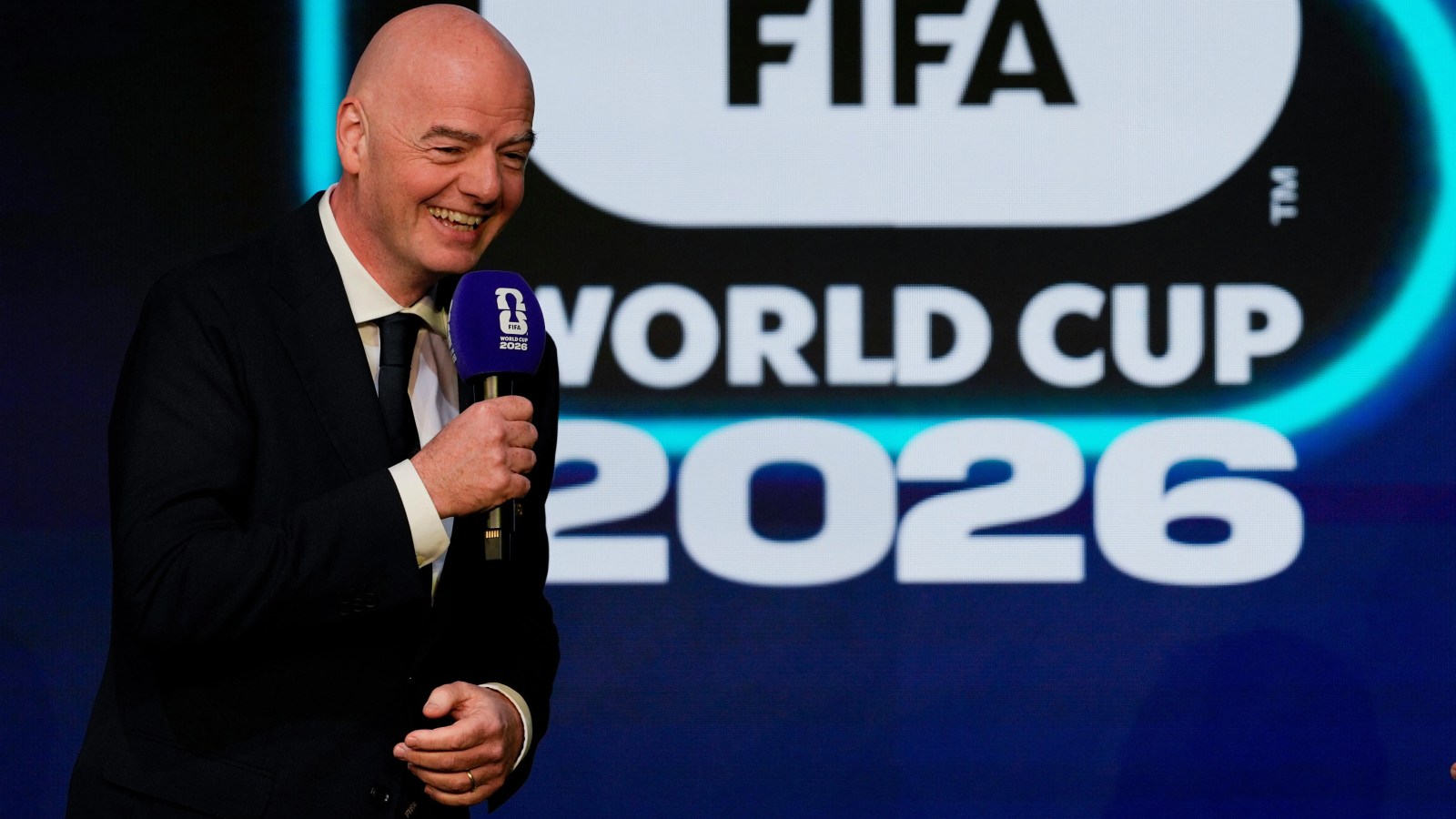
Gianni Infantino is under growing pressure ahead of the 2026 FIFA World Cup after a plan to sell stakes in the tournament began to unravel, prompting alarm at the top of world football. The FIFA president responded by calling a crisis meeting with senior staff in Morocco before later apologising for “mistakes” connected to the proposal, a notable admission at a time when scrutiny of his leadership is intensifying. The timing makes the episode especially significant: with the 2026 tournament drawing closer, any instability around FIFA’s commercial strategy and executive direction carries consequences far beyond the boardroom. Infantino is the central figure in this story not because any exit has been confirmed, but because the pressure is now focused squarely on his judgement, his handling of the fallout and his ability to steady the organisation before its biggest event.
- Gianni Infantino is facing mounting pressure after a plan to sell stakes in the World Cup began to unravel.
- He called a crisis meeting with senior FIFA staff in Morocco as concerns around the plan intensified.
- Infantino later apologised for “mistakes” linked to the proposal, underlining the seriousness of the internal backlash.
- There has been speculation that the 2026 World Cup could be his last as FIFA president, but no decision to step down has been confirmed.
- Infantino is due to stand for re-election in March 2027, and no opposing candidate has yet been identified.
Pressure builds at a delicate moment for FIFA
The central issue is not a confirmed leadership change, but a widening sense of strain around FIFA’s president at a sensitive point in the World Cup cycle. A plan involving the sale of stakes in the tournament was intended to project confidence and commercial ambition. Instead, as it began to unravel, it raised questions about execution and oversight. In any governing body, commercial decisions tied to a flagship competition rank among the most consequential choices senior executives make, and when they falter, the political cost can be severe. For FIFA, whose global standing is inseparable from the World Cup, the episode has become a test of credibility as much as a test of management.
The crisis meeting in Morocco is a revealing detail because it suggests the issue moved quickly from strategic planning to urgent damage control. Senior staff are not assembled in that setting unless the matter has become serious enough to require immediate alignment, explanation and a recovery plan. Infantino’s subsequent apology for “mistakes” adds another layer, because it shows the concerns were not merely external noise but substantial enough to require a public acknowledgement from the president himself. Even without further disclosed detail, that sequence alone points to a leadership challenge FIFA cannot easily dismiss.
The timing also sharpens the stakes. The period before a World Cup is typically defined by operational planning, commercial execution and message discipline. Instead, FIFA now finds itself managing turbulence around one of the most important aspects of tournament strategy. Any uncertainty over how the competition is packaged, financed or presented inevitably spills into broader perceptions of leadership competence. That does not mean a leadership change is imminent, but it does mean the margin for error has narrowed considerably as attention turns toward 2026.
What the speculation means – and what it does not
Speculation over whether the 2026 World Cup could be Infantino’s last as FIFA president has naturally accelerated in that environment, but the verified picture remains more limited than the surrounding noise suggests. There is no confirmed decision that he is stepping down, and that distinction matters. In football governance, pressure and resignation talk often travel together, especially when a major initiative falters, but they are not the same as an actual departure. The current story is therefore best understood as one of mounting pressure, internal crisis talks and uncertainty, rather than a settled succession battle.
That uncertainty is heightened by the fact that Infantino is due to stand for re-election in March 2027, with no opposing candidate yet identified. On one hand, that timeline gives him room to regain control of the narrative and reassert his authority before the next electoral moment arrives. On the other, it places the 2026 World Cup in the middle of a politically significant period in which every strategic misstep is likely to face greater scrutiny. If the tournament is a success, it could strengthen his position. If questions over leadership continue to build, the event could become a focal point for wider dissatisfaction. Either way, the road to 2026 is no longer solely about tournament delivery.
There is also broader institutional significance in the apology itself. Senior sports administrators rarely concede “mistakes” unless the pressure to do so has become difficult to resist, and such language can be read in two ways. It may help lower tensions internally by acknowledging errors and opening the door to corrective action, but it can also validate critics who believe the process was mishandled from the outset. That dual effect is what makes this moment consequential: the apology may be intended to close the issue, yet it also confirms that there was an issue serious enough to require contrition. For FIFA, managing that balance will be essential in the months ahead.
The World Cup is not just another tournament for FIFA; it is the organisation’s defining political and commercial asset. Any disruption linked directly to it carries an outsized impact. Even without confirmed changes at the top, the unravelling of a plan tied to the competition creates a sense of vulnerability that critics, rivals and observers will all notice. That does not automatically translate into an imminent power shift, but it does mean Infantino enters the next phase under heavier scrutiny than before. The closer the calendar moves toward 2026, the harder it may become to separate operational planning from questions of authority.
For now, the most grounded reading is that FIFA is dealing with a leadership stress test rather than an outright transition. Infantino remains in place, is still due to stand for re-election in March 2027 and does not currently face an identified opposing candidate, but those facts do not diminish the significance of the present turbulence. The crisis meeting in Morocco and the apology for “mistakes” show that the pressure is real, while the speculation over whether 2026 could mark the end of his presidency reflects how quickly confidence can be shaken when a major plan starts to unravel. FIFA’s challenge now is to prevent a commercial setback from becoming a prolonged political problem. Infantino’s task is even clearer: restore trust internally, calm the external noise and ensure the run-in to the 2026 World Cup is defined by preparation rather than instability.
What happens next will depend on whether FIFA can contain the fallout and redirect attention back to the tournament itself. There is no confirmed departure, no declared leadership vacancy and no identified challenger at this stage, but the pressure around Infantino is unmistakably rising. The period before the 2026 World Cup now looks set to be shaped not only by planning for football’s biggest event, but also by close scrutiny of how FIFA’s president responds to one of the most awkward episodes of his tenure. For the moment, the story is not that he is leaving; it is that he must now show he can lead through the turbulence.
Leave a Reply