

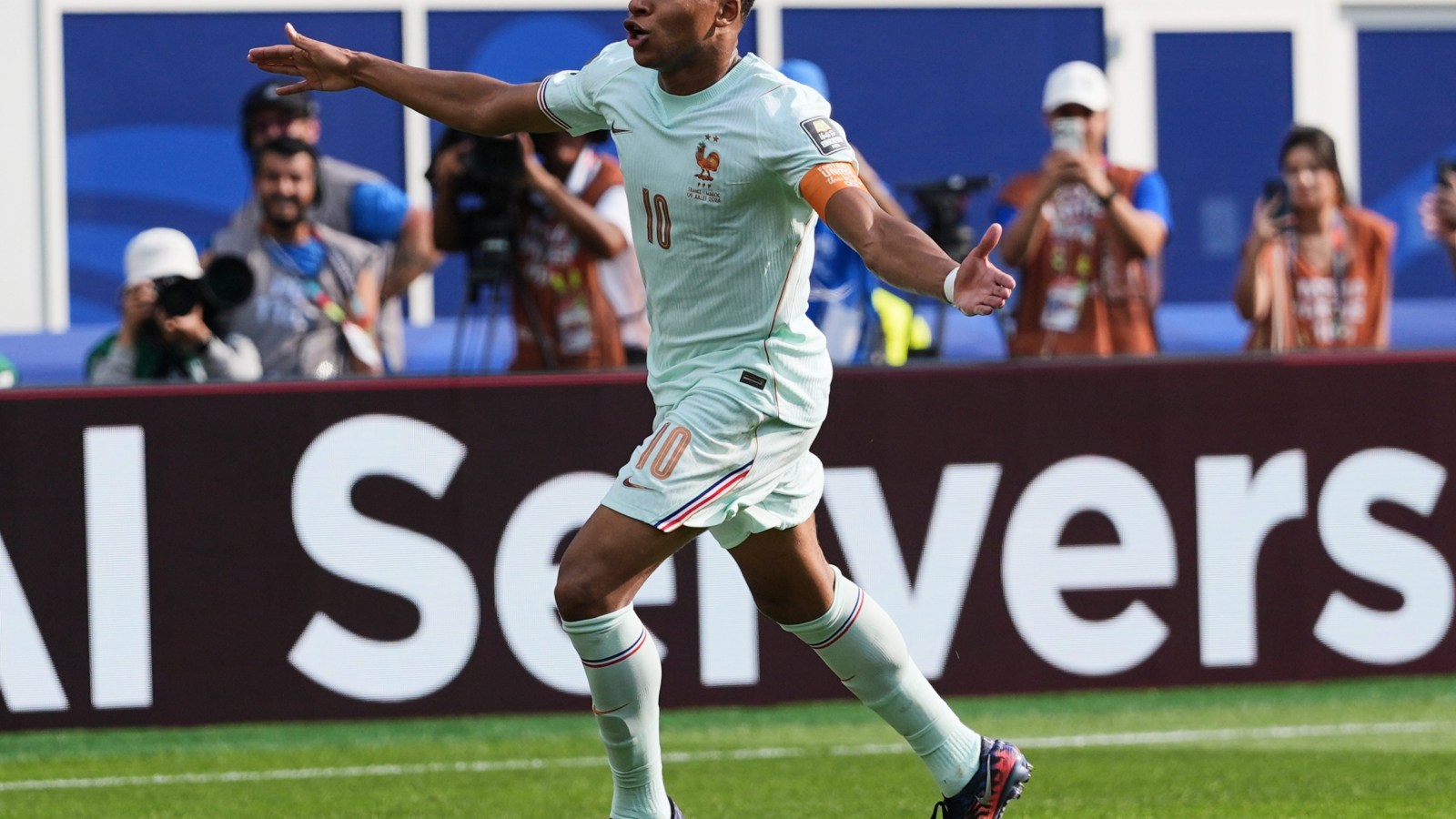
France ended Morocco’s 2026 FIFA World Cup journey by securing a place in the semifinals and bringing one of the tournament’s most compelling runs to a close. The result carried significance well beyond a single knockout tie. Morocco had again demonstrated the resilience, discipline and competitive edge that made them one of the stories of the competition, while France’s progress reinforced their standing as one of the leading contenders in the latter stages. With only a limited set of confirmed match details available, the clearest verified outcome is that France advanced and Morocco’s campaign came to an end.
- France advanced to the 2026 FIFA World Cup semifinals by defeating Morocco in the knockout stage.
- Morocco’s tournament run ended with that defeat after a strong campaign in the competition.
- Morocco had previously won a match on penalties, taking a 3-2 shootout victory after extra time.
- Morocco had an official team page and squad page on FIFA’s 2026 World Cup tournament site, confirming their participation in the event.
Morocco’s run deserved the global attention it earned
Even without every match detail available, Morocco’s path through the tournament stands as a significant achievement. Reaching the stage where defeat to France meant elimination shows they had already navigated major pressure and high-stakes football. Their earlier penalty shootout win, secured 3-2 after extra time, is especially revealing. Knockout football often turns on nerve, discipline and emotional control as much as attacking quality, and a team that survives that kind of test proves it can manage momentum swings, absorb tension and sustain belief when the margins are at their thinnest.
That is central to any fair assessment of Morocco’s campaign. Tournament football rewards structure, patience and the ability to stay alive in difficult moments, and a side that comes through extra time and penalties has already demonstrated those qualities in full. Morocco did not simply appear at the World Cup; they remained relevant deep into it, carrying their challenge to the point where only a defeat against France could stop them. For supporters and neutrals alike, that kind of run earns a lasting place in the narrative of a World Cup because it reflects consistency under pressure rather than one isolated result.
There is also a broader significance to the way Morocco’s campaign is recorded. Their confirmed presence on the official tournament team and squad pages forms part of the historical record of an effort that carried genuine competitive weight. That may sound administrative on the surface, but World Cups are remembered through both moments and milestones. Morocco added another chapter by pushing into the knockout rounds and extending their involvement to the point where their elimination became a major tournament event. Their earlier shootout success remains one of the clearest markers of that journey, because penalty victories often capture a team’s collective resolve in the starkest possible way.
For Morocco, the defeat does not diminish what came before it. If anything, being eliminated by a side that reached the semifinals helps place their campaign in proper context. They were not brushed aside early or reduced to a footnote. They stayed in the competition long enough to meet one of its strongest surviving teams in a match with enormous stakes. That alone reflects a level of performance and staying power that many nations pursue but never achieve on this stage.
France showed the ruthlessness required of a title contender
From France’s perspective, the significance is both straightforward and substantial. Advancing to the semifinals is the immediate headline, but the deeper takeaway is that they came through a knockout tie against a Morocco side that had already shown it could extend opponents, frustrate them and survive the most stressful phases of tournament football. That is not a routine obstacle. When a team has already won after extra time and penalties earlier in the competition, it carries confidence as well as a proven ability to make matches uncomfortable. Eliminating that kind of opponent is a meaningful statement.
France’s progression also points to the game management expected of a genuine contender, even if the verified details available here do not include tactical specifics such as formations, scorers or decisive passages of play. In knockout football, elite teams are judged not only by flair but by whether they can avoid being dragged into chaos by determined opponents. France did what was required. They won the tie, protected their tournament and moved one step closer to the biggest prize. Reaching the semifinals places them within touching distance of the final, and every advance at that stage heightens both pressure and belief.
The contrast between the two teams at full time is what gives the result its weight. France moved on with the chance to compete for a place in the final, while Morocco exited with the disappointment that always follows a knockout defeat. Yet there is an important distinction between elimination and failure, and Morocco’s campaign clearly belongs in the former category rather than the latter. They had already done enough to make their run memorable, and the fact France had to be the side to end it only strengthens the impression that Morocco were one of the notable teams of the tournament.
Looking ahead, France now carry both the momentum and the burden that come with a semifinal place, where every detail becomes sharper and every mistake more costly. Morocco, meanwhile, leave with clear evidence of a side capable of competing deep into the world’s biggest tournament and handling the intense demands of knockout football. Their 3-2 penalty shootout win after extra time showed one side of their character, and their eventual elimination by France marked the point at which that journey finally ran out of road. France continue the pursuit of the trophy, while Morocco depart with a campaign that still commands respect long after the final whistle.


Leave a Reply