

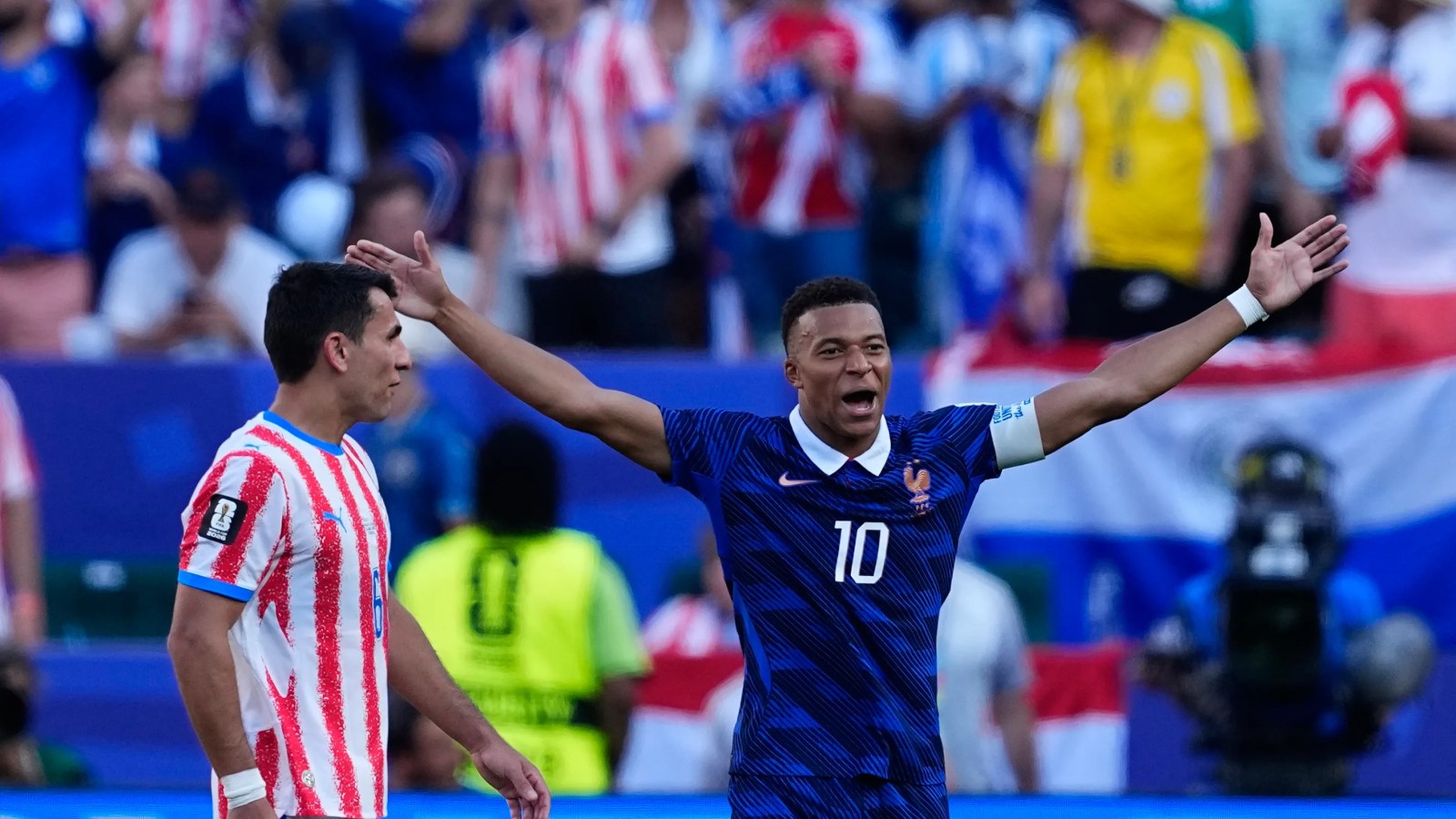
France’s 2026 World Cup campaign produced another deep run on football’s biggest stage, and the verified record leaves little room for doubt about its central storyline: Didier Deschamps remained in charge throughout the tournament, with Kylian Mbappé captaining the side and playing a decisive role in the knockout rounds. The clearest documented on-field highlight is France’s 2-0 quarter-final victory over Morocco, shaped by goals from Mbappé and Ousmane Dembele. That result sent France into the last four and underlined the team’s ability to blend star power with tournament control. It also matters for a wider reason, directly contradicting claims of a coaching handover during the competition, as the available record instead shows continuity on the touchline and another serious World Cup challenge from a familiar France setup.
- Didier Deschamps is identified as France’s head coach during the 2026 World Cup.
- Kylian Mbappé serves as France captain during the tournament.
- France beats Morocco 2-0 in the quarter-finals.
- Mbappé and Ousmane Dembele score the goals in the quarter-final win.
- France reaches the semi-finals and ultimately finishes fourth at the 2026 World Cup.
- No verified information in the provided record confirms Zinedine Zidane being appointed France head coach during this tournament.
Quarter-final authority and tournament continuity
The quarter-final against Morocco stands as the clearest snapshot of France’s campaign. A 2-0 win in a knockout match at that stage is significant in any World Cup, and the fact that Mbappé and Dembele supplied the goals speaks to the attacking quality that carried France deep into the competition. Mbappé’s contribution is especially notable given his role as captain, placing the team’s leading figure at the centre of its biggest confirmed victory of the tournament. Dembele’s place on the scoresheet adds another dimension, showing France had more than one decisive outlet when the pressure rose in the knockout phase.
That result also says plenty about France’s competitive level in 2026. Morocco had done enough to reach the quarter-finals, so progressing past them without conceding reflects a side capable of managing high-stakes matches at both ends of the pitch. Even without a fuller statistical breakdown, a 2-0 scoreline in a World Cup quarter-final points to control, efficiency and an ability to seize key moments. France did not merely survive that round; they advanced with a margin that reinforced their status as one of the tournament’s strongest teams.
Just as important was the continuity around the squad. The verified details place Deschamps in charge and Mbappé wearing the captain’s armband, framing France’s run as one built on an established structure rather than a sudden reinvention. In tournament football, that kind of stability can be crucial, particularly in knockout rounds where clarity of roles and trust in the manager often make the difference. France’s progress to the semi-finals therefore reads as the product of a settled hierarchy, with coach and captain aligned at the heart of the campaign.
What France’s finish says about the bigger picture
Reaching the semi-finals before ending the tournament in fourth place leaves France with a mixed but still substantial outcome. On one hand, a top-four finish at a World Cup is evidence of another elite-level campaign, especially in a competition where margins are fine and the knockout path is unforgiving. On the other, finishing fourth means the final stages did not end as France wanted, and that inevitably shifts the conversation from straightforward success to the question of what was missing in the decisive closing stretch. The tournament can therefore be viewed as both a validation of France’s enduring strength and a reminder of how difficult it is to turn contention into silverware.
Mbappé’s role in that broader picture is impossible to ignore. The available record identifies him not only as captain but also as a scorer in the quarter-final, placing him at the centre of France’s leadership and attacking threat. In World Cups, standout figures are often judged by whether they shape knockout ties, and Mbappé clearly did that against Morocco. Even without a complete list of France’s scorers or performances in every round, his influence on the campaign’s most clearly verified landmark match gives him a defining place in the story of France’s 2026 tournament.
For Deschamps, the confirmed details reinforce a familiar theme of sustained competitiveness. Guiding France to the semi-finals and a fourth-place finish meant he again took the national side into the closing weekend of a major tournament. That level of consistency matters because international football is notoriously volatile, with even highly talented squads often falling earlier than expected. France’s 2026 run instead points to a team that remained among the world’s most formidable under the same manager, rather than one entering a new era during the tournament itself.
The absence of any verified evidence for a Zidane appointment is therefore a significant part of the story, even if it is defined by what did not happen. Claims of a coaching change, a symbolic handover, or any attempt to connect the 2026 campaign to Zidane’s own World Cup past are not supported by the provided record. The verified account is more straightforward: France competed in the tournament with Deschamps as coach, Mbappé as captain, reached the semi-finals, and finished fourth. In a World Cup cycle where narratives can quickly outrun facts, that distinction is essential.
France’s road ahead will naturally be judged through the lens of this top-four finish. The quarter-final win over Morocco showed the team still had the firepower and composure to take command of a major knockout match, while the final standing of fourth showed there remained a gap between going deep and going all the way. Whether the next step is refinement, renewal or simply another push from an already proven core, the verified 2026 record provides a clear baseline: France stayed among the tournament’s leading sides under Didier Deschamps, with Kylian Mbappé leading from the front and delivering when a place in the semi-finals was on the line.
Leave a Reply