

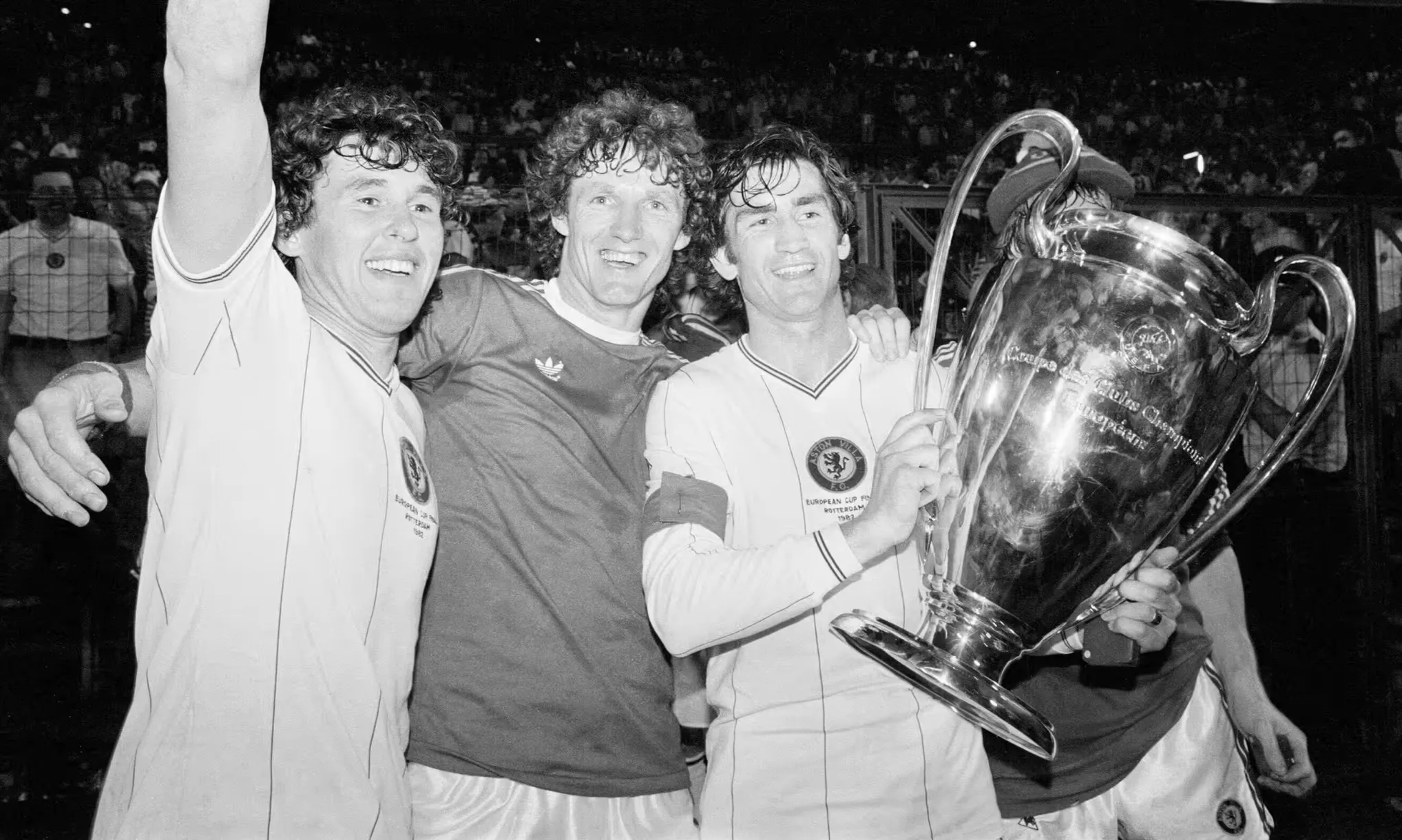
‘We didn’t know who the hell you were’
Nigel Spink, Goalkeeper: The recent passing of Gary Shaw has left us all heartbroken. Gary played an instrumental role in Aston Villa’s storied European Cup success. My own contribution in the 1982 final against Bayern Munich was unexpected and surreal.
Back then, the league only allowed one substitute, and it was rare for a goalkeeper to be on the bench. I primarily played for the reserves in the old Central League, with my last first-team appearance dating back to 1979. The European Cup’s five-substitute rule was a novelty, and we rarely expected substitutions for tactical reasons. So, when I came on just nine minutes into the match due to Jimmy Rimmer’s injury, it was a shock.
I didn’t have time to get nervous—within seconds of stepping onto the pitch, I confidently claimed an aimless ball from Bayern. I quickly felt part of the game, despite supporters later admitting, “We didn’t know who the hell you were,” given that Jimmy had been the team’s goalkeeper for five years.
Even now, the memories linger. I’ve had fans approach me all over the world, from Australia to South Africa, sharing their experiences from that night. In my day-to-day life as a freight deliverer, Villa supporters often recognize me and reminisce about the 1982 victory. When I started my own business, I ended up working with Mark Kendall, Villa’s No. 3 goalkeeper that year, who became my boss.
I’m attending the Bayern game on October 2, and I expect it to be an emotional night. Three years ago, I reached out to Bayern to see if they had my shirt from that final. They agreed to a swap, and I received Manfred Müller’s jersey. They treated us like royalty during our visit, providing a stadium tour and lunch.

Billy Connolly Helped Settle the Nerves
Gary Williams, Defender: We scored in the 67th minute of the final, and it felt like there was an eternity left to play. We dropped back a bit, and those last 20 minutes seemed to stretch on forever as Bayern relentlessly pressed us. I found myself up against Karl-Heinz Rummenigge, pushing forward in the second half. Looking back, I remember Brian Clough commenting on my play, saying, “He might regret this.” In hindsight, I did feel exhausted, but being part of that moment kept me energized.
What stands out from that day is how relaxed everyone was. As we got dressed for the match, Radio 1 was broadcasting well-wishes to Villa, reminding us of the occasion. On the coach ride from our hotel in Amsterdam to Rotterdam, the atmosphere was light and jovial. One player brought along a tape of a Billy Connolly comedy routine, and we all laughed, which helped us forget the enormity of the task ahead.
The following season, we faced Juventus in the quarter-finals, a team filled with superstars like Platini and Boniek. They were undoubtedly a superior side, and in the league, turmoil loomed as Doug Ellis returned as chairman and began dismantling our successful squad. By 1987, we were relegated, a stark contrast to our glorious 1982 season.
I vividly recall watching a game on TV and seeing my name mentioned in Brian Moore’s commentary during our winning goal: “Shaw, Williams, prepared to adventure down the left. There’s a good ball played in for Tony Morley. Oh, it must be! And it is!! Peter Withe!!” Those moments resonate deeply.
Nike Boots Caused Blisters the Size of Eggs
Tony Morley, Winger: Many don’t realize that Villa had a deal with Nike for the final, and their boots were notoriously stiff—like concrete. While I had my own sponsorship, several teammates suffered blisters the size of eggs from wearing them. It’s remarkable to think we could have lost the European Cup over footwear issues, a situation that seems unimaginable today.
After the match, we waited quite a while for Peter Withe and Ken McNaught to finish drug tests. They stumbled into the dressing room, half-tanked from having cracked open crates of Heineken they found while waiting, while the rest of us had showered and were ready to head to the afterparty in Amsterdam with our partners.
Winning the European Cup remains the pinnacle of Villa’s history. I hope this current squad can achieve similar greatness. Unai Emery’s team features talents like Morgan Rogers, a strong player who reminds me of myself. He’s adept at running at defenders from midfield, a skill that’s increasingly valuable in today’s game.
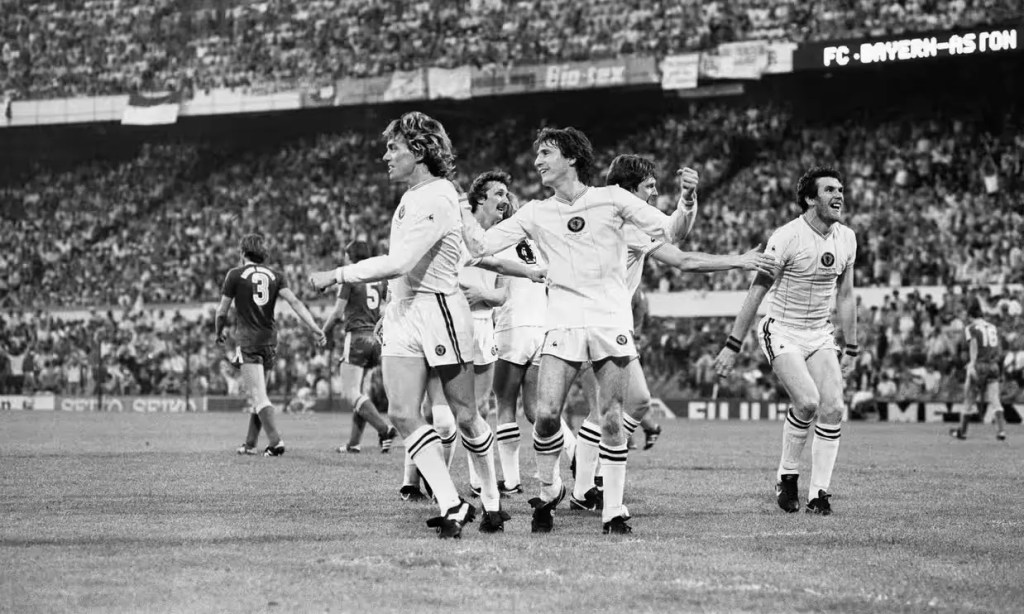
Wer hat mein Trikot?
Dennis Mortimer, Captain and Midfielder: A German magazine, 11Freunde, captured the moment with the headline “Wer hat mein Trikot?” or “Where is my shirt?” In many post-match photos, you’ll see teammates wearing Bayern shirts after swapping jerseys, but I kept my Villa shirt. Our kit man offered to swap shirts for us, but when he returned, the big names like Rummenigge had already been taken. Now, my nephew, Craig, is trying to track down my original shirt. If we find it, I’ll gladly swap it for my Bayern shirt, which belonged to Udo Horsmann.
Today’s Champions League format is vastly different; teams must play eight games just to qualify for the knockout rounds, whereas we played only eight matches to reach the final. Our training camp in Rotterdam was heavily scrutinized, limiting our ability to practice set plays. Back then, our coaching staff consisted of just our manager, Ron Saunders (later succeeded by Tony Barton), a coach, and a physio—no analytics or GPS data. It was simply about being prepared for the match ahead.
Winning the European Cup after clinching the First Division title was an extraordinary achievement. Lifting that trophy remains a moment etched in my memory; its grandeur and significance are unmatched at the club level. I was fortunate enough to take it home, inviting my family down from Liverpool for a photo op with my young son, Richard, in the trophy itself.
After winning the Super Cup against Barcelona in 1983, we dreamed of back-to-back European Cup victories, emulating Nottingham Forest’s success in 1979 and 1980. Losing that next final was tough.
‘Where Has the European Cup Gone?’
Colin Gibson, Defender: We took the European Cup to local pubs and supporters’ clubs to celebrate. One night, while at the Fox Inn near Tamworth with Gordon Cowans, we suddenly realized, “Where has the European Cup gone?” Panic set in; I was terrified. I spent a couple of hours fearing the worst, and my teammates ribbed me relentlessly, “Gibbo, you’re the only one who has won the European Cup and lost it too.”
Eventually, we received a call from the police informing us they had located the trophy. A man had taken it from the bar and driven up to Sheffield before turning himself in.
I was seated next to Spink on the substitutes’ bench during that final. “Well, Nige, all the best mate, we’ll be watching. No pressure,” we joked, but we all shared a strong bond. The previous season, we only used 14 players to win the league, a testament to our incredible teamwork.
Winning the league in 1981 and the European Cup in 1982 coincided with significant moments in my life, including my marriage to Kim, whom I met at 17 when she worked at the club’s front desk.
It’s astonishing to think it took 41 years for Villa to return to the competition. During those early days, our wages were modest—around £300 a week plus bonuses. I even sold my winner’s medal after retiring to buy a new car, which underscores the challenges we faced post-career. Yet, none of that diminishes the memories. I would be thrilled to see the club win the Champions League again; while we remain the only team to have achieved that feat, it’s a legacy I would love to see continued.

Leave a Reply