

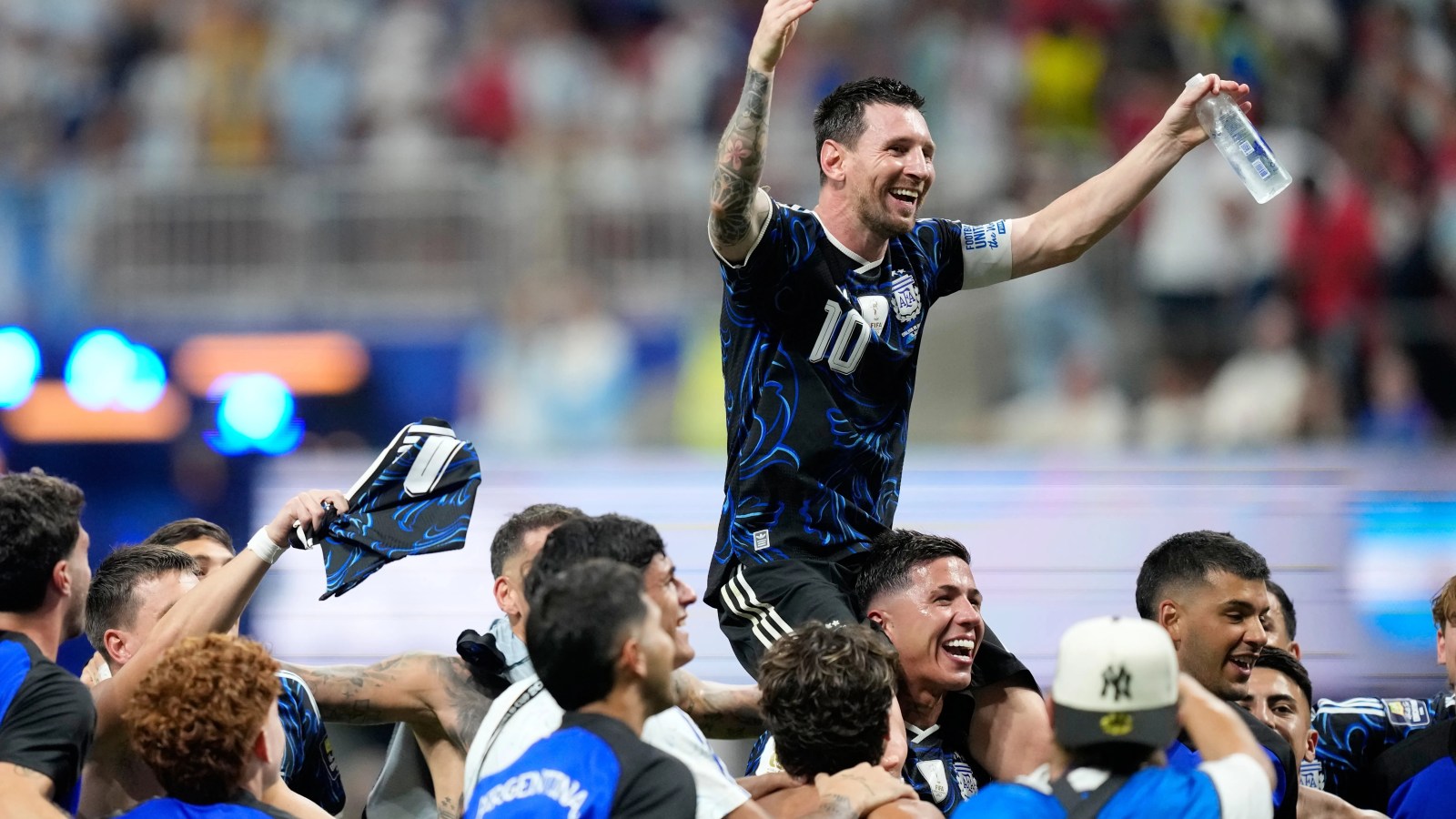
FIFA has opened an investigation into Argentina following the ugly scenes that unfolded at the end of the 2026 World Cup final, casting a shadow over the tournament’s closing chapter. Argentina finished as runners-up after a 1-0 extra-time defeat to Spain on 19 July 2026, but the immediate aftermath has now become a major story in its own right. With the champions crowned and the footballing verdict already delivered on the pitch, attention has shifted to post-match conduct and the possibility of disciplinary consequences. That matters not only for Argentina’s reputation after its run to the final, but also for how one of the biggest matches in the sport will ultimately be remembered.
- FIFA has opened an investigation into trouble involving Argentina after the World Cup final.
- The inquiry concerns ugly scenes at the end of the final.
- Argentina lost the final 1-0 to Spain after extra time on 19 July 2026.
- Argentina finished the tournament as runners-up.
- No verified disciplinary outcome has yet been confirmed in relation to the investigation.
Post-final fallout takes center stage
The confirmed facts are limited but significant. FIFA’s decision to investigate indicates that the governing body considers the post-final incidents serious enough to warrant formal review, and that alone lifts the issue beyond the usual emotional fallout that can follow defeat in a match of this magnitude. World Cup finals are intense, draining occasions in which players, staff and supporters absorb the weight of months of expectation in a single night, but an official inquiry makes clear that what happened after the whistle falls into a different category. Instead of the discussion ending with Spain’s extra-time winner and Argentina’s near miss, the final now carries a disciplinary dimension that could extend well beyond the tournament itself.
For Argentina, that is an especially painful turn because the team had already suffered the harshest sporting outcome available: losing a World Cup final after extra time. A 1-0 defeat in those circumstances points to a match decided by the finest of margins, the kind of contest in which every defensive action, every missed opening and every tactical adjustment carries enormous weight. To come so close to the biggest prize and then see the aftermath become the focus only deepens the frustration surrounding the campaign’s conclusion. Rather than the conversation centering exclusively on how Argentina reached the final and pushed the match beyond 90 minutes, scrutiny now extends to how events unfolded once the football itself was over.
That shift in focus is what gives the story its wider significance. Finals are typically remembered through defining football moments: a decisive goal, a tactical gamble, a missed chance or a display of resilience under pressure. In this case, however, the official response to the scenes at full-time means the narrative no longer belongs solely to the action on the field. The result remains settled, but the broader story does not. Argentina’s tournament ended with a narrow defeat, yet the post-match disorder has ensured that the final’s legacy is no longer confined to the scoreline.
What the investigation means for Argentina and the tournament
The absence of any confirmed disciplinary outcome is also important. At this stage, the verified position is that there is an investigation, not a verdict, sanction or named conclusion. That distinction matters because World Cup stories can quickly become crowded with speculation, particularly when emotions remain raw after a final, but the established facts stop short of identifying responsibility or defining punishment. Until FIFA completes its process, the significance lies in the existence of the inquiry itself and in what that says about the seriousness of the scenes that followed the match.
From a broader tournament perspective, the investigation underlines how fragile the legacy of a final can be. Spain’s 1-0 extra-time victory should stand as the defining football result of 19 July 2026, yet official scrutiny of the aftermath ensures the event will be remembered in two parts: the match and the disorder that followed it. That split matters because World Cup finals are usually framed as moments of pure sporting resolution, where one team’s triumph and another’s heartbreak are enough to tell the story. Here, however, the ending remains unsettled in an administrative sense, and that leaves an unresolved note hanging over what should have been a clean final chapter to the competition.
There is also a reputational dimension for Argentina that goes beyond any eventual ruling. Reaching the World Cup final is evidence of an outstanding tournament, one that places a team among the elite on the global stage, and finishing runners-up after extra time confirms how close Argentina came to the title. But elite performance at a World Cup is judged on more than technical quality and resilience across seven matches; it is also judged on composure under maximum pressure. An investigation into ugly scenes after the final inevitably invites questions about how the team and its wider environment handled the emotional crash of defeat, even before any formal outcome is known.
For FIFA, opening the investigation is a reminder of the balancing act that follows major finals. The governing body must protect the image and standards of its flagship competition while also dealing carefully with incidents that occur in the most emotionally charged setting the sport can produce. By moving to investigate, FIFA has signaled that the matter will not simply be absorbed into the noise that often follows a title decider. That decision gives the story continuing relevance in the days after the final and ensures that Argentina’s post-match conduct will remain under examination until the process is concluded.
What comes next is straightforward in outline, even if the eventual outcome is not yet known. FIFA’s investigation will determine how the ugly scenes at the end of the final are assessed and whether any further action follows, while Argentina must wait for that process to run its course after ending the tournament as runners-up to Spain. For now, the only confirmed sporting conclusion is that Spain won the 2026 World Cup final 1-0 after extra time on 19 July, and the only confirmed off-field development is that Argentina is under investigation over the aftermath. Until more is formally established, the final remains a story of both narrow defeat and lingering fallout.


Leave a Reply