

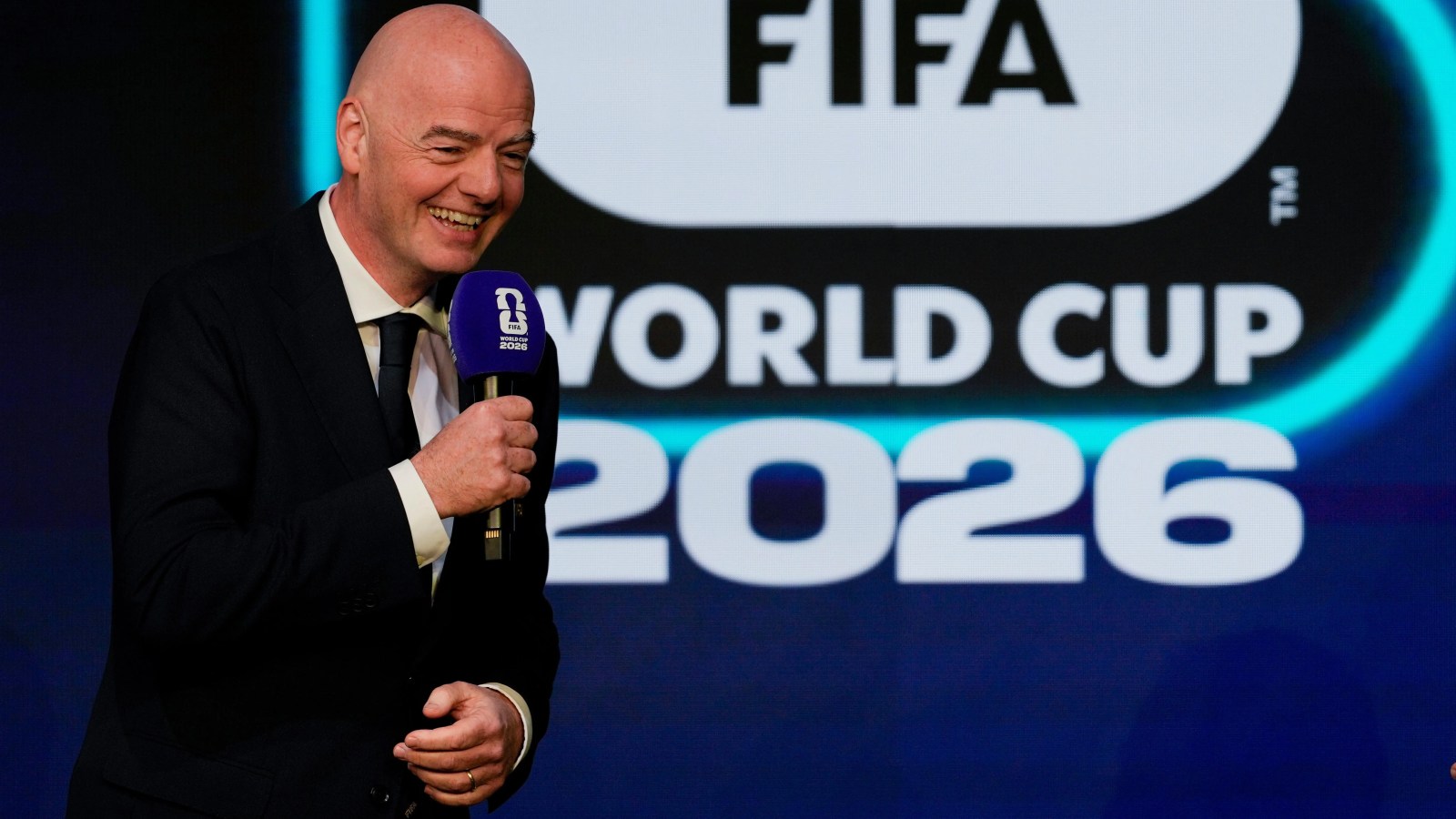
The Football Association is preparing to withdraw its support for Gianni Infantino’s re-election as FIFA president, a significant shift that would place England alongside Wales in open opposition to the current leadership. Wales has already officially removed its backing, becoming the first football association to do so on 3 August 2026, and England now appears ready to follow. The developing position matters because it signals growing unrest within European football at a time of wider tension around FIFA and its future direction. With Wales taking the first formal step and England expected to add its weight, pressure on Infantino’s new bid is increasing.
- Wales officially withdrew its support for Gianni Infantino’s re-election as FIFA president on 3 August 2026.
- England’s Football Association is set to follow Wales by removing its backing for Infantino’s new bid.
- Wales is the first football association confirmed to have withdrawn support.
- The developing split comes amid wider tension around FIFA and related proposals.
- UEFA is threatening legal action over related proposals, underlining the seriousness of the current dispute.
A significant break in support
Wales’ decision to withdraw support is notable not only for the act itself, but because it establishes a clear precedent. In football politics, public backing for a FIFA presidential candidate carries both symbolic and strategic value, particularly when it comes from established associations within the European game. By becoming the first association to formally step away from Infantino’s re-election push, Wales has transformed private unease into a visible institutional stance. That changes the tone of the debate, because the issue is no longer one of quiet dissatisfaction but of concrete resistance from within football’s governing structure.
England’s expected move would magnify that effect considerably. The Football Association remains one of the most influential bodies in world football, and any decision to remove support from an incumbent FIFA president carries significance far beyond a single vote. Even the language surrounding the development matters: England is described as set to withdraw support rather than having already completed the process, which means formal confirmation still carries importance. Even so, the direction of travel is clear, and that expectation alone is enough to sharpen focus on FIFA’s political landscape in the build-up to the next presidential contest.
The timing gives the story added significance. FIFA’s leadership typically seeks to project stability, continuity and broad international consensus around an incumbent president. When that consensus begins to fracture, particularly in Europe, it raises questions about how durable the support base really is. Wales’ withdrawal and England’s anticipated follow-up suggest that opposition is no longer hypothetical. Instead, it is becoming organised, visible and increasingly difficult to dismiss as isolated discontent.
That matters because support in these contests is measured not only in formal ballots, but also in momentum, optics and political confidence. Once an association makes a public break, it becomes harder for others to treat their own concerns as purely internal matters. Wales has already crossed that line, and England now appears close to doing the same. If that happens, the issue will move beyond a single act of dissent and become a more serious test of how much authority and goodwill still surround Infantino’s campaign.
What it means for FIFA and the wider European picture
The wider backdrop is just as important as the individual decisions by Wales and England. Tension around FIFA is already running high, and the current dispute is not unfolding in isolation. UEFA is threatening legal action over related proposals, a sign that the disagreement has moved beyond ordinary political friction and into a more serious confrontation over governance and direction. When legal threats enter the picture, it usually reflects a belief that the issues at stake are structural rather than temporary, and that informal negotiation may no longer be enough to resolve them.
That context helps explain why the withdrawal of support matters beyond the immediate question of Infantino’s candidacy. A FIFA presidential election is never solely about one individual; it also serves as a judgment on the administration’s choices, priorities and relationships with key stakeholders. If major associations begin to distance themselves, the message is that confidence has weakened. Wales has already made that judgment publicly, and if England follows through, the combined effect will be to frame the re-election campaign not as a routine continuation but as a contested and politically charged process.
For European football, the issue is also one of leverage. UEFA’s members have long understood that influence at FIFA depends not only on formal voting power, but also on the ability to present a coherent front when major disagreements emerge. One association acting alone can be portrayed as an outlier; two or more moving in the same direction begins to resemble a bloc. Wales’ action, followed by England’s expected withdrawal, creates the possibility of a broader alignment among associations unhappy with the current course. Even without a wider wave of public declarations yet, the symbolism of these first moves is powerful.
There is also a practical political consequence in the language surrounding England’s position. Because the FA is set to withdraw support rather than confirmed to have done so already, the story remains live and fluid. That means every next step will be scrutinised closely, from the timing of any formal announcement to whether other associations choose to respond. In governance disputes, momentum can matter almost as much as numbers. Once one association breaks ranks and another appears ready to follow, a sense of inevitability can begin to build.
For Infantino, this creates a more difficult environment for a new bid. Incumbent presidents typically benefit from the advantages of office, established relationships and the perception that challengers face a steep uphill task. But those advantages are weakened when support withdrawals become part of the public narrative. Even if the overall electoral arithmetic is not yet clear from the available information, the optics are damaging because they invite further questions about unity, legitimacy and confidence. The fact that this is unfolding alongside broader institutional tension only deepens that challenge.
For England and Wales, the move is also a statement about where they believe the current debate is heading. Publicly stepping away from a FIFA president’s re-election effort is not a neutral act; it places an association squarely within a larger struggle over the governance of the game. Wales has already accepted that position, and England now looks ready to do the same. Whether others follow immediately or not, the message from Britain is becoming increasingly difficult to ignore. It suggests that dissatisfaction is no longer confined to private meetings and internal frustration, but is moving into formal, visible opposition.
What happens next will depend on whether England turns expectation into official action and whether Wales’ decision proves to be the start of a wider chain reaction. Any further withdrawals would intensify scrutiny on Infantino’s campaign and sharpen the broader dispute over FIFA’s direction. UEFA’s threatened legal action ensures the issue will not fade quickly, and the next phase is likely to be defined by whether more associations choose to take a public stand. For now, Wales has made the first move, and England appears ready to turn a significant tremor into a much larger political challenge.

Leave a Reply