

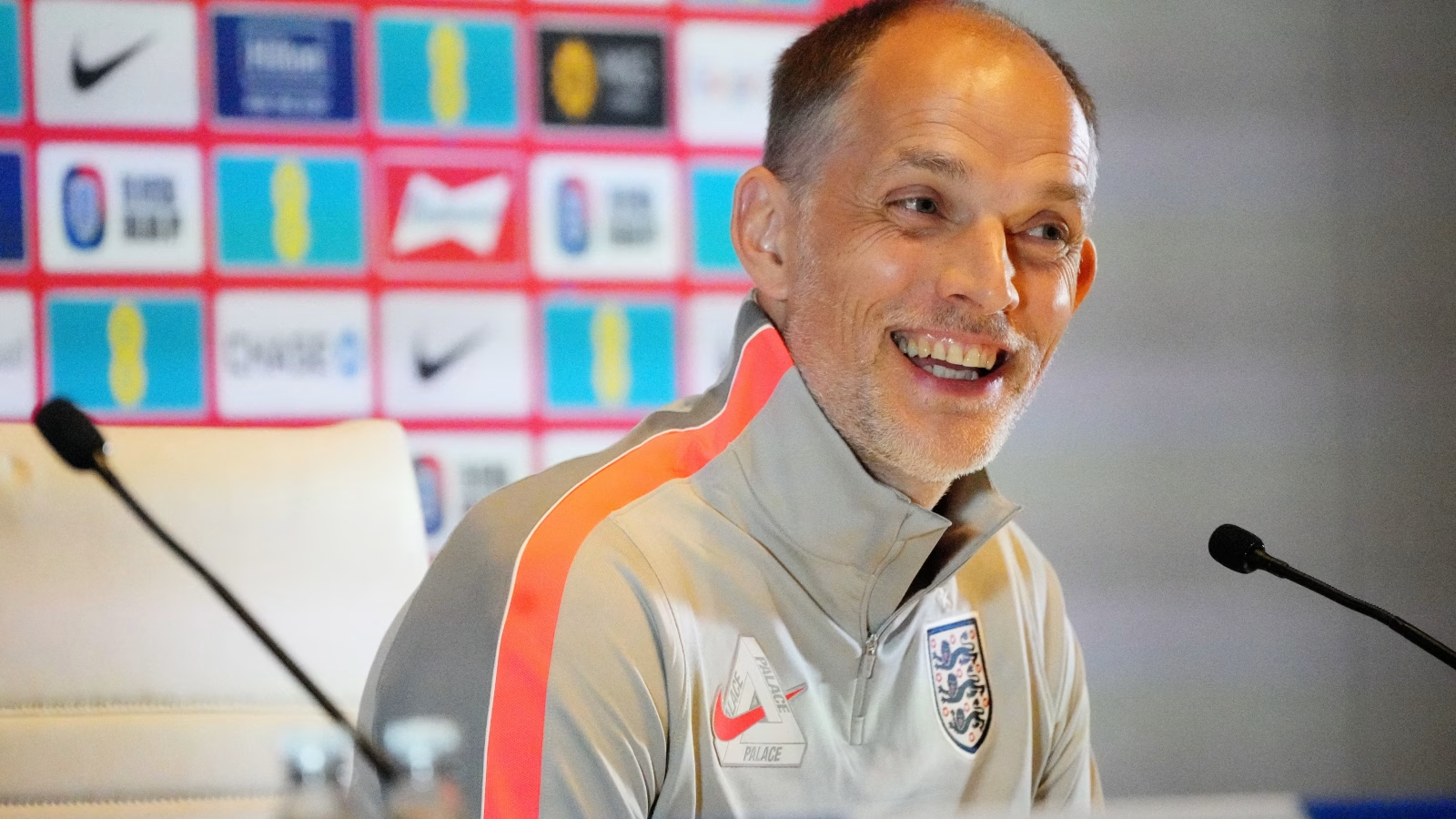
England head into the quarter-finals of the 2026 FIFA World Cup with momentum, clarity and an unbeaten record after coming through the group stage under manager Thomas Tuchel. A 4-2 win over Croatia, a 0-0 draw with Ghana and a 2-0 victory over Panama have taken England into a last-eight meeting with Norway and brought their tournament ambitions sharply into focus. Most striking has been England’s ability to secure results in very different types of matches, showing attacking force in one game and defensive control in another. That adaptability now matters more than ever, because knockout football demands not only quality but also the capacity to solve contrasting problems under pressure.
- England have reached the World Cup quarter-finals and will face Norway next.
- Thomas Tuchel is leading England at the 2026 FIFA World Cup.
- England opened their group-stage campaign with a 4-2 victory over Croatia.
- They followed that result with a 0-0 draw against Ghana.
- England then beat Panama 2-0 to continue an unbeaten start to the tournament.
England’s group stage built on variety as much as results
The shape of England’s group-stage campaign says plenty about why they remain in contention. The 4-2 win over Croatia showed that this side can produce goals and win a match that demands attacking authority, while the stalemate with Ghana demonstrated they could also navigate a more restrictive contest without losing their balance. Closing the group phase with a 2-0 win over Panama gave England another clean, efficient result and ensured they moved into the knockout rounds with confidence intact. Taken together, those three matches point to a team that has not relied on a single route to success.
That variety is often one of the clearest signs of a serious tournament side. Group stages can present sharply different tests in quick succession, and England’s record reflects an ability to respond rather than force every game into the same pattern. Scoring four against Croatia points to a team capable of stretching opponents and capitalising when openings appear, but the goalless draw with Ghana also underlined the importance of patience and defensive concentration when a game refuses to open up. The win over Panama then added another layer, showing England could finish the job professionally and avoid any late uncertainty over their path forward.
For Tuchel, that unbeaten sequence offers both reassurance and a challenge. The reassurance comes from the fact England have already shown they can handle different game states at this tournament, whether that means protecting their structure in a tighter contest or doing enough in front of goal to build a winning margin. The challenge is that quarter-finals magnify every small weakness, and previous results matter only if they sharpen a side for what comes next. England’s task now is to turn a solid and promising group phase into something more decisive as the stakes rise against Norway.
What the Norway test means for England now
A quarter-final brings a different emotional and tactical environment from the opening phase of a World Cup. There is no longer the cushion of multiple fixtures to recover from a setback, and every decision carries greater weight because one difficult spell can define the tournament. England’s unbeaten run gives them a strong platform, but it does not guarantee control of the next match. Instead, it increases the emphasis on how well they can carry the lessons of the group stage into a one-off contest where margins are likely to be tighter and the pressure more intense.
One of the most encouraging elements for England is that they have already experienced both ends of the game-flow spectrum. They know what it feels like to operate in a match with several goals, as they did against Croatia, and they also know what it takes to remain compact and disciplined in a scoreless draw such as the one against Ghana. That matters because quarter-finals often swing between those extremes, with periods of caution followed by sudden moments of acceleration. A team that has already lived through contrasting scenarios in the same tournament can approach that uncertainty with a little more calm.
The Panama result may also prove more important than it first appeared. Winning 2-0 in the final group match allowed England to preserve their forward momentum while reinforcing the value of control at both ends of the pitch. In tournament football, a result like that can help a side reach the knockout rounds with a sense of order rather than drama, and that psychological steadiness can be valuable when the next opponent stands between a team and the semi-finals. England do not enter the Norway game as a side searching for form; they enter it as a side that has already built a credible body of work.
Norway, meanwhile, represent the next step in difficulty simply because the quarter-finals are where ambitions become tangible. England are no longer playing to establish themselves in the competition; they are now playing for a place in the final four. That changes the significance of every passage of play, from how they manage transitions to how they respond if the game becomes tense late on. England’s group-stage record suggests they have the tools to compete in that environment, but the quarter-final will reveal how effectively those tools hold up when the tournament narrows and every error becomes more costly.
There is also broader significance in England reaching this stage under Tuchel. The manager’s presence gives this campaign a clear point of leadership, and the results so far indicate the team has responded well enough to remain unbeaten through three group matches. Yet knockout football is where managerial influence comes under the sharpest scrutiny, because preparation, in-game adjustments and emotional management all move into even clearer focus. England have given themselves the chance to push deeper into the competition; the next challenge is to make that opportunity count against Norway and turn a promising tournament into a potentially defining one.
What comes next is simple in format but enormous in consequence: England face Norway for a place in the World Cup semi-finals. Their path to this point has been built on a 4-2 win over Croatia, a 0-0 draw with Ghana and a 2-0 victory over Panama, a sequence that has delivered both points and belief. Now the question is whether that unbeaten start can be converted into knockout progress when the margin for error disappears. England have played their way into a strong position; the quarter-final will determine whether they can carry that momentum into the final stretch of World Cup 2026.


Leave a Reply