

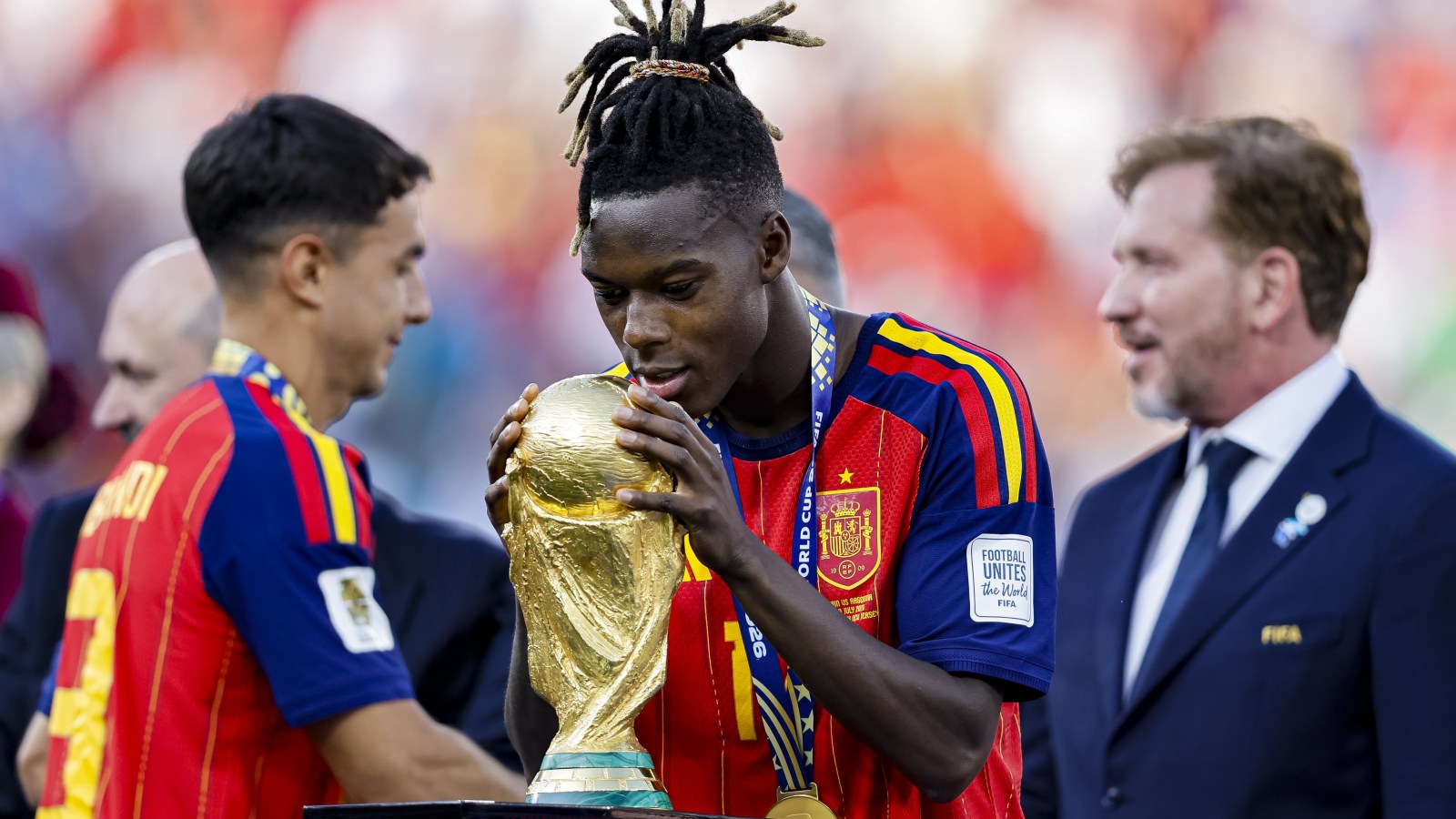
Dani Olmo has rejected Roberto Ayala’s apology after the altercation that followed Spain’s World Cup final win over Argentina in New York, turning an ugly post-match confrontation into one of the first major flashpoints of the 2026 tournament’s aftermath. The Spain attacker has made clear he does not accept Ayala’s version of events, accusing the Argentina assistant coach of lying about what happened. That response matters because it keeps the incident alive well beyond the final whistle, extending the story from a moment of chaos on the pitch into a dispute over accountability and truth. With Spain celebrating the biggest prize in international football, Olmo has become the central figure in this latest chapter, not for a goal or assist, but for his blunt refusal to let the matter pass on terms he does not believe.
- Spain beat Argentina in the World Cup final in New York before a post-match altercation involving Dani Olmo and Argentina assistant coach Roberto Ayala.
- Ayala previously expressed regret over the confrontation and denied throwing a punch, describing the incident as a shove.
- Olmo has rejected that apology and said Ayala was lying about what happened.
- Ayala had indicated he would apologize to Olmo in person if they met again.
- The disagreement leaves the post-final incident unresolved despite Spain’s title-winning night.
Why Olmo’s response matters
Olmo’s reaction gives the incident a sharper edge because it directly challenges the central point of Ayala’s defence. Ayala had already expressed regret and sought to frame the confrontation in less severe terms, insisting he did not throw a punch and instead describing the incident as a shove. By calling that account a lie, Olmo is not simply declining an apology; he is disputing the factual basis on which that apology was offered. That distinction is important, because an apology built on a version of events the other party rejects is unlikely to bring any real closure.
In the emotional aftermath of a World Cup final, tensions can remain high long after the decisive moments of the match have passed. Defeat in a final is raw, and victory can be chaotic, especially in the scenes that follow the trophy presentation and the end of a draining tournament. The confrontation in New York appears to have emerged from exactly that combustible environment, where emotion, disappointment and celebration collide in a confined space. What Olmo has now done is remove any suggestion that the matter can be dismissed as a minor misunderstanding simply because regret was expressed afterward.
There is broader significance, too, in the fact that the disagreement involves a player from the winning team and a senior member of the losing side’s staff. Incidents between players can sometimes be framed as part of the heat of competition, but when a coach is involved, standards of conduct come under even closer scrutiny. Ayala’s role as Argentina’s assistant coach gives his actions added weight, both symbolically and practically, because coaches are expected to represent authority and control in moments when others may lose theirs. Olmo’s refusal to accept the apology therefore shifts the focus beyond a single clash and onto how responsibility is handled at the highest level of the international game.
An unresolved dispute after Spain’s triumph
Spain’s World Cup final win should have been defined entirely by achievement, composure and the fulfilment of a campaign objective, yet this dispute ensures that part of the conversation remains fixed on the aftermath rather than the football alone. That does not diminish the title itself, but it does complicate the public memory of the occasion. The final in New York was the sport’s biggest stage, and anything that happens immediately afterward inevitably commands global attention. In that context, Olmo’s words ensure the post-match scenes remain part of the event’s lasting narrative.
For Argentina, the issue is particularly awkward because Ayala had already attempted to lower the temperature. Expressing regret and denying a punch while characterising the contact as a shove suggested an effort to contain the fallout and present the incident as less severe than some may have believed. Olmo’s response has now undone that effort and left Argentina with a problem that is no longer only about the original altercation, but also about competing descriptions of it. When one side says an apology has been offered and the other says the explanation attached to that apology is false, the dispute becomes much harder to settle quietly.
There is a personal dimension to this as well. Ayala had said he would apologize to Olmo in person if they met again, a line that implied there was still room for a direct and perhaps more meaningful resolution. Olmo’s latest stance suggests that even a face-to-face apology may not be enough unless it is accompanied by an account he considers truthful. That is an important detail because it shifts the issue from one of simple reconciliation to one of credibility. As long as Olmo believes Ayala’s version is untrue, the possibility of closure remains uncertain regardless of whether the two men speak again.
The fallout also underlines how quickly a World Cup final can move from celebration and heartbreak into a battle over narrative. Finals are remembered not only for the result, but also for the moments that define their emotional texture, and post-match incidents can become part of that memory if they are not resolved swiftly. Spain’s players should be enjoying an undisputed moment of glory after winning the tournament, while Argentina should be processing defeat and assessing what came next. Instead, this confrontation has created a secondary story that continues to demand attention because the two sides are not aligned on the most basic account of what happened.
What comes next will depend on whether the issue is allowed to fade or whether further responses deepen the disagreement. Ayala had already shown a willingness to apologize, but Olmo’s rejection means the matter remains open rather than settled. For Spain, the priority will still be preserving the significance of a World Cup-winning night, while Argentina may seek to move beyond an incident that has cast an unwanted shadow over the end of the tournament. Yet until there is either a clearer resolution or a mutual willingness to let it rest, the altercation in New York will remain an unresolved coda to Spain’s victory over Argentina.



Leave a Reply