

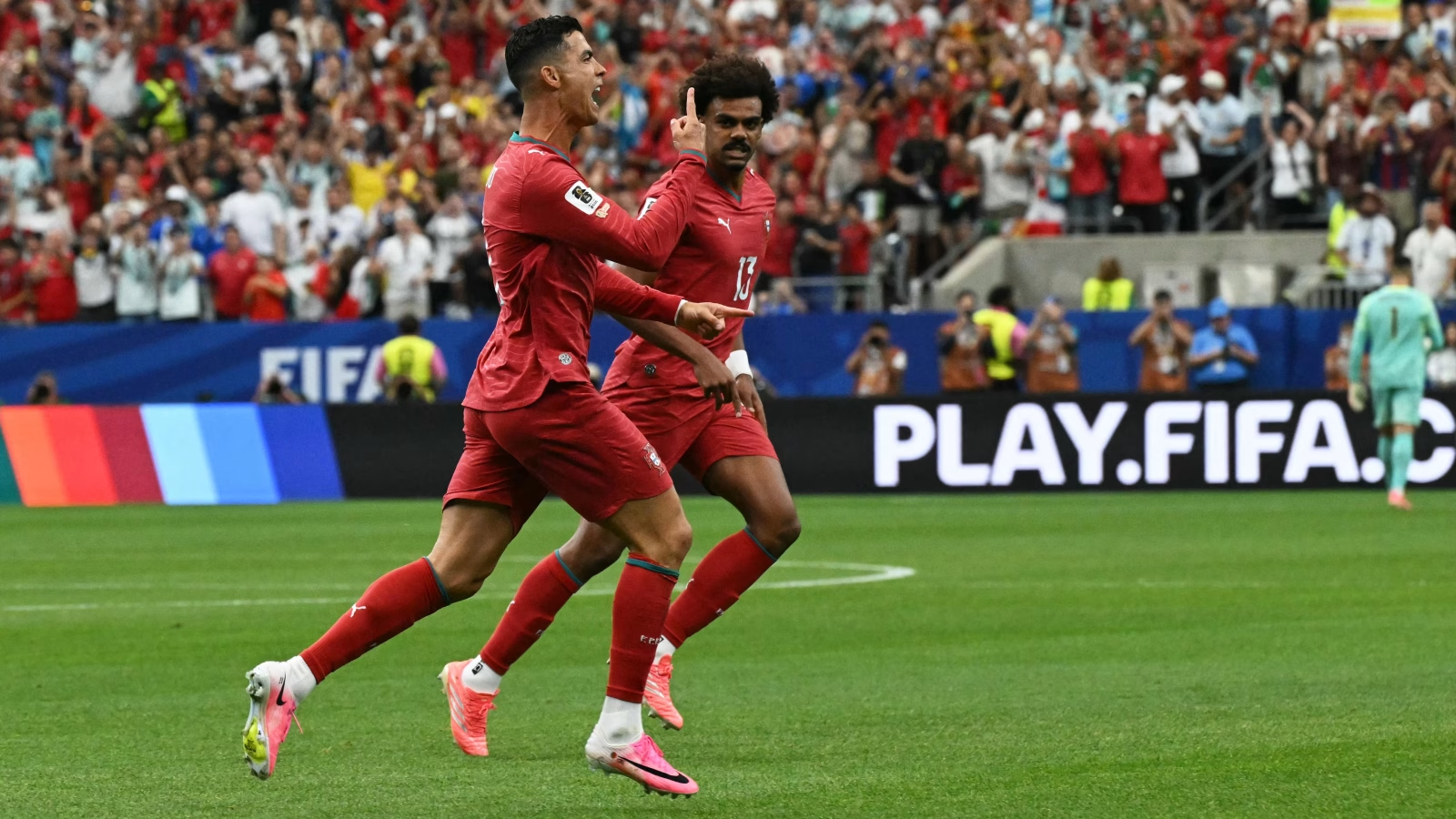
Portugal remain alive at the 2026 FIFA World Cup after beating Croatia in the knockout stage, a result that sends them into the round of 16 and keeps their campaign moving forward. The defining moment came from Cristiano Ronaldo, whose equaliser proved central to a victory with both immediate significance and broader momentum for Portugal. In a match shaped by tension and the weight of elimination, Portugal found a way through against a Croatia side with the experience and quality to make every phase difficult. At this stage, progression is all that matters, and Portugal achieved it with their most recognisable figure once again playing a decisive role.
- Portugal beat Croatia in the knockout stage to stay in the 2026 FIFA World Cup.
- Cristiano Ronaldo scored an equaliser during the match.
- The victory sends Portugal through to the round of 16.
- Portugal’s progress keeps their World Cup campaign alive heading into the next knockout test.
Ronaldo delivers when Portugal need him most
Ronaldo’s equaliser stood out not only for its direct impact on the scoreline, but for what it represented in a knockout match. Games of this kind often turn on a single intervention from a player capable of changing the emotional direction of the contest, and Portugal received exactly that. Falling behind or losing control in a tie can quickly become costly, especially against opponents as disciplined as Croatia, so restoring parity was a moment of genuine consequence. It gave Portugal renewed belief, shifted the pressure on both teams and created the platform from which they ultimately secured progression.
That contribution also reinforced a familiar truth about Portugal in tournament football: even as the team evolves, Ronaldo remains a player who can define the biggest occasions. An equaliser in a World Cup knockout match is never routine, because it arrives in the most unforgiving environment the sport offers. Portugal needed calm, conviction and a player willing to take responsibility in a high-stakes moment, and they got that from their captain. The value of such a goal extends beyond the finish itself, because it settles team-mates, disrupts the opponent’s sense of control and can reset the tactical picture of the entire match.
There was significance, too, in the timing and context of the intervention. Croatia are the kind of opponent who can make a lead feel larger than it is, not only through structure and discipline but through their ability to manage the rhythm of a knockout game. By cancelling out that advantage, Ronaldo did more than change the scoreline. He altered the mood of the tie, removed Croatia’s comfort and restored Portugal’s sense that the match was again on their terms. In elimination football, those emotional swings can be as decisive as any technical detail.
For Portugal, that is why the equaliser carried such weight. It was not simply a goal in a difficult game; it was the moment that prevented the contest from drifting toward an outcome they could not afford. Knockout matches often demand one senior player to impose clarity amid uncertainty, and Ronaldo provided exactly that. Portugal still had to complete the job, but his intervention ensured they remained in position to do so. In a tournament setting where margins are thin and momentum can turn quickly, that kind of contribution is often remembered as the hinge on which the entire night moved.
What the result says about Portugal and Croatia
For Portugal, this was the kind of result that can strengthen a squad’s belief as much as any comfortable win. Knockout football rarely allows for perfection, and teams are often judged less on style than on resilience, timing and the ability to survive difficult passages. Beating Croatia suggests Portugal were able to absorb pressure within the game and still produce the moments required to advance. That matters because the path through a World Cup is usually shaped by adaptability, and this victory showed Portugal have enough composure to navigate a contest that demanded more than attacking talent.
Croatia’s exit, meanwhile, underlines how thin the margins become once the tournament moves beyond the group phase. Any side capable of taking Portugal deep into a knockout tie is clearly competitive, yet one decisive swing can end a campaign immediately. Ronaldo’s equaliser removed Croatia’s advantage and changed the dynamic they had worked to establish, leaving them to chase control again in a match where every mistake carried amplified cost. Even without a fuller statistical picture, the confirmed outcome makes clear that Croatia were unable to preserve their position once Portugal found that response, and that is often the difference between continuing and going home.
There is also wider significance in Portugal reaching the round of 16 after this result. Progression keeps alive the possibility of building rhythm at exactly the point in the tournament when identity and confidence become most important. Teams that survive a stern knockout examination often emerge with a clearer sense of themselves, because they have already confronted adversity and come through it. Portugal can now view this win as evidence that they possess both the star quality to rescue difficult situations and the collective resilience to finish the job once a route opens up.
From a tactical perspective, the limited confirmed details still point to a contest in which game state was crucial. Croatia at one stage held the edge, Ronaldo’s equaliser erased it, and Portugal then did enough to turn that shift into qualification. In knockout football, that sequence is everything: the team that responds best to a changing scoreline usually gains the upper hand in confidence, territorial intent and decision-making. Portugal’s success suggests they managed those transitions more effectively, staying composed after going behind and then capitalising once the match was level again. That kind of emotional control is often as important as any technical detail in determining who advances.
Another important aspect of the result is what it does for the narrative around Portugal’s campaign. A team can move through a tournament in many ways, but victories shaped by a key intervention from a senior figure often become reference points for the rounds that follow. Team-mates draw confidence from knowing they have already come through a pressure game, while future opponents are reminded that Portugal can punish any lapse and remain dangerous even when the tie is not unfolding in their favour. The psychological benefit of that should not be underestimated as the competition narrows and every remaining side searches for small edges.
Looking ahead, Portugal now enter the round of 16 with momentum and with proof that they can handle the stress of elimination football. The challenge will be to build on this result rather than simply celebrate it, because each step forward raises the level of scrutiny and the quality of opposition. Ronaldo’s equaliser against Croatia has already secured its place as the pivotal act in a match that preserved Portugal’s World Cup hopes, but the real value of that moment will be measured by what comes next. If Portugal can carry the resilience and conviction shown here into the next round, this win may be remembered as the point at which their tournament truly came alive.


Leave a Reply