

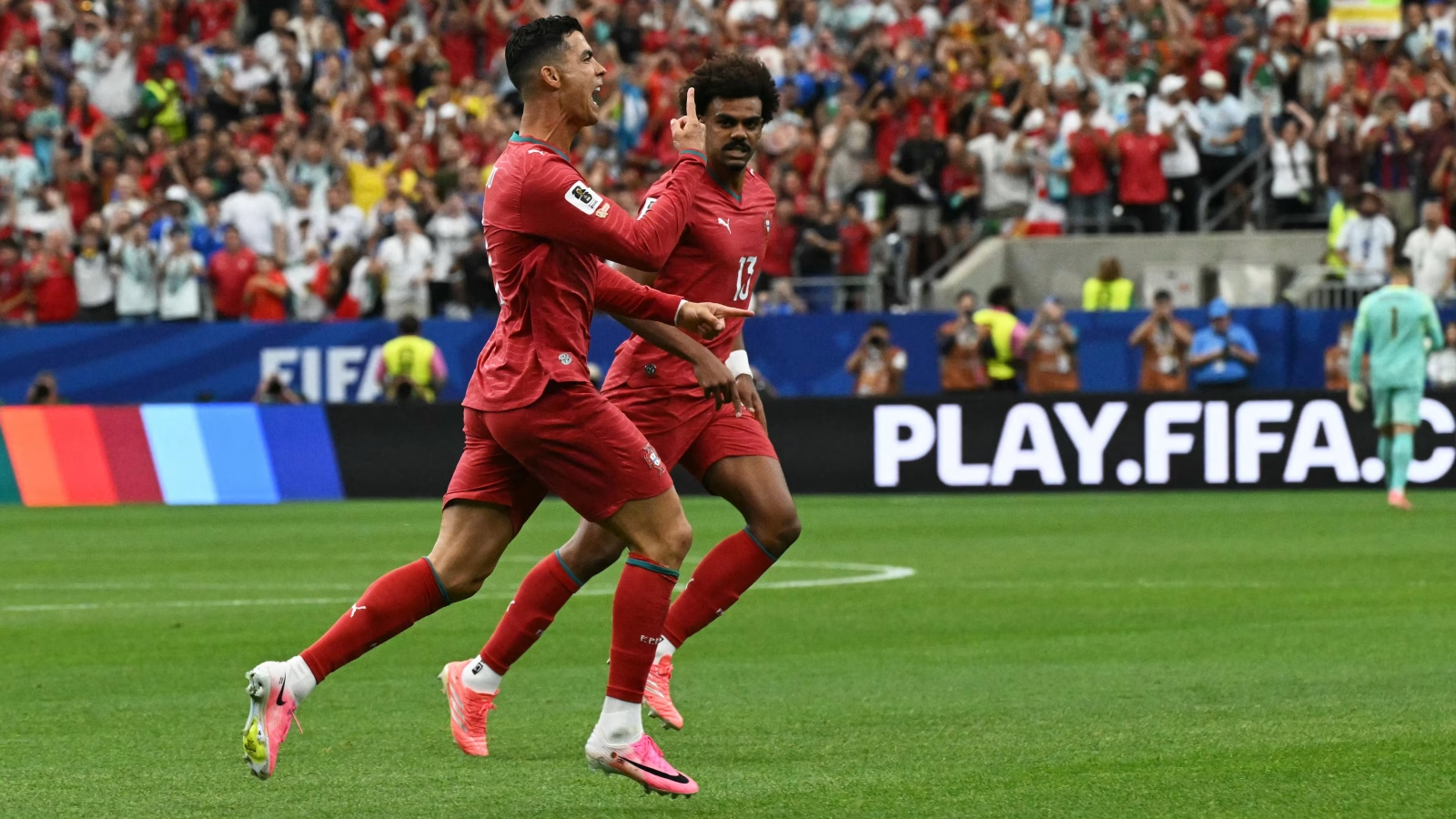
Cristiano Ronaldo’s landmark strike for Portugal carried significance far beyond the immediate scoreline, combining a decisive group-stage breakthrough with a place in FIFA World Cup history. The goal put Portugal 1-0 ahead and, in the same instant, made Ronaldo the first player ever to score in six World Cups. That dual importance gives the finish an enduring place among Portugal’s most memorable tournament moments, turning a single attacking action into a milestone that spans generations of the competition. Even without every surrounding match detail, the weight of the goal is unmistakable: Portugal had the lead, and Ronaldo had moved into a category of his own.
- Cristiano Ronaldo scored the featured goal for Portugal in the FIFA World Cup group stage.
- The strike put Portugal 1-0 ahead in the match.
- That goal made Ronaldo the first player to score in six FIFA World Cups.
- Separate World Cup results show Ronaldo later scored his first career knockout-stage World Cup goal.
- That knockout-stage goal was a penalty that brought Portugal level at 1-1 against Croatia.
A milestone built on timing and tournament pressure
What elevates this goal is not only the record itself, but also the moment in which it arrived. Group-stage matches can shape the course of an entire campaign, and the opening goal in those contests often shifts the tactical balance immediately. By putting Portugal 1-0 ahead, Ronaldo did more than add another line to his personal record; he gave his side control of the scoreboard at a stage of the tournament where margins are often narrow and every advantage matters. The fact that the strike also delivered a historic sixth World Cup scoring appearance means it belongs both to Portugal’s competitive story and to the wider history of the tournament.
World Cup records carry particular weight because they are built over long periods, across changing teammates, different tactical systems and the singular pressure that only this competition can create. Ronaldo’s milestone speaks to longevity, but it also highlights adaptability. To score in six separate World Cups requires more than endurance; it demands the ability to remain decisive on football’s biggest stage as the sport evolves around you. This featured goal therefore resonates as more than a statistical landmark. It stands as evidence of sustained relevance in the most demanding environment international football can offer.
For Portugal, there is additional symbolic value in a goal like this arriving in the group stage and putting the team in front. Tournament football often turns on players capable of breaking tension when matches are still compact, cautious and difficult to open up. A 1-0 lead changes both the emotional and strategic rhythm of a game, allowing the team in front to manage phases differently while forcing the opposition to chase. Ronaldo’s strike fits that pattern. It stands out not only because it was historic, but because it directly altered the competitive state of the match in Portugal’s favour.
That combination of timing and consequence is what gives the goal lasting significance. Some records are accumulated gradually and appreciated over time; others arrive in moments that immediately feel larger than the match itself. This was the latter. Portugal gained a crucial lead, and Ronaldo simultaneously set a new benchmark in World Cup history. The achievement was personal, but the impact was collective, reinforcing the idea that the most memorable tournament moments are often those in which individual greatness and team need intersect perfectly.
What it says about Ronaldo’s World Cup journey
The available results also place this group-stage milestone alongside another notable chapter in Ronaldo’s World Cup career: his first knockout-stage goal, scored from the penalty spot to bring Portugal level at 1-1 against Croatia. Taken together, those moments help frame the breadth of his contribution across different phases of the tournament. One goal established a unique scoring record in the group stage; the other came in the elimination rounds, where every moment carries immediate consequences and there is no margin for recovery if a team falls short. That contrast adds depth to the story of his World Cup impact.
The knockout-stage detail is especially revealing because it shows how even the most decorated international careers can continue to produce new landmarks deep into a player’s tournament history. Bringing Portugal back to 1-1 against Croatia with a penalty reflects another form of responsibility: the ability to convert under direct pressure when the stakes are absolute. While the featured highlight centres on the group-stage opener and the six-World-Cups record, the later knockout goal broadens the picture. It shows Ronaldo contributing not only to historic firsts, but also to Portugal’s efforts in matches where progression is on the line.
There is a reason these goals remain central when discussing Portugal at the World Cup. International tournaments magnify every decisive action, and players who repeatedly shape scorelines become reference points for entire eras. Ronaldo’s goal to make it 1-0 in the group stage is one of those reference points because it fused immediate match importance with a milestone no one had previously reached. His later equalising penalty against Croatia reinforces that continuity, showing a player still central to defining moments whether Portugal were taking the lead or trying to restore parity.
From Portugal’s perspective, these moments also underline the value of having a forward capable of changing a match with a single action. A team entering the World Cup with ambitions of a deep run needs goals in different contexts: openers that settle nerves, equalisers that restore belief and interventions that turn pressure into advantage. The verified details available here point to Ronaldo providing exactly those kinds of contributions. Even with limited surrounding information, the pattern is clear enough to explain why his World Cup record remains such an important part of Portugal’s tournament identity.
The historical dimension matters as well. Becoming the first player to score in six World Cups is the kind of achievement that immediately separates one career from almost every other in the competition’s history. World Cups are spaced across years, and each edition brings new physical, tactical and psychological demands. To remain present and decisive across six tournaments requires a level of consistency that is exceptionally rare. That is why this Portugal goal endures as more than a highlight: it is a marker of a career that repeatedly intersected with the sport’s biggest stage in meaningful ways.
Looking back, this goal remains one of the defining reference points whenever Ronaldo’s World Cup legacy is assessed. It captures the blend of personal history and national importance that only a handful of tournament moments ever achieve, while the later knockout-stage penalty against Croatia adds another layer to the story of his influence for Portugal. Together, those verified milestones underline a simple truth: when Portugal needed major World Cup moments, Ronaldo produced goals that changed matches and pushed the boundaries of what had previously been achieved in the competition.
Leave a Reply