

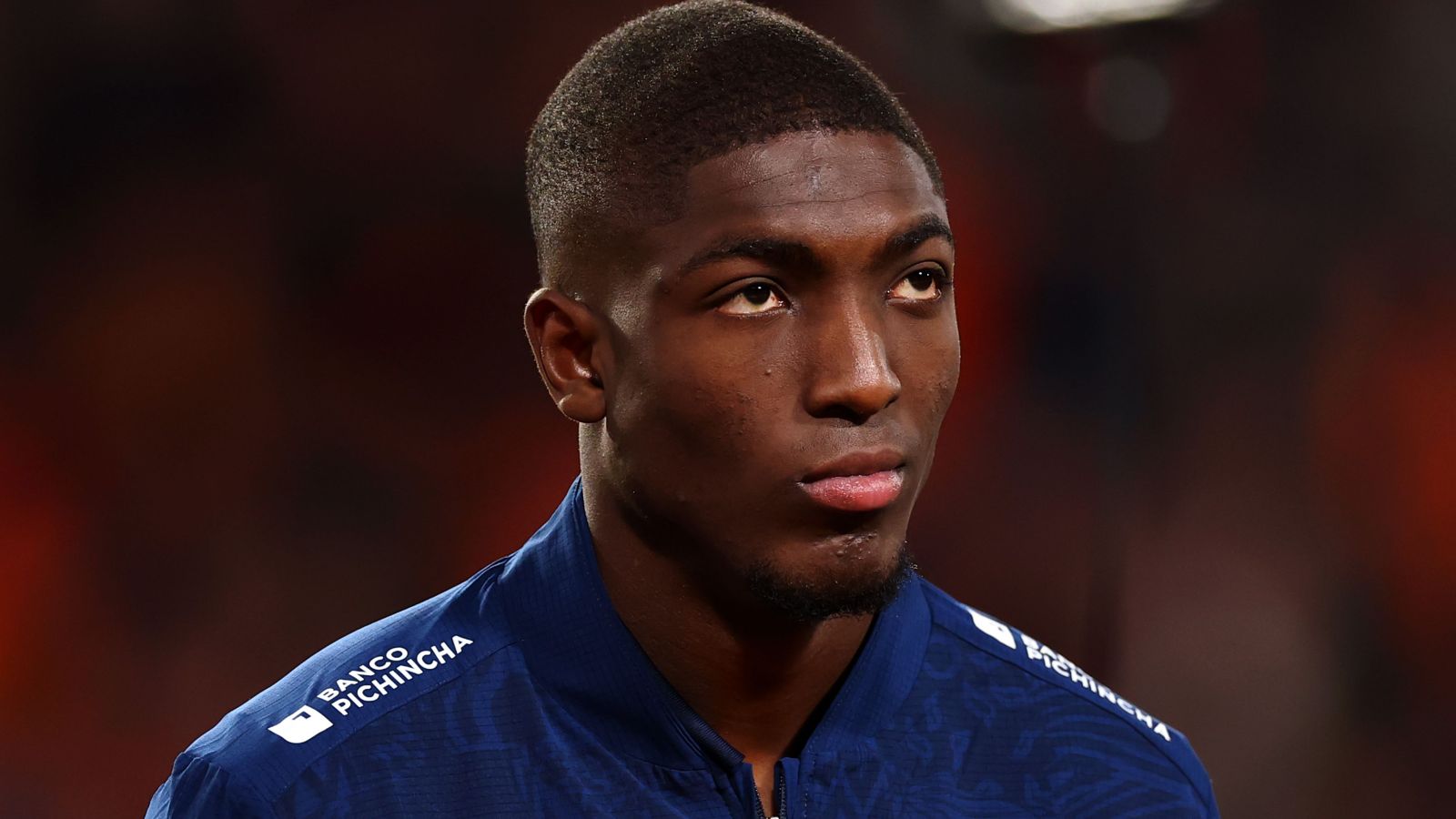
Chelsea’s transfer planning around the 2026 FIFA World Cup is beginning to take clearer shape, but the picture remains wider than any one headline pursuit. Joel Ordonez has emerged as one of the most prominent names in that conversation, yet the available information does not support the idea that Chelsea have already settled on a single World Cup star as their outright priority. What is clear is that the tournament is influencing the club’s assessment process, with performances on the international stage feeding into decisions that were already in motion. That matters because Chelsea are trying to balance immediate squad needs with the chance to act decisively once the World Cup ends, particularly in defensive areas where change is already expected.
- No verified information confirms that Chelsea are favourites to sign one specific “World Cup star” during the 2026 tournament.
- Chelsea are expected to complete a £48m deal for a Premier League defender after the World Cup.
- Joel Ordonez is among the options Chelsea are assessing, and his displays for Ecuador have encouraged interest.
- Multiple Chelsea players and transfer targets are involved in the 2026 World Cup, adding further relevance to the tournament for the club’s recruitment plans.
- Chelsea have a history of moving for players who enhanced their reputations at World Cups, giving extra context to the current speculation.
Why the World Cup matters to Chelsea’s planning
The key point in Chelsea’s current transfer picture is not uncertainty over intent, but uncertainty over hierarchy. The evidence supports active interest in players whose profiles are being shaped by the World Cup, but it does not establish one standout target as the club’s clear leading objective. That distinction matters. Transfer windows often produce narratives built around a single marquee name, while the reality of a recruitment process is usually more complex. In Chelsea’s case, the clearest reading is that the club are monitoring several possibilities while also preparing to push through at least one major defensive deal after the tournament.
The expected £48m agreement for a Premier League defender after the World Cup offers the strongest indication of where Chelsea’s priorities may currently lie. Even without naming the player here, the size of the fee points to a significant move rather than a speculative addition. It also suggests Chelsea are not relying solely on World Cup breakout stories to define their summer business. Instead, they appear to be running parallel tracks: established domestic targets on one side, tournament-based evaluations on the other. That kind of dual approach fits the demands of a club seeking rapid improvement while still leaving room to react if a player raises his stock on the biggest international stage.
Ordonez’s case is especially notable because it sits at the intersection of long-term scouting and tournament performance. He is not presented here as Chelsea’s definitive top target, but he is clearly among the options under assessment, and his displays for Ecuador have strengthened that interest. In practical terms, that means the World Cup is not creating Chelsea’s attention from scratch; rather, it is sharpening and testing an evaluation that was already under way. Strong performances in this environment carry weight because they place a player under tactical pressure, emotional pressure and intense scrutiny at the same time, giving clubs another layer of evidence when judging whether he is ready for a major move.
That broader process helps explain why the World Cup matters so much to Chelsea’s planning. A tournament of this scale can accelerate decisions, alter valuations and shift the competitive landscape around a target in a matter of days. For a club already expected to be active in defence, every performance becomes part of a wider calculation: whether to move quickly on established plans or whether to hold position and allow the tournament to reveal more. Chelsea’s current stance appears to reflect both caution and opportunity, with the club keeping its options open rather than forcing the story into one predetermined pursuit.
What Ordonez’s emergence could mean
For Chelsea, the appeal of a player such as Ordonez would naturally be tied to how the club want to shape their defensive unit for the next phase. The available information does not provide tactical data, match statistics or detailed positional specifics from Ecuador’s campaign, so it would be wrong to overstate the exact football reasons behind the interest. What can be said is that encouraging World Cup displays tend to reinforce confidence in a player’s composure, adaptability and ability to perform in high-stakes situations. Those are qualities any elite club values, and they become even more important when recruitment decisions must balance long-term potential with the immediate pressure to deliver results.
The wider context matters too, because Chelsea’s transfer business is rarely separated from the influence of major international tournaments. The club have a history of moving for players who improved their reputations at World Cups, and that gives the current speculation a familiar shape. A competition like this compresses attention and intensifies judgment, turning every strong display into a test of whether a player can carry that form into club football, where the demands are relentless and the expectations even higher. That does not mean every admired World Cup performer becomes a signing, but it does help explain why Chelsea continue to be linked with players whose standing is rising during the tournament.
Another important factor is the sheer number of Chelsea-connected figures involved in the 2026 World Cup. With multiple current players and transfer targets active in the competition, Chelsea have a direct interest in how the tournament unfolds that goes beyond simple observation. World Cup involvement can affect valuation, timing and negotiating leverage, especially when a player’s profile grows over the course of the event. It can also complicate planning, because clubs must decide whether to move early on pre-existing targets or wait until the tournament ends and risk facing stronger competition. That tension appears to be part of Chelsea’s current landscape, particularly if post-World Cup business is already lined up in one area while other options remain under active review.
All of that leaves Chelsea in a position that is intriguing rather than definitive. There is enough verified information to say the club are engaged, watching closely and preparing for action, but not enough to reduce the story to one inevitable chase for a single World Cup star. Ordonez has strengthened his case through Ecuador’s performances, and that alone makes him a name worth tracking closely in the weeks ahead. At the same time, the expected £48m move for a Premier League defender suggests Chelsea’s recruitment team are attempting to combine certainty with flexibility, securing one major piece while preserving room to respond to developments from the tournament. That is often how elite clubs operate when a World Cup collides with transfer season: not through one straight line, but through several carefully managed options.
The next stage will come as the World Cup moves closer to its conclusion and Chelsea can begin turning monitored interest into firmer action. Whether Ordonez rises further in that process remains to be seen, but his displays for Ecuador have ensured that he stays firmly in the conversation. For now, the clearest reading is that Chelsea’s transfer picture is active, broad and still evolving, with the tournament serving as a proving ground rather than a final verdict. The period immediately after the World Cup should reveal which assessments become concrete deals and which remain part of a wider summer shortlist.

Leave a Reply