
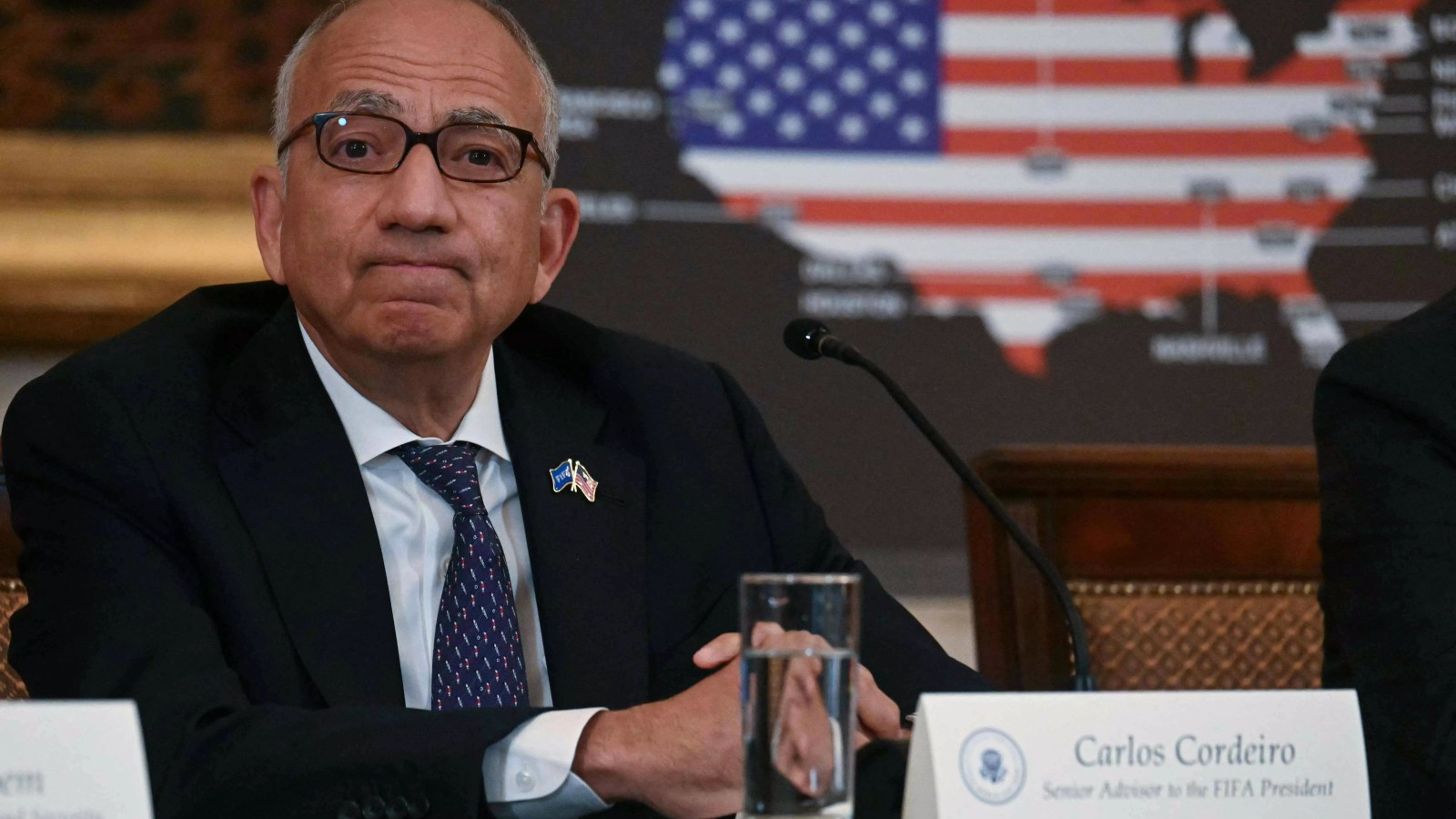
Carlos Cordeiro has resigned from his role as a senior adviser to FIFA president Gianni Infantino, escalating the dispute over plans to sell a stake in a World Cup-related commercial entity to private investors. The departure is significant because it turns what could have remained an internal governance disagreement into a broader political challenge over the future control of football’s biggest tournament and its commercial rights. Cordeiro’s decision to step away in protest underlines the depth of concern among influential figures about the direction of the proposal. FIFA has responded forcefully, with Infantino denying that the governing body is “selling football,” but the controversy now extends far beyond a single resignation.
- Carlos Cordeiro has resigned as a senior adviser to Gianni Infantino in protest over plans involving a World Cup-related commercial entity.
- The dispute concerns plans to sell a stake in World Cup commercial interests to private investors, rather than any confirmed completed sale.
- Gianni Infantino has denied that FIFA is “selling football” as criticism of the proposal has intensified.
- Opposition is not confined to Europe, with the Asian Football Confederation also rejecting the plan.
- AFC leadership has described the proposal as unacceptable and criticised the lack of consultation around it.
A governance fight with global implications
Cordeiro’s resignation gives the debate a sharper edge because it indicates that unease is not limited to outside critics or rival power centres within the game. When a senior adviser steps down in protest, it signals that concern exists close to the top of FIFA’s leadership structure, where decisions on strategy, commercial growth and tournament planning are made. That matters especially in the context of the World Cup, still the sport’s most valuable and politically sensitive asset. Any proposal linked to its commercial future will be judged not only on financial logic, but also on stewardship, transparency and who ultimately benefits from the game’s flagship competition.
The central issue also needs to be defined clearly. The dispute concerns plans to sell a stake in a World Cup-related commercial entity to private investors, not a completed transaction. That distinction is crucial because it means the battle is still being fought over intent, structure and governance, rather than over the consequences of a deal that has already been finalised. In practical terms, the backlash is aimed at stopping or reshaping the proposal before it becomes irreversible. It also means the pressure on FIFA is likely to centre on consultation, accountability and the rationale for bringing outside investors into an area so closely tied to the identity and control of the World Cup.
The resignation also raises the political stakes inside FIFA. Internal dissent carries a different weight from criticism delivered from outside the organisation, particularly when the issue concerns the commercial framework around the World Cup. The tournament is more than a revenue engine; it is the focal point of FIFA’s authority and global influence. Any suggestion that its commercial architecture could be opened to private investment is therefore bound to prompt scrutiny over process as much as policy. In that sense, Cordeiro’s exit is not simply a personal decision. It is a sign that the proposal has become a test of trust in FIFA’s decision-making at the highest level.
Why the backlash extends beyond one region
One of the most striking aspects of the dispute is that opposition is not limited to Europe. The Asian Football Confederation has also rejected the plan, with its leadership describing the proposal as unacceptable and criticising the lack of consultation. That significantly broadens the importance of the row, because it shows resistance is not merely a regional power struggle or a predictable split between FIFA and European interests. Instead, it points to a wider concern among confederations that any move involving World Cup commercial stakes must be handled with far greater consensus and clarity than critics believe has been shown so far.
The AFC’s position matters because support from outside Europe is often essential in shaping FIFA’s political landscape. When criticism emerges across multiple regions, it becomes much harder to dismiss objections as isolated or self-interested. The complaint about inadequate consultation is particularly damaging because governance in international football depends heavily on member associations and confederations believing they have been heard before major strategic decisions are advanced. If that confidence weakens, even proposals intended to unlock new revenue or modernise commercial structures can quickly become symbols of centralised decision-making and mistrust.
Infantino’s response shows FIFA understands the sensitivity of that perception. His denial that FIFA is “selling football” is a direct attempt to counter the most emotionally potent criticism of the plan: the idea that private investment in a World Cup-related entity would amount to giving up part of the game’s crown jewels. The language is revealing because it acknowledges that this is not merely a technical financial discussion. It is a debate about ownership, symbolism and whether monetising part of the World Cup’s commercial framework risks crossing a line that many stakeholders believe should remain untouched, even if the structure under discussion falls short of an outright sale of the tournament itself.
That tension is likely to shape the next phase of the story. FIFA appears determined to defend both the concept and its motives, while opponents are making clear that their objections concern not only the presence of private capital, but also the process and principle behind the proposal. Cordeiro’s resignation gives the divide personal consequence, and the AFC’s intervention gives it institutional and geographic breadth. Together, those developments suggest this is not a passing disagreement but a meaningful test of how FIFA balances commercial ambition with political legitimacy. The World Cup is not just another revenue stream; it is the organising centre of global football, and any plan touching its commercial architecture will be examined through that lens.
What happens next will depend on whether FIFA can rebuild confidence around the proposal or whether resistance forces a rethink. With no completed sale confirmed, there is still room for the governing body to alter its approach, widen consultation or pursue a different path altogether. For now, Cordeiro’s resignation and the AFC’s rejection have ensured that the debate is no longer confined to internal planning rooms. It has become a defining argument over who controls the future of the World Cup and how far football’s leadership can go in reshaping its most valuable assets.


Leave a Reply